
This post contains affiliate links. As an Amazon Associate I earn from qualifying purchases.
Winter-blooming plants and shrubs can give a bare garden a reason to look outside, but the right choices depend on your climate. Christmas roses and snowdrops suit small foreground pockets; witch hazel and wintersweet bring flowers higher into the view. The eight plants below range from cold-hardy bulbs to shrubs for milder winters. Use the zones as an in-ground starting point, then confirm local flowering dates: a plant that blooms in December farther south may wait until March in a colder yard.
How we chose: These plants offer flowers in winter or at the late-winter transition, with an early-winter camellia option clearly distinguished from reliable midwinter bloomers. The ranges below are conservative planting guidance, not promises of flowers through every freeze; pet cautions are not veterinary feeding advice.
1. Christmas Rose (Helleborus niger)
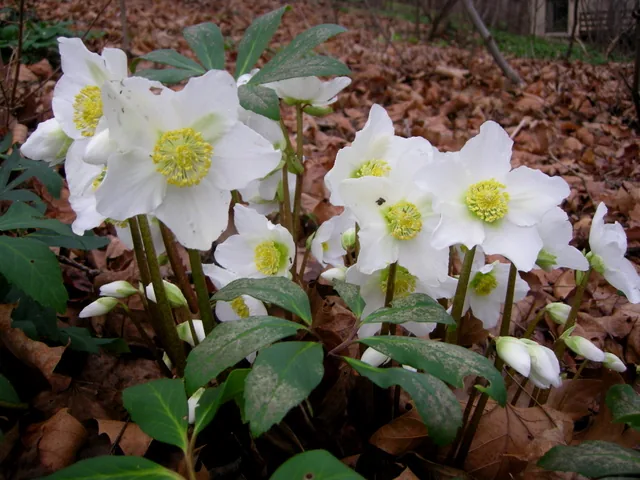
Zones: 3–8 (in ground) · Light: Part to full shade · Height: 9–12 in. · Bloom: Late winter–early spring; sometimes Christmas in mild areas · Pets: Toxic if eaten; keep pets away
The white flowers lift a quiet, shaded corner without needing a large shrub behind them. Christmas rose is the winter-flowering hellebore to look for, rather than assuming every plant sold as “Lenten rose” will open before February. The creator identifies the pictured plant as Helleborus niger ‘Praecox’; its earlier reputation still does not override local weather. Give the clump a place you can see from a path, with rich, well-drained soil rather than a soggy hollow.
Care tip: Avoid bright, exposed winter sun and leave enough room around the crown for air movement. Use a hand trowel for careful planting beside established roots.
2. Vernal Witch Hazel (Hamamelis vernalis)
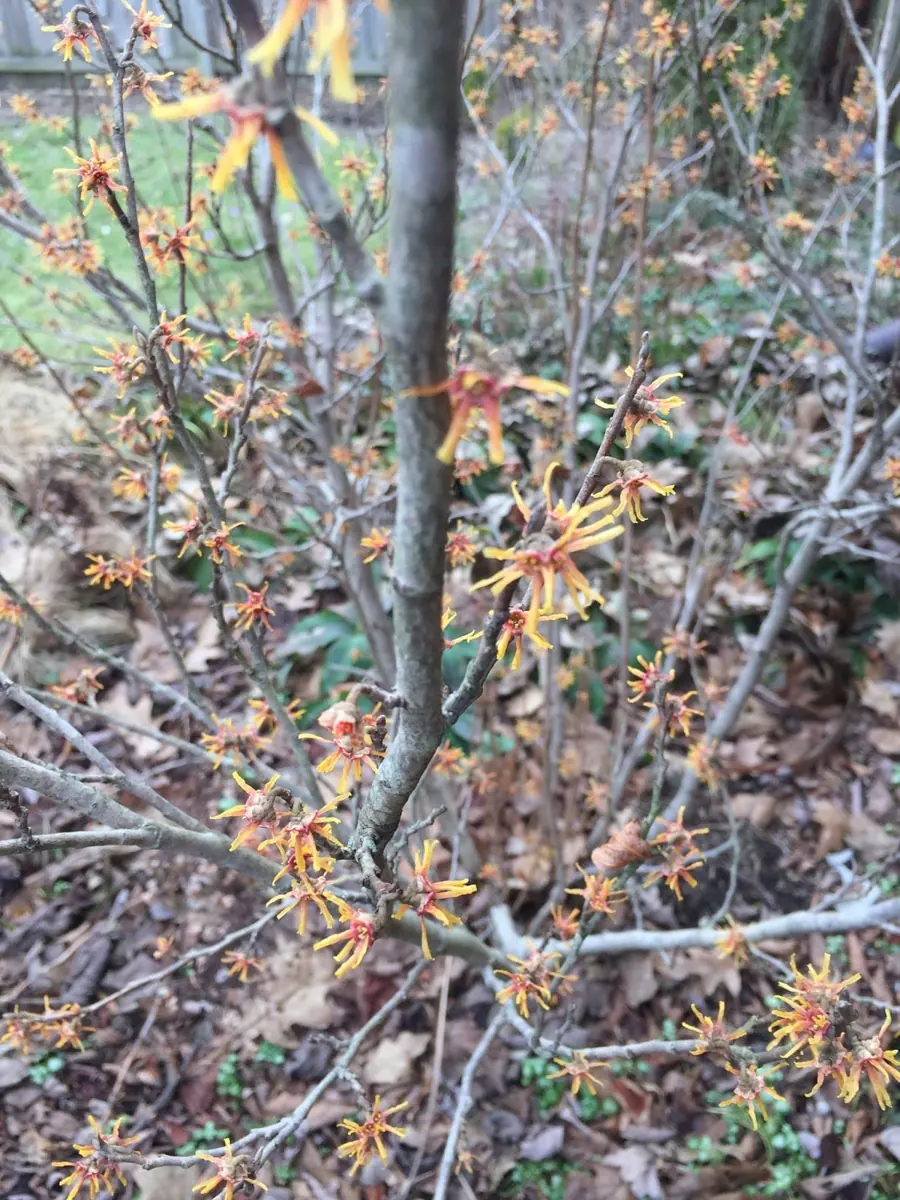
Zones: 3–8 (in ground) · Light: Full sun to part shade · Height: 6–16 ft. · Bloom: Midwinter–early spring · Pets: Check: no pet-safe claim
Tiny ribbonlike flowers on bare twigs reward a closer look, rather than behaving like a big summer-flowering shrub. Vernal witch hazel is native to the Ozark region of the United States; it is not the same seasonal choice as common witch hazel, which generally flowers in fall. The shrub can eventually become broad and substantial, so do not put a small nursery plant in a narrow gap simply because its first flowers look delicate. Its winter flowers and later foliage make it a long-term border plant.
Winter note: Flowers form on older growth. If shaping is necessary, plan around flowering rather than cutting the whole shrub back before its winter display.
3. Early-Winter Camellias (Camellia Winter Group)
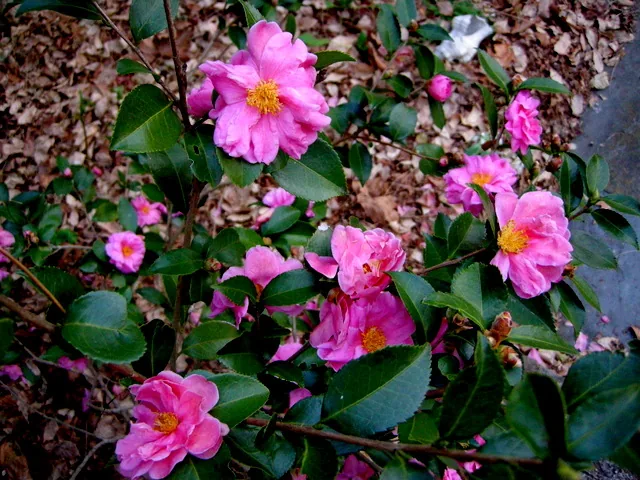
Zones: 7–9; selected plants in sheltered zone 6 (in ground) · Light: Part shade · Height: 2–12 ft., depending on cultivar · Bloom: Fall–early winter, climate dependent · Pets: Check: hybrid-specific pet safety not assessed
The pink-flowered plant in this photo is ‘Winter’s Joy’, one of the cold-hardy Ackerman hybrids. Despite the series name, these are principally fall-flowering camellias: a mild season can carry flowers into early winter, but they are not a dependable January–February choice everywhere. Their glossy leaves provide structure when flowers are finished. Choose the cultivar for its local bloom record and eventual size, not just the word “winter” on its label. This is the mild-climate or shoulder-season option in the list.
Container note: The zones here are for plants in the ground, not exposed pots. Check cultivar details and provide acidic, well-drained soil; label the selection with a durable plant marker.
4. Winter Jasmine (Jasminum nudiflorum)
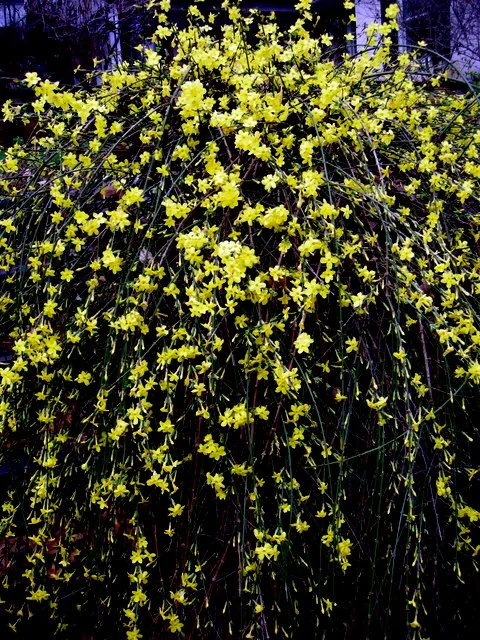
Zones: 6–9 (in ground) · Light: Full sun to part shade · Height: Long stems to 10–15 ft. when supported · Bloom: Winter–early spring · Pets: NC State lists as non-toxic to cats and dogs
Small yellow flowers spread along arching green stems, making winter jasmine useful beside a wall or on a bank where it can spill naturally. It is a sprawling shrub, not a self-clinging climber, and its flowers are not the perfume-heavy blooms people associate with summer jasmine. Supported stems and an unsupported mound will make very different shapes. Let that growth habit guide its position instead of trying to squeeze a vigorous plant into a narrow, formal clipping line.
Care tip: Stems can root where they touch soil. Keep growth within the intended area, check local planting guidance, and use a regionally appropriate alternative if this plant is problematic locally.
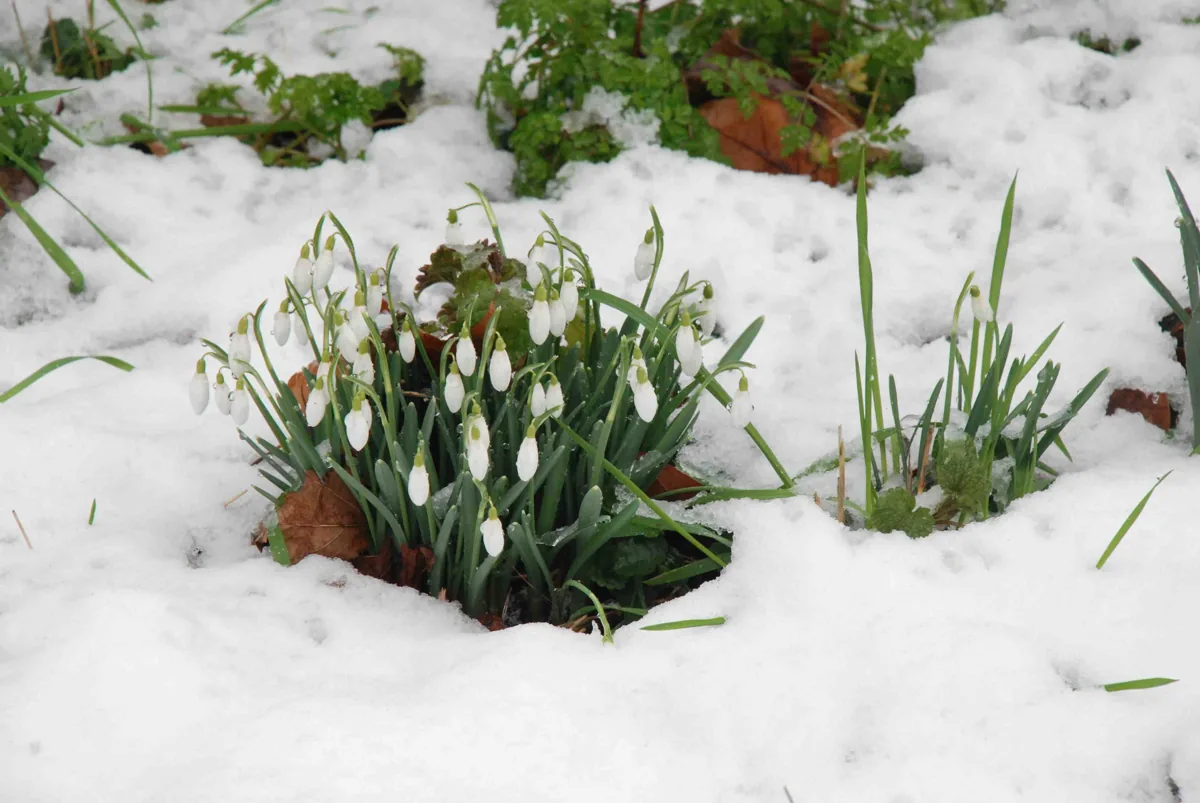
5. Snowdrop (Galanthus nivalis)
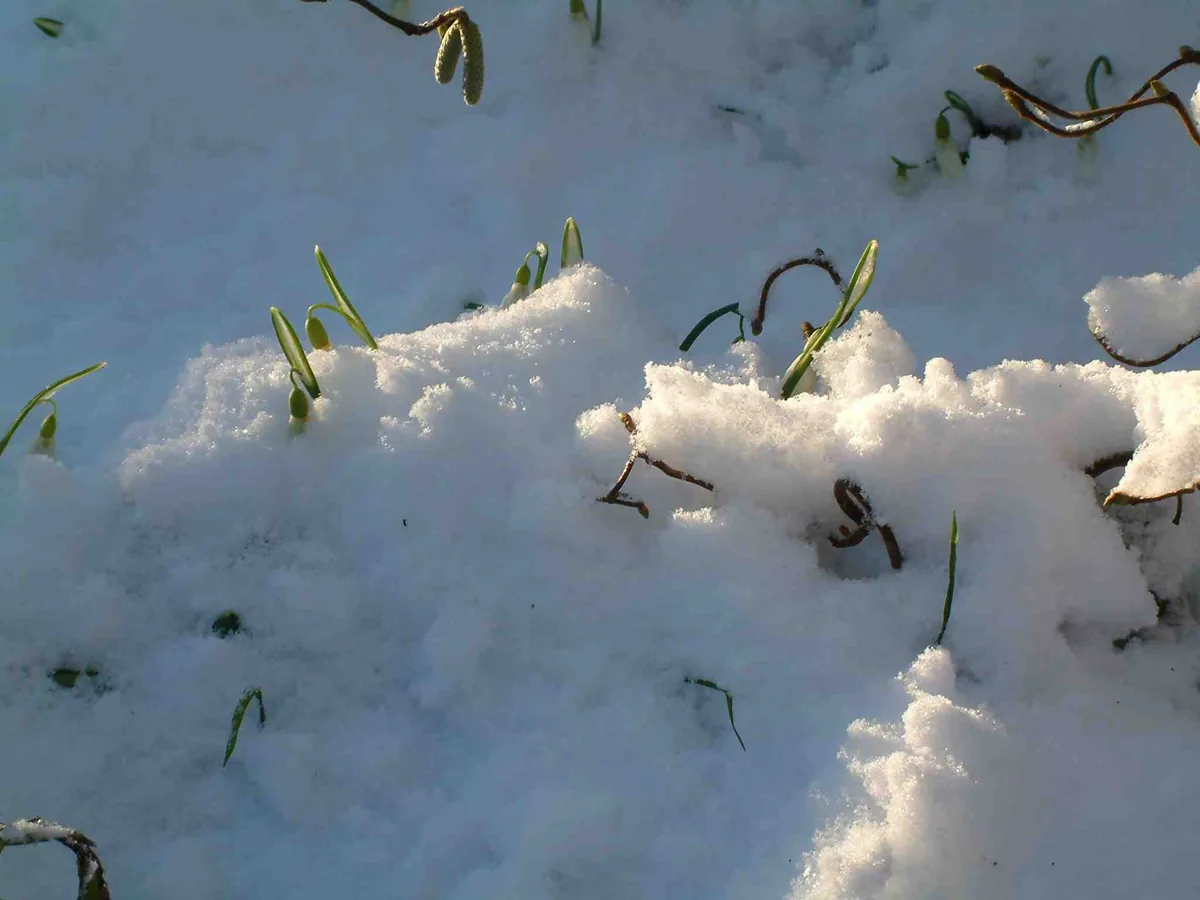
Zones: 3–9 (in ground) · Light: Sun to part shade · Height: 4–10 in. · Bloom: Late winter–early spring · Pets: Toxic if eaten, especially bulbs
White hanging flowers sit just above the ground, so a small clump belongs where you can notice it rather than behind a bulky evergreen. The photograph shows ordinary Galanthus nivalis emerging through snow, not a promise that every buried bulb will bloom during a deep freeze. Under deciduous trees, the plants can use brighter light before the canopy fills. Their modest height makes them a useful layer in front of larger winter shrubs without competing for the same view.
Plant with: Use a suitable deciduous-shrub edge and let the foliage mature after flowering. Keep bulbs away from pets and children, and follow supplier planting-depth guidance rather than guessing from the flower height.
6. Sweet Box (Sarcococca confusa)
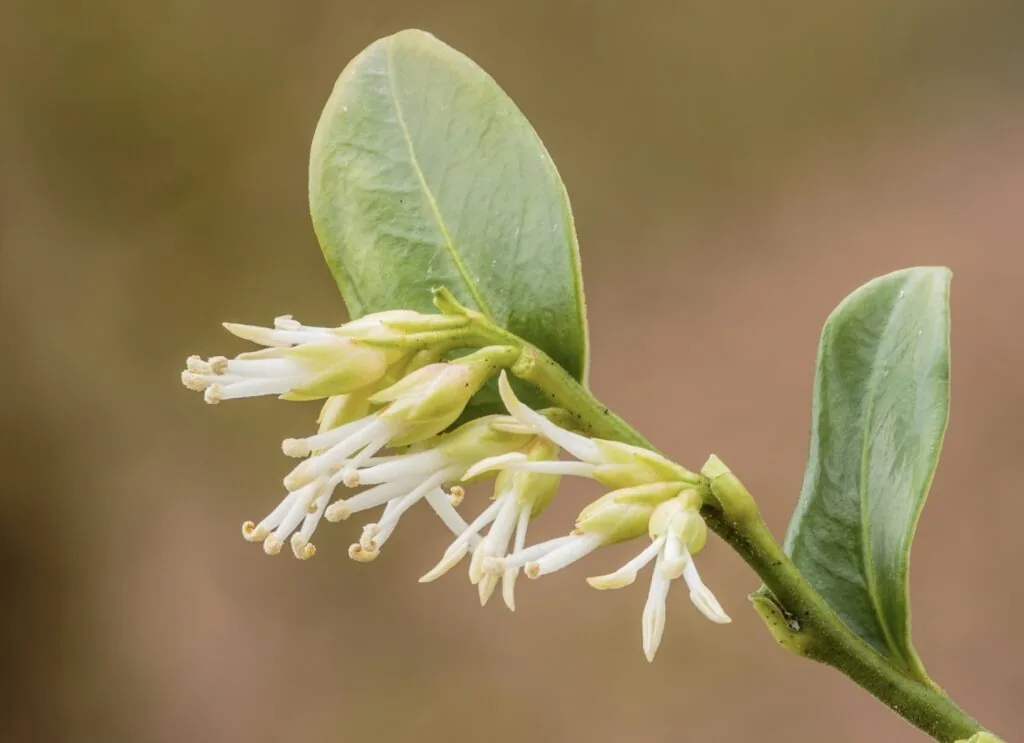
Zones: 7–9 (in ground) · Light: Part to full shade · Height: 3–5 ft. · Bloom: Winter flowers; evergreen foliage · Pets: Check: no pet-safe claim
The small creamy flowers are easy to overlook in a photograph; the attraction is their fragrance near a sheltered path. Sweet box can fill a shaded space with glossy evergreen growth, making it a quieter choice than a bright-flowered specimen shrub. It is useful where you pass often enough to enjoy scent on a mild day. Choose a site with good drainage and room for a mature plant rather than treating it as a tiny permanent edging plant.
Winter note: This is a milder-winter choice. A nearby indoor/outdoor thermometer can help you learn the site’s temperature pattern, but cannot make an unsuitable climate safe.
7. Wintersweet (Chimonanthus praecox)
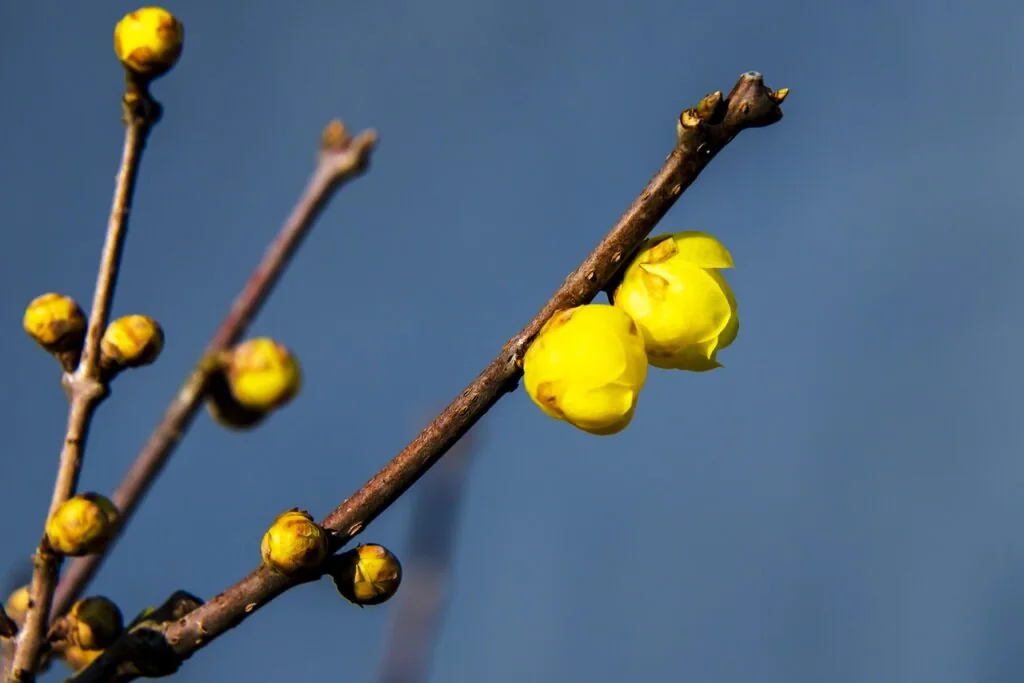
Zones: 7–9 (in ground) · Light: Full sun to dappled light · Height: 10–15 ft. · Bloom: Winter–early spring · Pets: Poisonous seeds; prevent pet access
Waxy yellow cups on bare stems give wintersweet a distinctive, almost translucent look. Its fragrant flowers are a good reason to put the shrub within sight or scent range of a winter route, but its mature size calls for a proper border position. Young plants may take time to flower, and exposed cold can damage a display even when the shrub itself survives. This is a specimen to plan for patiently, not an instant replacement for a small holiday pot.
Budget note: Check the mature footprint before buying and do not expect immediate flowering from a small plant. Keep the seed-bearing fruits away from pets and children.
8. Winter Aconite (Eranthis hyemalis)
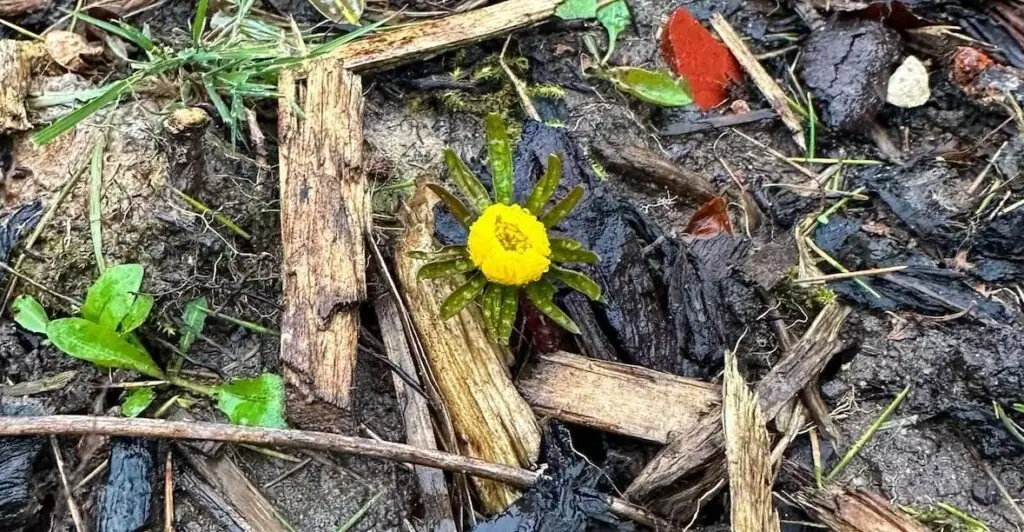
Zones: 3–7 (in ground) · Light: Sun to part shade · Height: 3–6 in. · Bloom: Late winter–early spring · Pets: Poisonous if eaten; keep pets away
The bright yellow flower sits in a green ruff close to the soil, making a tiny plant look surprisingly cheerful against leaf litter. Winter aconite works as a low seasonal layer in suitable deciduous shade, not as a permanent flowering carpet. Its foliage disappears later, so avoid putting it where bare summer soil will tempt you to dig into the dormant tubers. In warmer gardens it may flower in winter; farther north the same display can belong to the first thaw.
Care tip: Mark the dormant planting and avoid working frozen or saturated soil. A soil thermometer measures soil conditions, not whether the plant is safe to eat.
Compare the Winter Flowers at a Glance
| Plant | Zones, in ground | Light | Height | Pet caution |
|---|---|---|---|---|
| Christmas Rose | 3–8 | Part to full shade | 9–12 in. | Toxic if eaten; keep pets away |
| Vernal Witch Hazel | 3–8 | Full sun to part shade | 6–16 ft. | Check: no pet-safe claim |
| Early-Winter Camellias | 7–9; selected plants in sheltered zone 6 | Part shade | 2–12 ft., depending on cultivar | Check: hybrid-specific pet safety not assessed |
| Winter Jasmine | 6–9 | Full sun to part shade | Long stems to 10–15 ft. when supported | NC State lists as non-toxic to cats and dogs |
| Snowdrop | 3–9 | Sun to part shade | 4–10 in. | Toxic if eaten, especially bulbs |
| Sweet Box | 7–9 | Part to full shade | 3–5 ft. | Check: no pet-safe claim |
| Wintersweet | 7–9 | Full sun to dappled light | 10–15 ft. | Poisonous seeds; prevent pet access |
| Winter Aconite | 3–7 | Sun to part shade | 3–6 in. | Poisonous if eaten; keep pets away |
Supplies for a Winter-Flowering Border
A trowel and plant labels help with planting and keeping track of dormant bulbs; soil and air thermometers help you understand conditions rather than relying on a calendar date. Supplies are suggestions, not products identified in the photos.

- Thickened Aluminum Alloy Material: Our gardening shovel is made of high-quality aluminum alloy material, allowing the garden trowel to dig deeply into the soil and cut through hard turf easily. The 0.08 inch thickness makes our spade shovel more sturdy and long lasting, ensures durability and stability during use, and makes the trowel not easy to break and long lasting
- Ergonomic Design: The trowel garden tool is designed with an ergonomic rubber-grip handle that reduces hand and wrist fatigue while digging. The high-quality non-slip TPR material of the handle makes the trowel garden tool easy to hold and comfortable to use. Saving your labor, time and energy
- Easy to Store: The small hand trowel is lightweight and compact, makes it easy to store on your garden bag and carry out for gardening. The hanging hole in the handle is designed to accommodate a rope. You can hang the hand shovel for gardening on everywhere you want when you need to do gardening works in your own garden or other places
- Easy to clean: Our hand trowel has a smooth surface, with a polished aluminum knife head that is rustproof and long lasting. The small garden shovel is also easy to clean after use, ensuring its smooth appearance and remaining rust resistant for an extended period of time
- Multi-function: This small shovel is suitable for a wide range of horticultural tasks, including digging, weeding, loosening soil, aerating, transplanting, etc. The great gardening tools for women, small shovels for gardening, digging shovel, small plant tools

- Easy-to-read green, yellow, and red tick marks for easy monitoring
- 5-inch stainless steel stem penetrates soil and worm compost to the perfect depth.
- Worms are happiest between 55F and 90F. This thermometer lets you know when to cool them off or to move them to a warmer place

- [Color LCD Screen Weather Station] Newentor temperature & humidity monitor with a large color LCD display shows essential home weather information at a glance: indoor/outdoor temperature & humidity, daily high/low records, customizable alerts, time/date, alarm clock & snooze, weather forecast, moon phase, and barometric pressure.
- [Two Power Modes & Adjustable Backlight] To enjoy a 24/7 continuous always-on vibrant display, simply connect this home weather station to a wall outlet using the included DC power adapter. When operating on battery power only (batteries not included), the digital thermometer automatically enters an eco-energy-saving mode, where the screen lights up for a quick 15-second glance before dimming. It is the perfect bedside or living room clock designed to fit your power preference.
- [3-channel Home Weather Stations Wireless Indoor Outdoor] Wireless temperature forecast station supports up to 3 remote sensors to monitor inside outside temperature & humidity of multiple locations. Package contains one remote sensor.
- [Wireless Forecast Station] The weather forecast station calculates the weather forecast for the next 12-24 hours, 7 to 10 days calibration ensures an accurate personal forecast for your location.
- [Wireless Weather Station with Atomic Time&Date] Atomic alarm clock weather station can be used not only as a wireless indoor outdoor thermometer but also as an atomic clock with dual alarms.


- 【Value for Money】: Great value plant labels pack included 500 Pcs white plastic plant tags 4inch*0.62inch(10cm*1.6cm) with a bonus permanent marking pen, enough plant markers can meet your different needs and plant makers name tags will make plant header look clearer.
- 【Durable Waterproof Materials】: These plant markers plant labels for seedlings are made of high standard quality PVC plastic. Water resistance, and will not rust like metal tags or rot like wooden labels, not easy to break and brittle.
- 【Easy to Use】: These plastic plant labels markers, pointed on end and square on the other, The shape of the garden labels is very easy to insert into the soil, easily cleaned with household cleaner for reuse. Plant tags' smooth edge without injuring plants and hands.
- 【Easy to Write】: Garden tags labels both side are blank, you can write on any side, matte surface easy to write on the plant labels to record the true condition of the plants or flowers. With the bonus permanent marking pen, the ink on the plant label will not easy to be washed away by rain, or fade in the sunlight.
- 【Wide Application】: Our plastic seed tags can be used to write cultivar name, plant names.They really help you remind what is where, perfect for vegetable seedlings, greenhouses, gardening project, pot experiments, etc.
Plan for a Sequence, Not One Permanent Show
Check the local bloom calendar
Hardiness describes survival, not a guaranteed flowering month. Compare local public gardens or Extension guidance before buying for a specific December or February display. NC State’s Christmas-rose profile explicitly notes the difference between Christmas flowering in warmer regions and early-spring flowering in cooler ones. A mix of early and late candidates is more useful than expecting every plant to open at once.
Give woody plants their grown-up space
A tiny witch hazel or wintersweet will not stay the size of its nursery pot. Allow access around the future shrub and keep small bulbs at a visible edge rather than burying them behind it. The NC State Winter Group camellia guide is also worth reading before buying: it distinguishes cold hardiness from the principally fall-flowering habit of those hybrids.
Keep winter planting realistic
Plan now, but plant when the ground is workable and conditions suit the species. Avoid digging in frozen or waterlogged soil, and keep mulch away from crowns and woody stems. For plant identity, size, and hazard checks, use the NC State Extension Plant Toolbox rather than assuming that attractive flowers are safe for a pet to sample.
Pet note: Hellebores, snowdrops, and winter aconite should not be eaten. Wintersweet seeds are also poisonous. “No pet-safe claim” means the plant is not being certified safe here; ask a veterinarian about a specific exposure.
Start with one plant that genuinely suits your winter and your available space. A well-placed clump or shrub is enough to give the quiet season a little color.
For more cold-season structure, see these evergreen shrubs for small gardens and winter garden ideas, and read how to prune roses in late winter while the border is quiet.
Featured photo: 📷 Geoff Stebbings at The Biking Gardener.