
This post contains affiliate links. As an Amazon Associate I earn from qualifying purchases.
How to prune roses in late winter starts with identifying the rose, not choosing a cutting height. For established repeat-flowering bush and shrub roses, wait for the locally appropriate late-winter or early-spring window, remove damaged and crowded growth, then shorten the remaining stems for that rose group. Once-flowering roses and ramblers need a different approach.
The aim is a sound framework with useful flowering wood—not a row of identical stumps. These steps help you make that decision before a cut removes next season’s flowers.
Quick answer:
When: Late winter to early spring for suitable repeat-flowering roses; local weather and rose type decide.
Cut: No more than about ¼ in. above a sound bud, angled gently away.
Amount: Repeat-flowering shrubs often need only light reduction, up to about one-third of strong new growth.
Stop first: Identify once-flowering roses, climbers, and ramblers before applying bush-rose cuts.
Identify the Rose Before You Prune
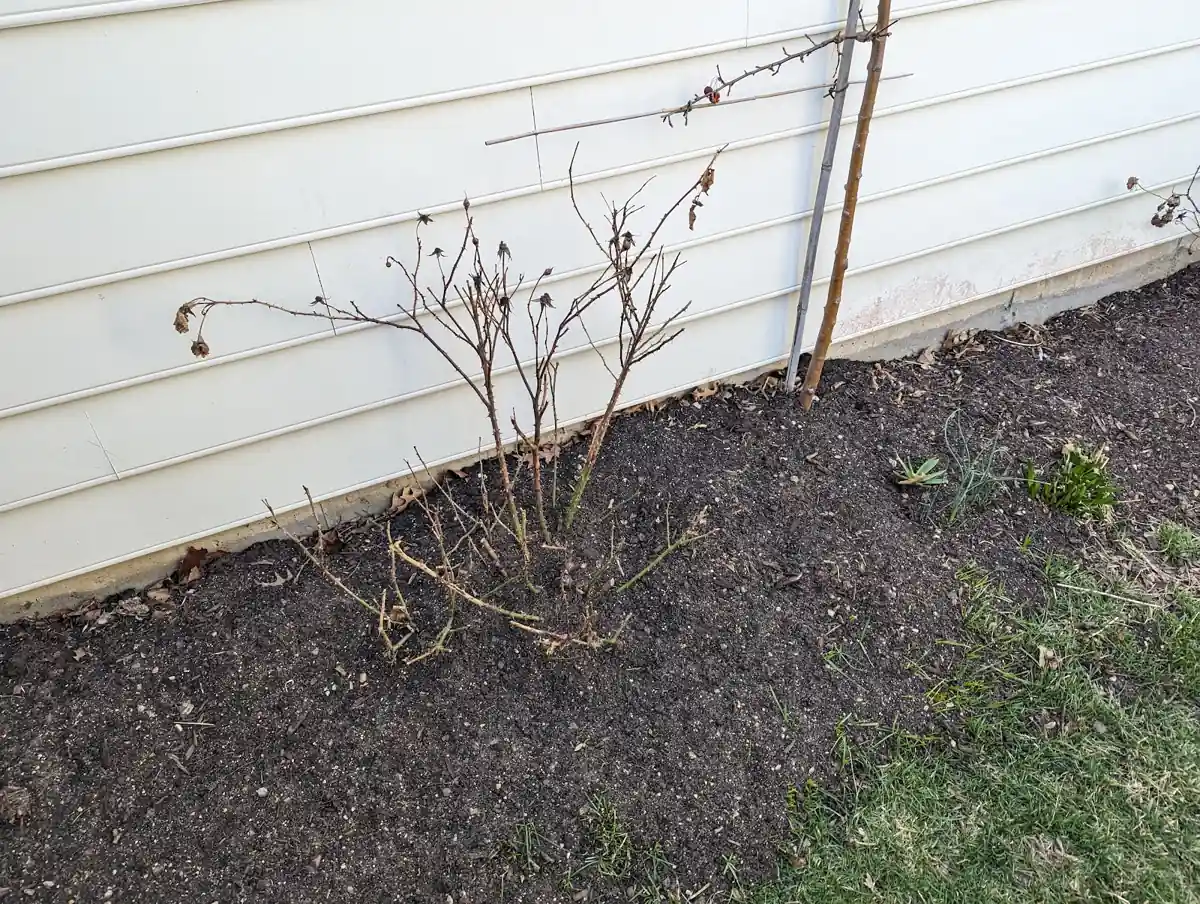
Jake Parrillo’s photograph shows his floribunda before pruning. It is a useful example of checking the whole plant, not a height template for every rose in your garden. Find the label or purchase record if possible, and note whether the plant flowers once or repeatedly.
| Rose group | Main decision | Late-winter approach |
|---|---|---|
| Repeat-flowering shrub | Keep a balanced older-and-younger framework | Often light reduction; up to one-third of strong new growth |
| Hybrid tea | Flowers on new growth; stronger renewal cuts | RHS guidance uses about 4–6 buds on the strongest remaining shoots |
| Floribunda | Leave more buds than on hybrid teas | RHS guidance leaves strong shoots about 10–12 in. above soil |
| Once-flowering shrub or old rose | Preserve wood carrying the coming bloom | Main structural pruning generally follows flowering |
| Climber or rambler | Identify flowering habit and train retained canes | Use group-specific instructions, not the bush-rose cutting height |
Those are group distinctions, not an instruction to cut an unknown rose hard. RHS shrub-rose guidance separates once-flowering shrubs from repeat-flowering ones. New plants, unusual cultivars, and severely winter-damaged roses may need advice specific to their condition.
What You’ll Need
- Sharp bypass pruners for clean cuts on suitable small stems; use a tool that fits your hand.
- Thorn-resistant gauntlet gloves for hand and forearm protection; resistance is not a guarantee against every thorn.
- Bypass loppers for branches too thick for comfortable hand-pruner cuts.
- A compact folding pruning saw for an older cane that is beyond the safe capacity of the other tools.
Rose-Pruning Tools to Match the Cut
These are optional supporting tools, not equipment identified in the creators’ photographs. Inspect and clean tools first, use their stated cutting capacities, and keep your free hand out of the cutting path. You do not need to buy every tool for a small, young plant.

- Clean, Precision Bypass Cutting up to 1” Diameter – Sharp, forged steel bypass blade delivers smooth, scissor-like cuts through live branches, stems, and green wood up to 1 inch thick, helping reduce plant damage and promote faster, healthier regrowth.
- Heavy-Duty Forged Steel Construction – Built from high-quality forged steel for superior strength and long-lasting durability, making these professional pruning shears ideal for daily use in gardening, landscaping, orchards, and vineyard maintenance.
- Ergonomic Non-Slip Comfort Handles – Contoured red handles are designed to reduce hand fatigue and provide a secure, comfortable grip, giving you better control and cutting power during extended trimming, pruning, and shaping tasks.
- Sap Groove & Smooth Action Design – Integrated sap groove helps prevent sticking and buildup during cutting, while the smooth spring-loaded action ensures fast, effortless operation when trimming flowers, shrubs, and small tree branches.
- Built-In Safety Lock for Secure Storage – Easy-to-use locking mechanism keeps blades safely closed when not in use, making these pruning shears safe to carry in tool belts, garden bags, and toolboxes for professional or home use.


- WIDE RANGE APPLICATION: This thorn proof gardening gloves is perfect for pruning roses, blackberries, cactus, holly, berries and other prickly plants. Perfect for all types of gardening works, landscaping, weeding, mowing, branch cleaning, picking, pruning and outdoor activities.
- STRENGTH AND DURABILITY: Made from carefully selected high-quality 100% Cowhide leather, They will be more soft to touch & more breathable, NON-Toxic than Pigskin&Goatskin leather.
- FULL PROTECTION LEATHER GARDEN GLOVES: This palm part is made of full grain cowhide for wear resisting, suit for doing various chores in your yard. Elbow-length gauntlet will offer protection all the way until your elbow. Extended cowhide leather cuff protects forearms from cuts and scratches, long pruning gloves allowing you free from your roses painlessly and has good anti-bite effect.Our rose pruning gloves are thorn and scratch resistant.
- COMFORTABLE AND FLEXIBLE: The gloves are meticulously stitched. Gunn cut and Keystone thumb design provide comfort and flexibility. Ergonomically designed thumbs make it easier to grip garden tools. Pliable and flexible enough in leather material to maintain dexterity for fine motor tasks such as planting seeds.
- GARDENING GIFT FOR GARDENERS: Heavy duty yard work gloves with unique design, which is definitely a gardener's favorite leather garden gloves. A necessary tool gift for gardeners, family, friends, colleagues and neighbors.

- IDEAL BRANCH TRIMMER: 28" Steel blade garden bypass lopper that glides through up to 1.5" thick branches for easy cuts; Works well for trimming tree branches to maintain your yard and garden, and to encourage overall plant health and appearance
- MAXIMUM POWER AND PRECISION: Low-friction blade coating makes smooth cuts, reduces gumming, and enhances rust resistance; Non-slip grip handle allows for more control of clippers
- LONG-LASTING AND RELIABLE: Steel blades stay sharp through heavy use and provide excellent durability for lasting value; Fiskars pruning shears and tools are built to last and backed by a lifetime warranty
- QUALITY GARDEN TOOLS: Designed to help you cultivate a better garden, Fiskars garden and yard tools are equipped with smart technologies and award-winning, ergonomic features that make it easier and more enjoyable to transform your outdoor space
- INCLUDES: (1) Fiskars Manual Bypass Lopper measuring 28” long; Makes clean cuts on branches up to 1-1/2" in diameter

- VERSATILE CUTTING TOOL – Professional pruning saw for tree trimming, branch cutting, and wood cutting. This folding hand saw works as a reliable tree saw, limb saw, garden saw, and curved pruning saw, making it an ideal tree trimming saw for camping, bushcraft, woodworking, and outdoor garden work.
- TRIPLE-CUT SK5 STEEL BLADE – Premium SK5 high-carbon steel blade with 7 TPI razor teeth delivers fast, aggressive cutting through branches, limbs, and dry or green wood.
- HEAVY DUTY CONSTRUCTION – Rugged folding design built for reliable performance during tree pruning, garden maintenance, camping, and bushcraft use.
- ERGONOMIC NON-SLIP HANDLE – Comfortable grip reduces hand fatigue and provides secure control while cutting branches, limbs, and firewood.
- COMPACT FOLDING DESIGN – Lightweight folding saw fits easily in a backpack or tool bag for camping, hiking, survival kits, and garden tools.
Prune an Established Repeat-Flowering Rose: Step by Step
Step 1: Choose the Correct Local Window
Look for the seasonal transition toward renewed growth rather than treating January as a deadline. The RHS uses February to March as a UK example and advises later work in colder areas; that is not a nationwide U.S. calendar. In a cold region, follow local extension timing and avoid rushing major cuts during a severe cold spell.
In a mild climate, growth may resume earlier. The plant, its group, and your weather need to agree before you begin.
Step 2: Stand Back and Choose What to Keep
Inspect the whole bush from more than one side. Locate strong, well-spaced canes and healthy buds before removing anything alive. Distinguish an awkward but useful main cane from a thin shoot that crosses through the center.
Do not start by shortening every stem: that hides the structure and can leave you doing unnecessary work twice. If a climber’s long framework is the main feature, stop and use climbing-rose guidance instead of continuing with these bush-rose steps.
Step 3: Remove Dead, Damaged, and Rubbing Wood First
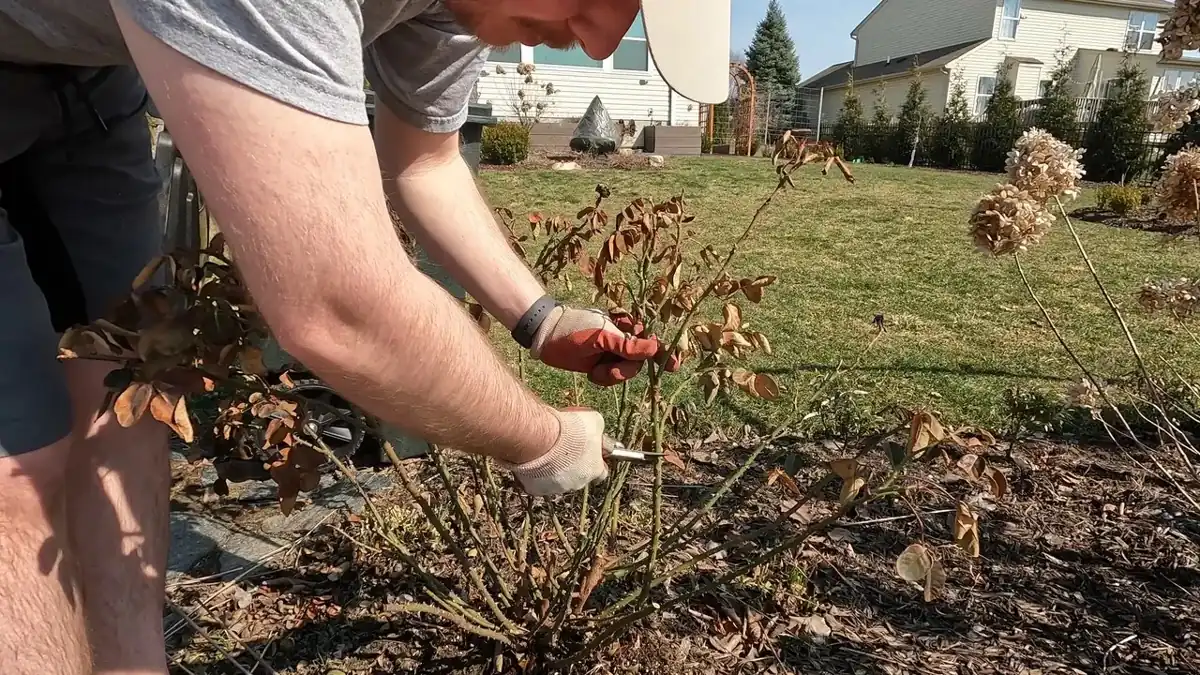
Take out dead or clearly damaged stems, then address diseased-looking, crossing, and very weak growth. On a damaged cane, cut back toward sound wood rather than leaving a long dead stub. Use the appropriate tool instead of twisting a thick cane until it breaks.
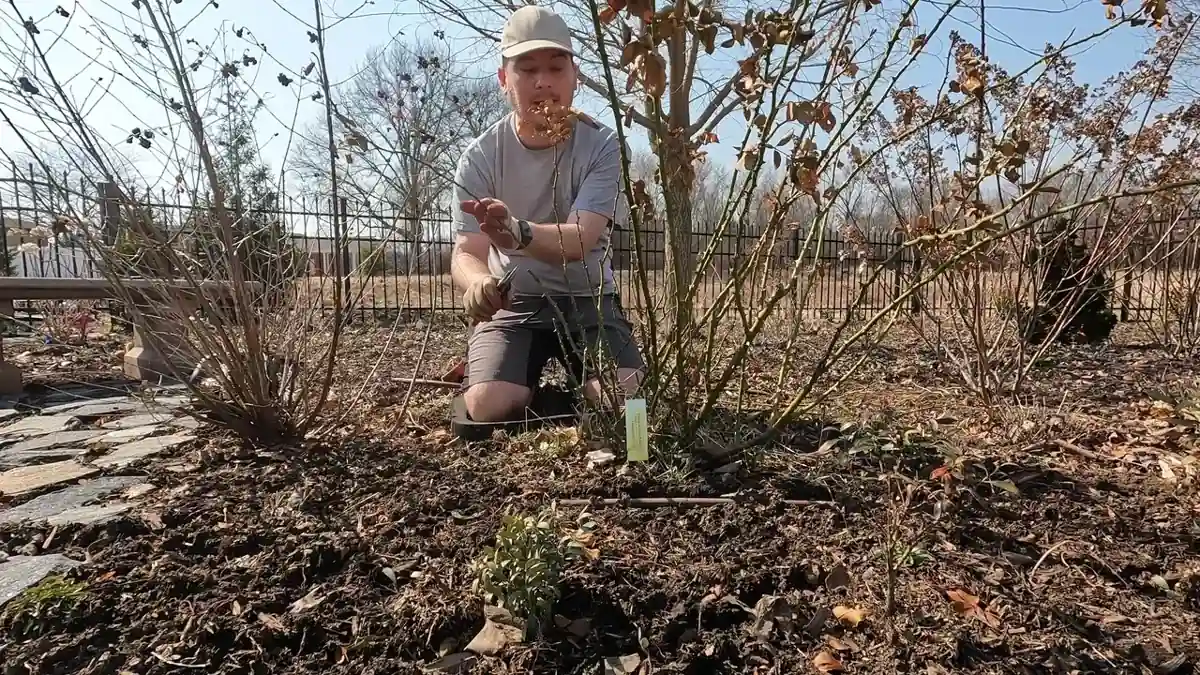
Matthew Ingram’s pruning photograph illustrates working through an established shrub; it does not establish a universal cutting height or an exact bud-cut position.
Good to know: If canes show unexplained lesions or repeated dieback, seek a local diagnosis. More pruning or an unneeded chemical treatment is not a substitute for identifying the problem.
Step 4: Make a Clean Cut Near a Healthy Bud
For a shortening cut, choose a sound bud and cut no more than about one-quarter inch above it, with a slight angle away so water does not sit against the bud. An outward-facing bud often helps an upright bush develop an open shape, but the desired direction depends on the rose’s habit. Keep the blade positioned for a clean cut and avoid crushing the stem.
A long stub above a bud is not extra protection; it simply leaves more wood to die back.
Step 5: Shorten According to the Rose Group
Now decide how much healthy growth actually needs removing. For repeat-flowering shrubs, retain a balanced framework and reduce strong new growth by up to about one-third where appropriate; follow cultivar-specific advice for English roses. Hybrid teas and floribundas are pruned differently: the RHS uses roughly four to six buds on strong hybrid-tea shoots, while strong floribunda shoots are commonly left about ten to twelve inches above soil.
Those are not targets for once-flowering shrubs or every winter-damaged plant.
Step 6: Renew a Crowded Mature Bush Selectively
A mature repeat-flowering shrub may benefit from removing some older, unproductive main stems near the base to encourage replacement growth. Work selectively and preserve a useful framework rather than clearing the center indiscriminately. If the rose is young or has only a few healthy canes, do not remove them merely to imitate a photograph of a larger plant.
The size and condition in front of you matter more than a fixed number of stems to keep.
Step 7: Check the Result From More Than One Side
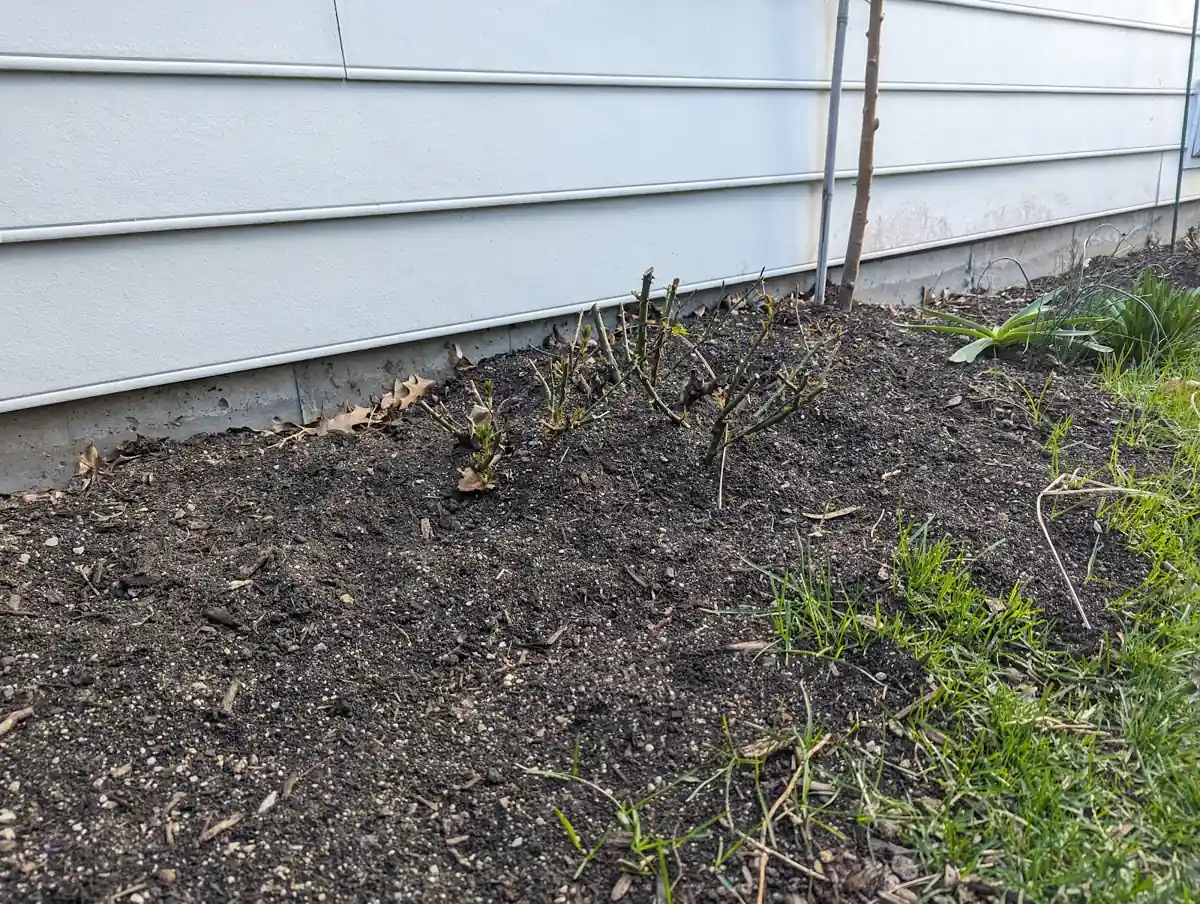
Step back before making any final tidying cuts. Look for a balanced framework, fewer rubbing stems, and clean cuts without a tangle of small dead pieces. Jake’s after-pruning floribunda is a result photograph, not proof that every shrub should end at that height.
Remove sharp cuttings as you work, collect fallen debris, and put tools away safely. A cleared work area is easier to inspect and less hazardous to pets, children, and your own hands.
Step 8: Watch New Growth Before Doing More
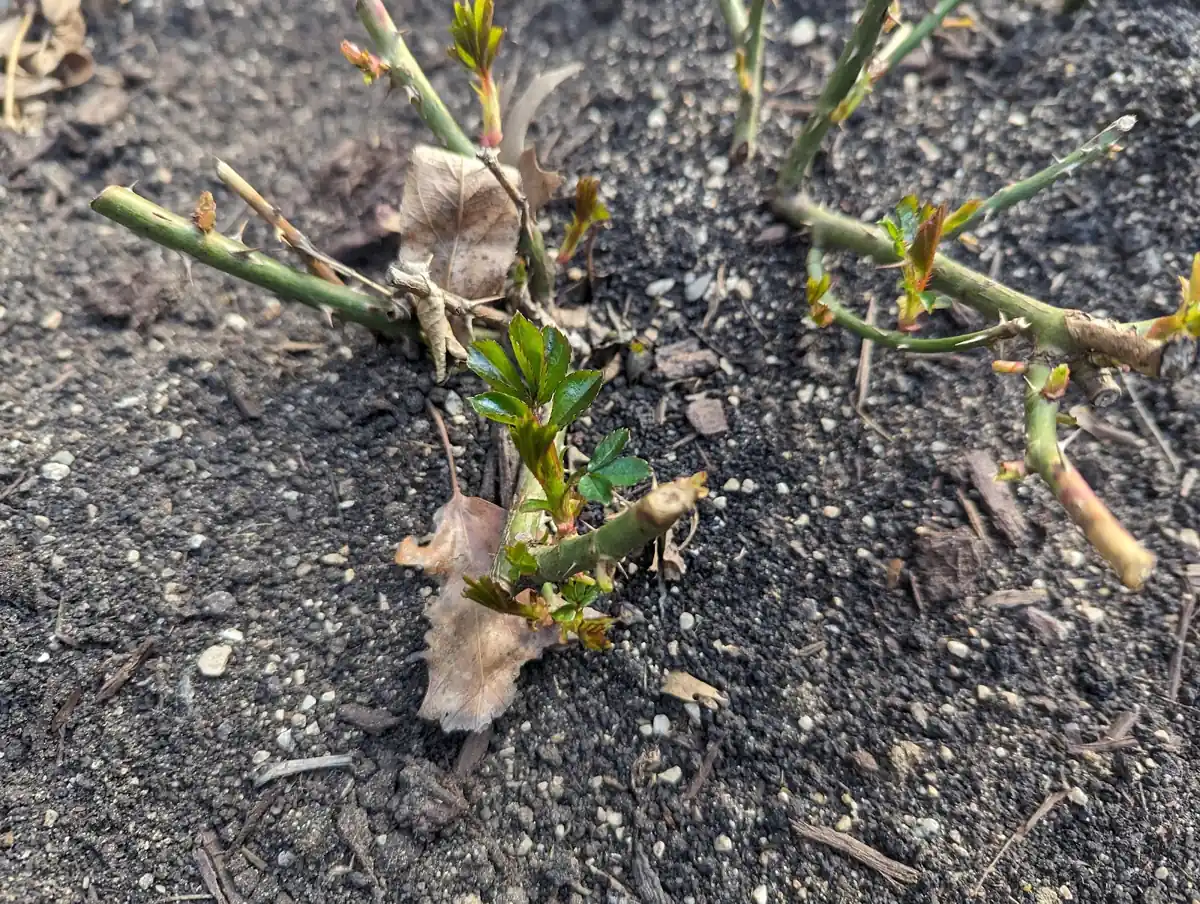
As growth resumes, inspect buds and shoots rather than immediately making another round of cuts. Jake’s close-up shows emerging growth; it is not a close-up demonstration of the one-quarter-inch cutting rule. If later cold damages tender tips, wait until the extent of the injury is clear and assess what remains alive.
Do not try to force a winter-stalled plant into action with extra fertilizer. Follow local seasonal care guidance and any product label when feeding becomes appropriate.
Mistakes to Avoid
- Every rose cut to the same height → Return to the rose-group table. Preserve a climber’s framework and a once-flowering rose’s useful older wood.
- A thick stem crushed by small cutters → Stop and switch to the right, sharp tool before making further cuts.
- A large dead stub left above a bud → Reassess the cut and remove the unnecessary stub without damaging the healthy bud.
- Continuing to shorten because the plant looks bare → Step back and stop once the appropriate framework is established; bare winter canes are not a reason to keep cutting.
For the cut technique, see RHS general rose-pruning advice. For the stronger pruning of modern bush roses, its hybrid-tea and floribunda guide explains the different treatment. Use those distinctions alongside locally appropriate timing.
FAQ
What If You Inherited a Rose With No Label?
Keep a record of its growth and flowering pattern before making irreversible structural cuts. Photograph the whole plant and ask a knowledgeable nursery or local extension service to help identify the group. Removing clearly dead or broken wood is a different decision from cutting all healthy canes low.
Waiting to learn whether it blooms once or repeatedly can preserve a useful clue.
Are New Shoots From the Base Always Suckers?
No. A new basal cane can be valuable replacement growth, while a grafted rose may also produce unwanted rootstock shoots. Identify where the shoot originates and whether the plant is grafted before treating it as a problem.
Do not rely only on leaf number or vigor. If the graft position or identity is unclear, ask the nursery before removing healthy new growth.
What If the Tool Leaves a Ragged Cut?
Stop and inspect the blade and the stem size rather than squeezing harder. Clean or sharpen the tool as appropriate, or use a lopper or pruning saw within its stated capacity. Reassess whether a cleaner cut can be made without sacrificing a sound bud or too much healthy cane.
A damaged tool is a reason to pause the job, not hurry through the rest.
Identify the rose, wait for its local window, and make each cut for a reason. Keeping the right flowering wood is more useful than making every bush look alike.
Featured photo: 📷 Matthew Ingram / The Southerners Garden.