
This post contains affiliate links. As an Amazon Associate I earn from qualifying purchases.
The most useful winter garden ideas give you something to notice after flowers and leaves have gone: an evergreen outline, colorful stems, fruit, or a frost-catching seedhead. You do not need a yard full of December blooms. These twelve real garden examples show how planting, open space, and a little habitat can make beds and borders feel considered in the quiet season. Choose one feature for your main window view, then check its light, mature size, and local hardiness before planting.
Before you pick: Plan for the winter your garden actually gets, not the climate in a photograph. Match named plants to your USDA zone and soil. Some examples show late winter or an autumn layout that carries into winter; snow, flowers, and persistent fruit are seasonal possibilities, not promises.
1. Evergreens and Bright Stems for Winter Structure
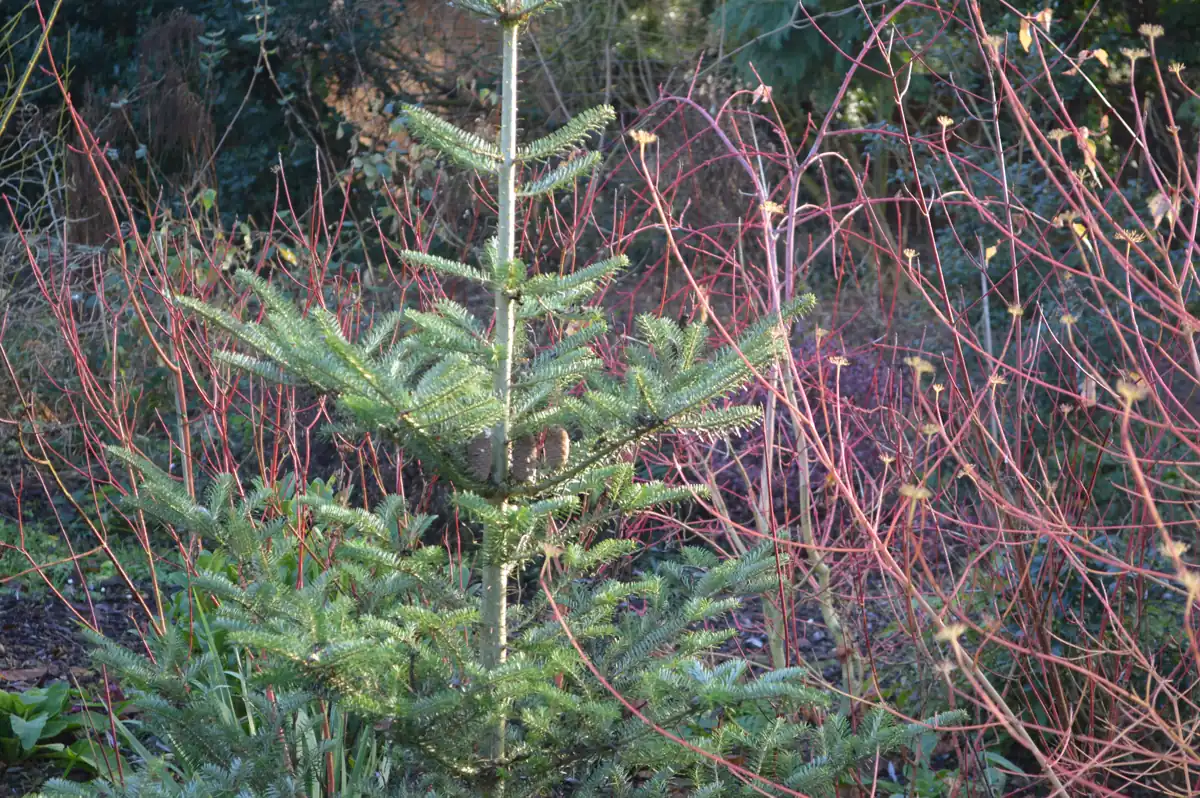
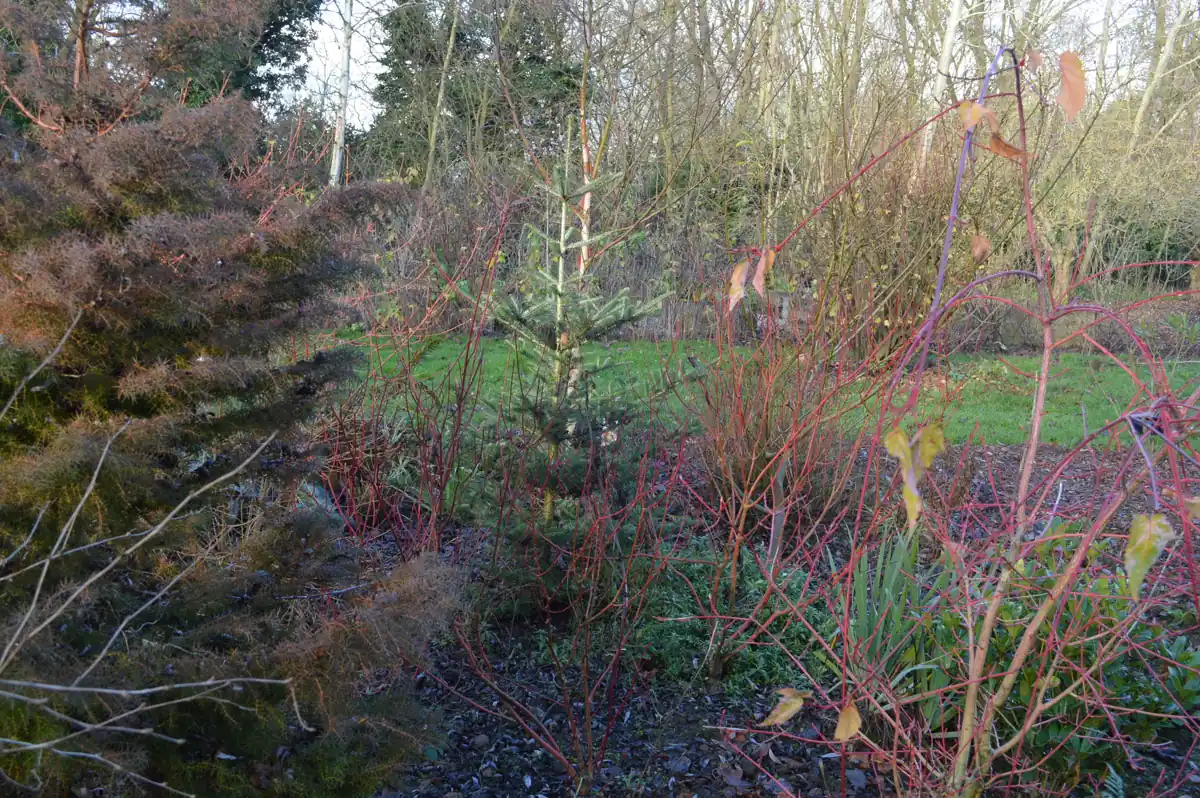
A small evergreen conifer among bright red winter stems gives this border both a solid winter shape and a flash of color. The contrast is simple: one durable green form, and deciduous stems that read clearly after leaf fall. Repeat a few suitable evergreens along a border instead of scattering unrelated specimens everywhere. You can borrow that structure for a small winter garden without copying the scale of the whole landscape.
Quick facts: Evergreen framework · Species-specific light and zones · Long-term planting
Small-space tip: Choose by mature width, not the nursery pot’s size. A shrub that naturally fits its allotted space is a better small-yard choice than a large conifer kept small by repeated hard pruning.
2. A Small-Fruited Crabapple for Color overhead
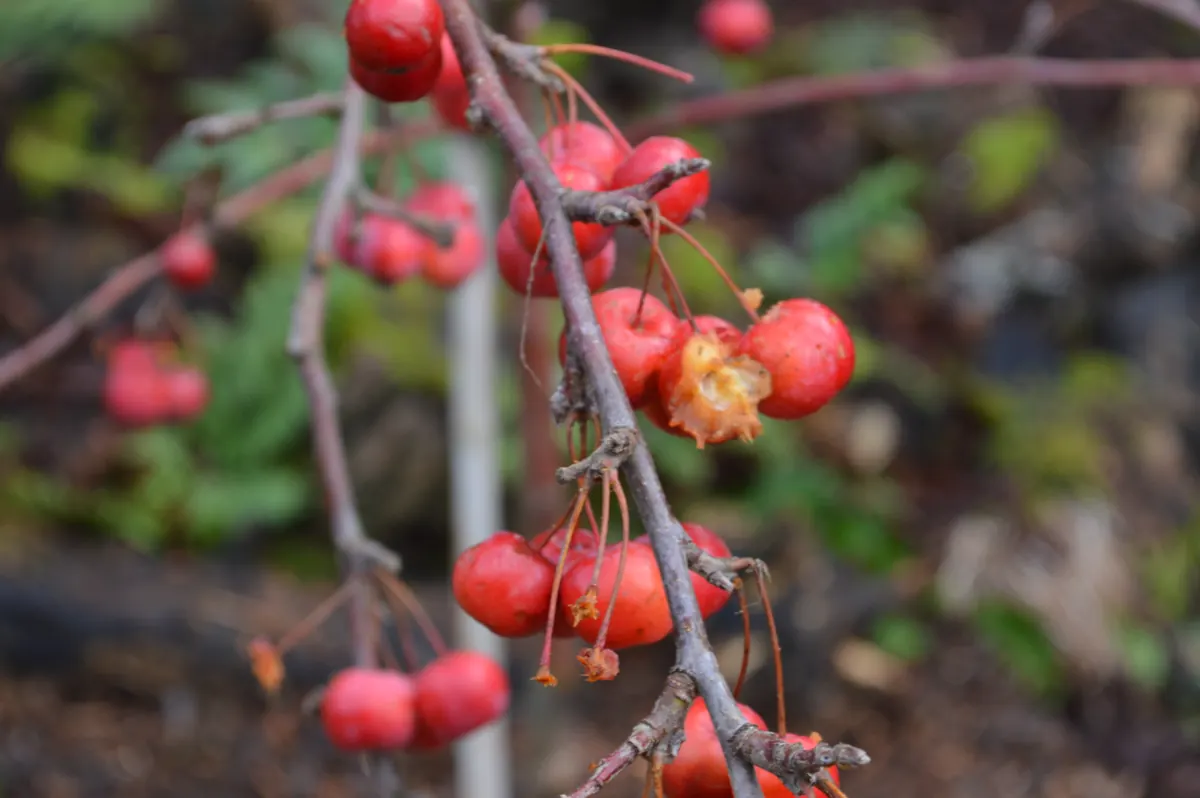
Clusters of red crabapples bring color to an otherwise fine, twiggy canopy. A tree like this adds winter interest above eye level while leaving room beneath for lower planting. Choose a cultivar known locally for suitable size, disease resistance, and persistent fruit; not every crabapple holds fruit into winter. This is a planting decision for the years ahead, not a reason to rush a tree into frozen or waterlogged ground.
Quick facts: Small ornamental tree · Usually a sunny position · Cultivar-specific hardiness
Plant swap: If a crabapple is too large, ask your extension service about a smaller, locally appropriate fruiting shrub. Check pollination needs, invasiveness, and pet access before buying any berry-bearing plant; attractive fruit is not automatically edible.
3. A Group of Colorful Dogwood Stems in One Bed
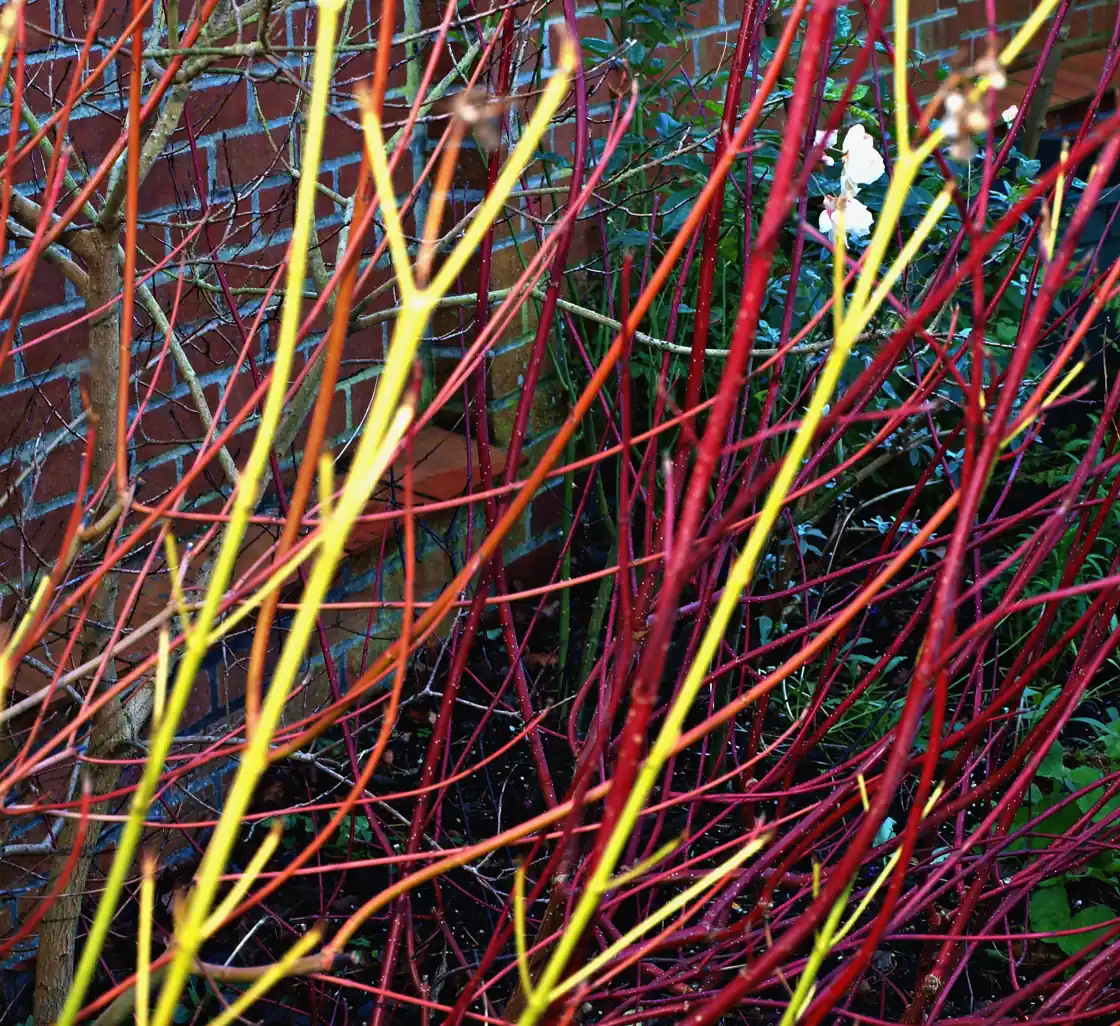
Red, orange, and yellow stems make a strong patch of color in this close view of winter dogwoods. Grouping the shrubs lets the stems read as a deliberate planting rather than a few isolated sticks. A dark evergreen background can make the color especially visible. Keep enough room around the group for its summer size, when leaves and growth will change the picture completely.
Quick facts: Deciduous stem-color shrubs · Choose species for your zone and soil · Moderate upkeep
Care tip: Young growth often supplies the best stem color, but renewal pruning depends on the dogwood and its establishment. Do not cut every shrub hard in December simply because the leaves have fallen.
Get the look: similar bypass pruners for appropriate small-stem renewal work; not the tool used in the photo.
4. Standing Seedheads That Catch the Frost
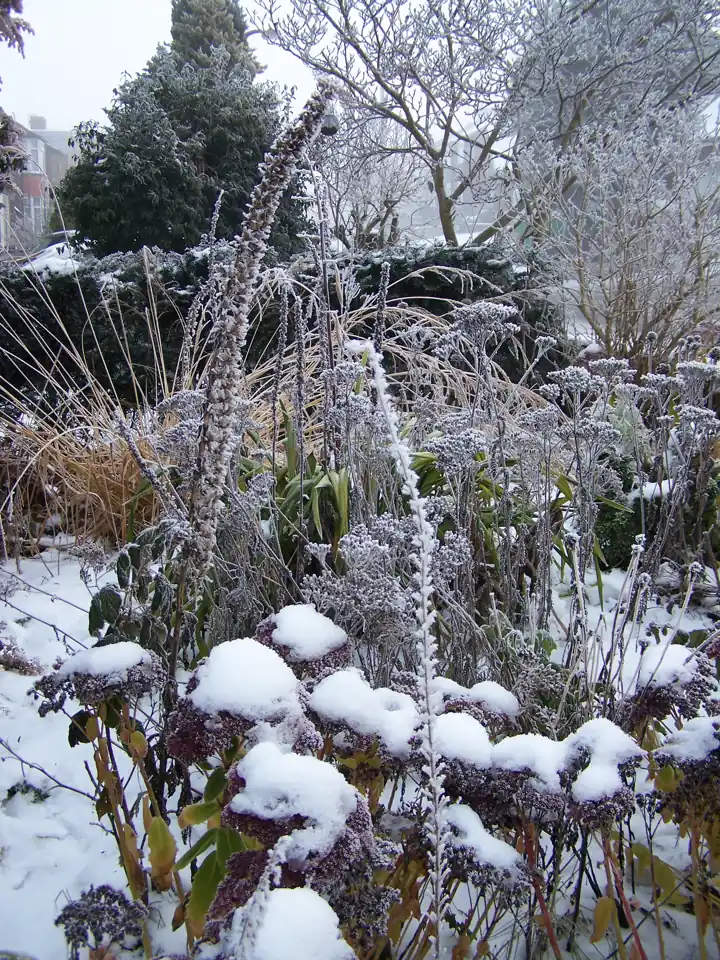
Frost and a light covering of snow pick out these standing seedheads, so the border still has height and texture after the flowers are gone. Their upright shape holds the winter picture together even without leaves. Leave healthy, well-anchored stems that are likely to stay standing in your conditions; wet snow and strong wind can flatten some plants, so treat the frosted look as a bonus, not the only reason to delay cleanup.
Quick facts: Standing seedheads · Light and zones vary · Seasonal cutback
Make it last: Leave healthy, upright stems where they are useful, then time cleanup for the particular plant and local wildlife guidance. Remove collapsed material from paths, and do not preserve diseased growth just for appearance.
5. A Few Milkweed Seedpods Left above the Bed
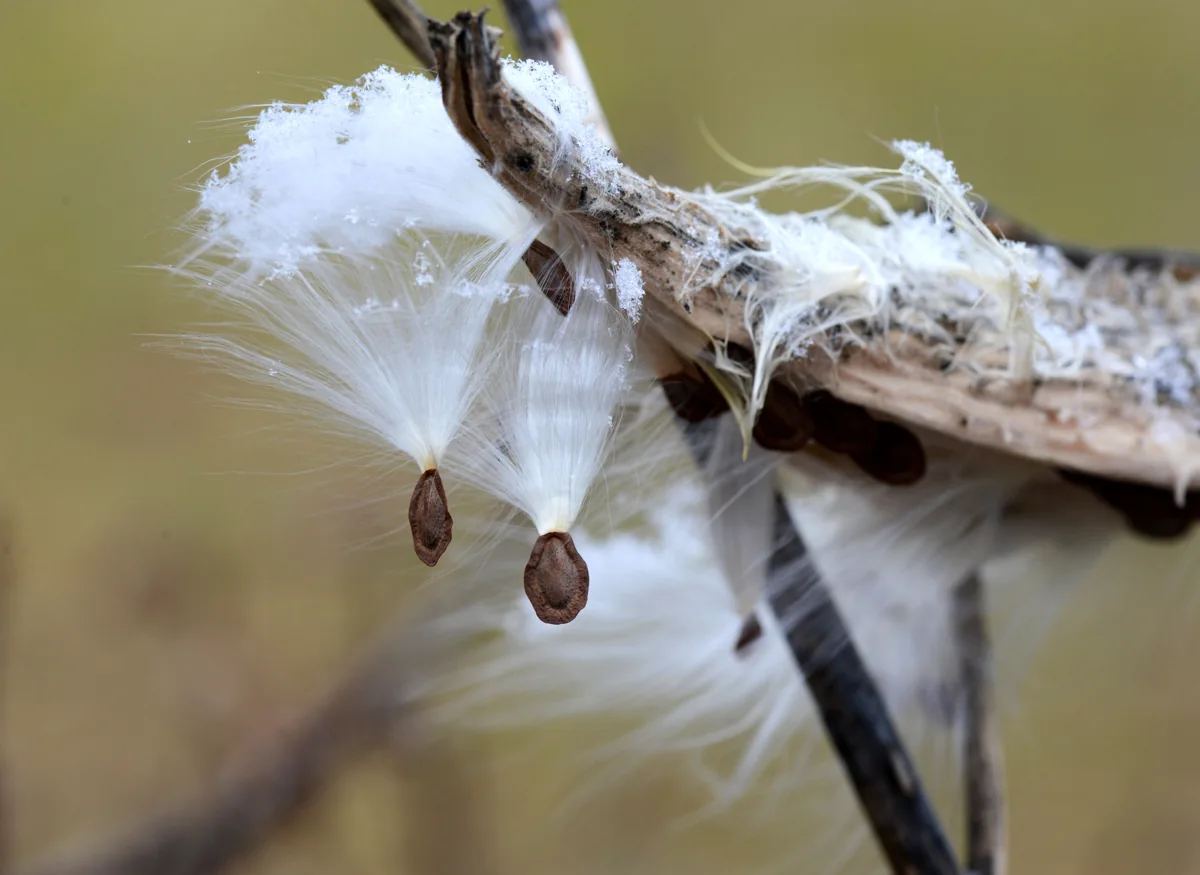
A dusting of snow picks out the edges of an open milkweed pod, while silky seeds add delicate movement. Small details like this reward a close view from a path or window rather than a large empty expanse of lawn. Keep selected healthy seed-bearing stems in a wildlife-minded bed, where their shape belongs among the planting. Use a milkweed species appropriate to your region, not an unidentified plant copied from a photo.
Quick facts: Seedpod interest · Native range and growing needs vary · Toxic to pets
Pet note: Milkweed can be seriously toxic to cats and dogs if eaten. Keep it away from browsing pets and livestock, wear gloves when handling irritating sap, and choose a different winter texture for an accessible pet play area.
6. Pale Tree Trunks against a Darker Background
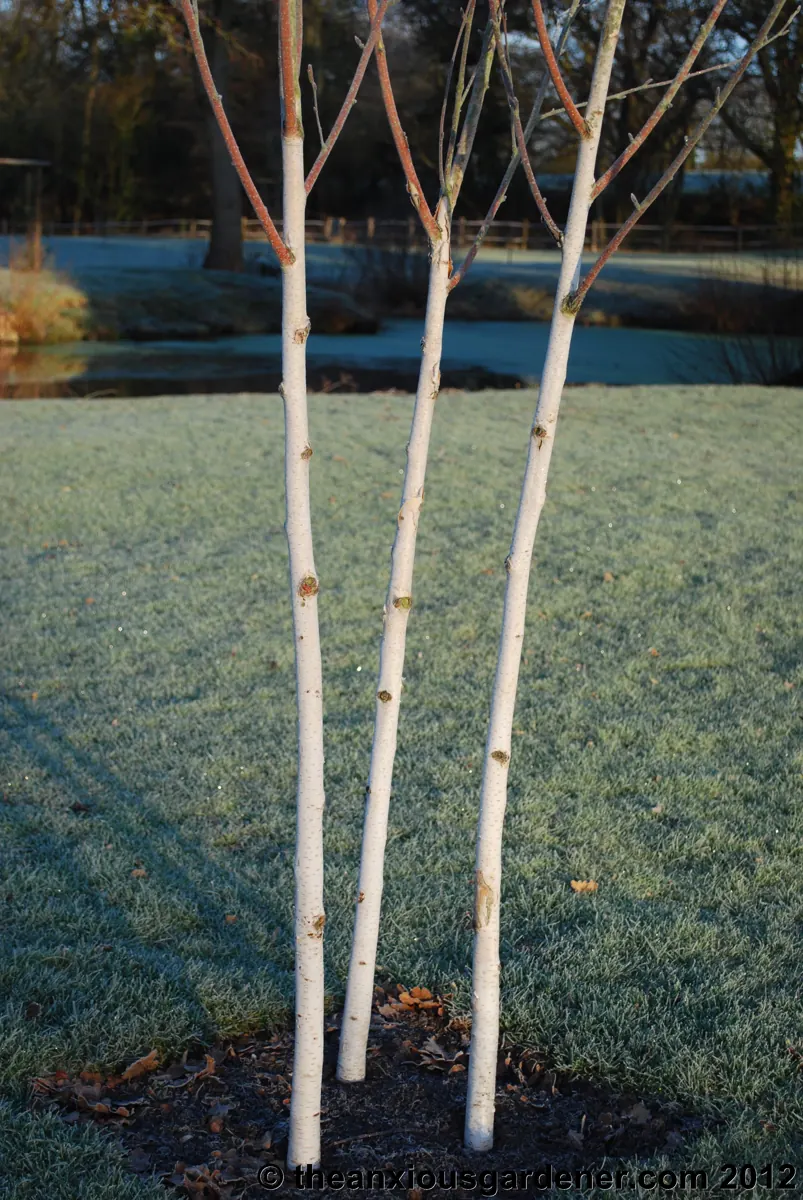
A small cluster of pale-barked birches makes a clear vertical feature above the frosty lawn. The bark has space around it, so its color does not disappear into a crowded thicket. When planning a winter view, compare bark color with the fence, shrubs, or woodland behind it. This approach can suit a modern winter garden, but only when you have room for the mature tree and its roots.
Quick facts: Deciduous tree structure · Match species to climate · Space needed at maturity
Budget note: Mark the mature spread before buying a young tree. A cheap sapling is not a bargain if it will outgrow the bed or crowd foundations; underground utilities also need checking before digging.
Get the look: similar plant labels for keeping proposed planting positions organized; planning helpers, not objects shown here.
7. Glossy Evergreen Ferns in a Shaded Border
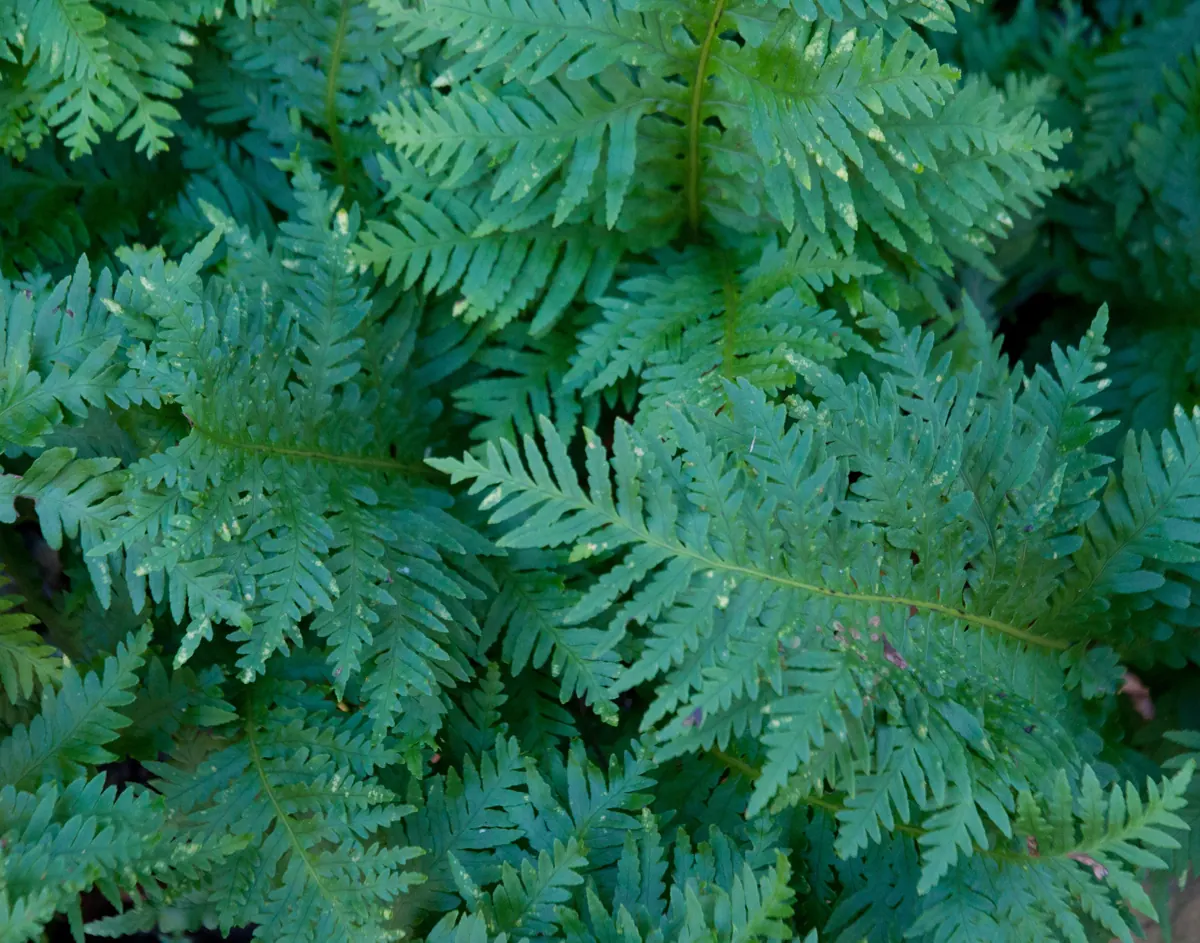
Lush evergreen polypody fronds make a different kind of winter interest: fresh green leaves when many plants have died back, rather than a bright flower display. The contrast is useful in a sheltered shady bed where sun-loving grasses would struggle. Choose an evergreen fern suited to your local conditions, and use a few clumps to repeat that leaf shape. Winter damage can still flatten or mark foliage, especially in exposed sites.
Quick facts: Evergreen fern foliage · Sheltered shade · Species-specific hardiness
Plant swap: In colder or drier shade, ask a local nursery about a fern adapted to that setting rather than assuming every evergreen fern behaves the same way. Good drainage still matters in a moist woodland-style bed.
Get the look: a similar foam kneeling pad for gentle hand maintenance around established clumps; a care accessory, not a photographed product.
8. A Carpet of Snowdrops beneath Deciduous Trees
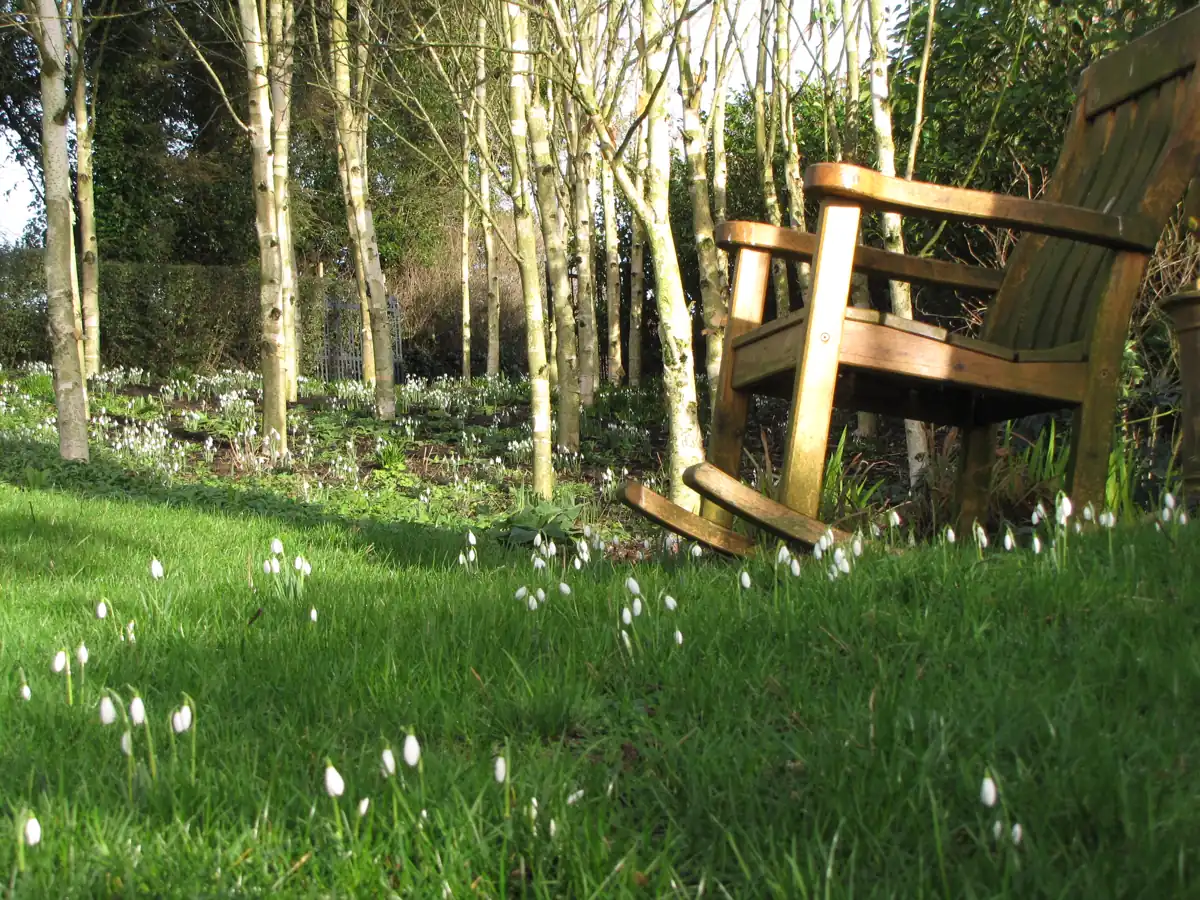
A carpet of snowdrops makes the ground beneath these leafless trees look planted rather than empty. Repeating one small bulb in a loose drift is easier to read from a window than scattering a few bulbs across the whole yard. This photograph shows a late-winter garden, so use it to plan the end of winter rather than promising December flowers. Check which snowdrop species performs well locally.
Quick facts: Late-winter bulbs · Sun to partial shade while growing · Toxic if eaten
Best season: Plan ahead with responsibly sourced bulbs or established plants at the appropriate local planting time. Let foliage finish its growth after flowering, and keep bulbs and plants away from pets and children who may put them in their mouths.
9. Clean, Unfrozen Water in a Wildlife-Friendly Corner
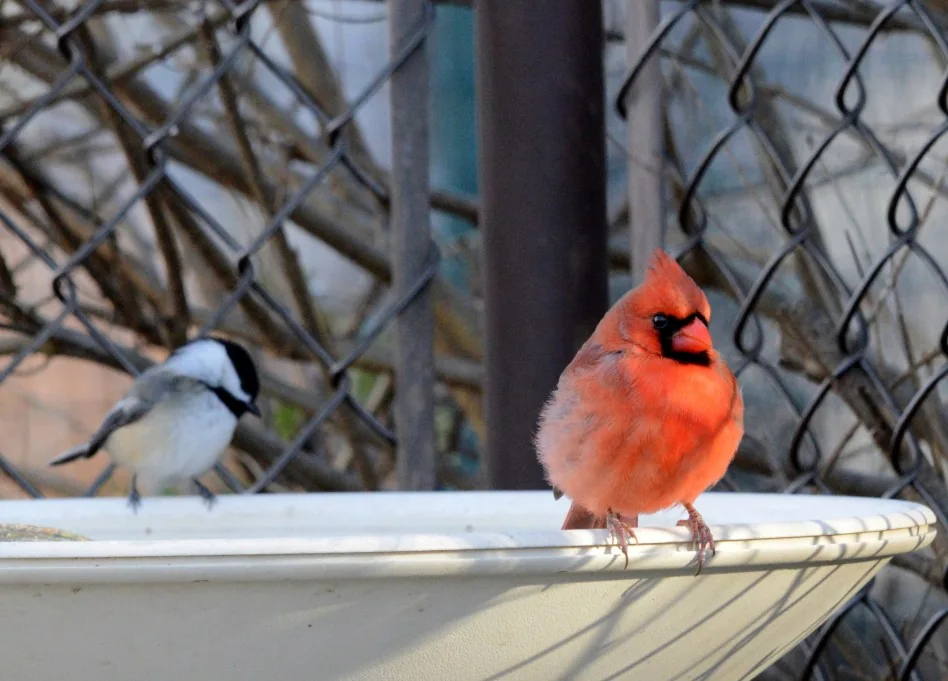
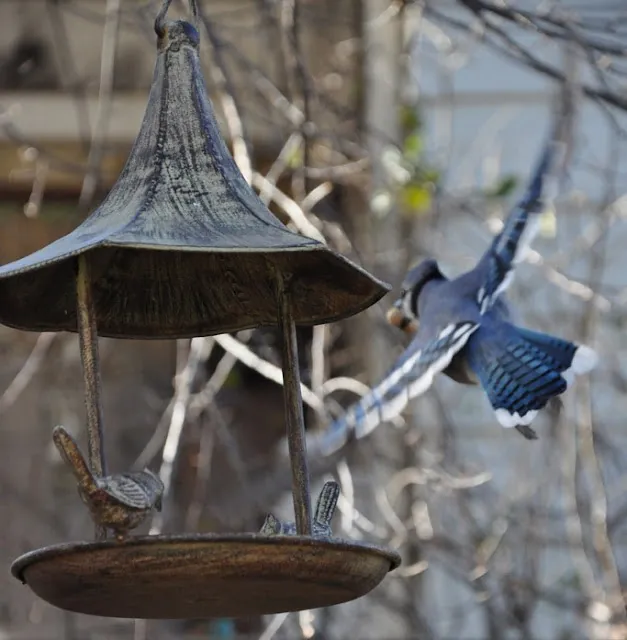
A cardinal and chickadee make this simple birdbath part of the winter garden’s activity. Put clean water where you can see it and reach it for maintenance, with a clear view around the basin rather than dense ambush cover immediately beside it. The planting supplies a setting; the birds provide the changing interest. A small wildlife corner can be a more rewarding winter garden idea than adding another decorative object.
Quick facts: Garden habitat · Cleaning and fresh water required · No plant-zone rating
Care tip: Refresh and clean the basin regularly using current local bird-health guidance. If you use a heater, choose equipment intended for birdbaths and outdoor use, follow its instructions, and never add antifreeze or other chemicals to the water.
10. An Existing Pond That Reflects the Winter Sky
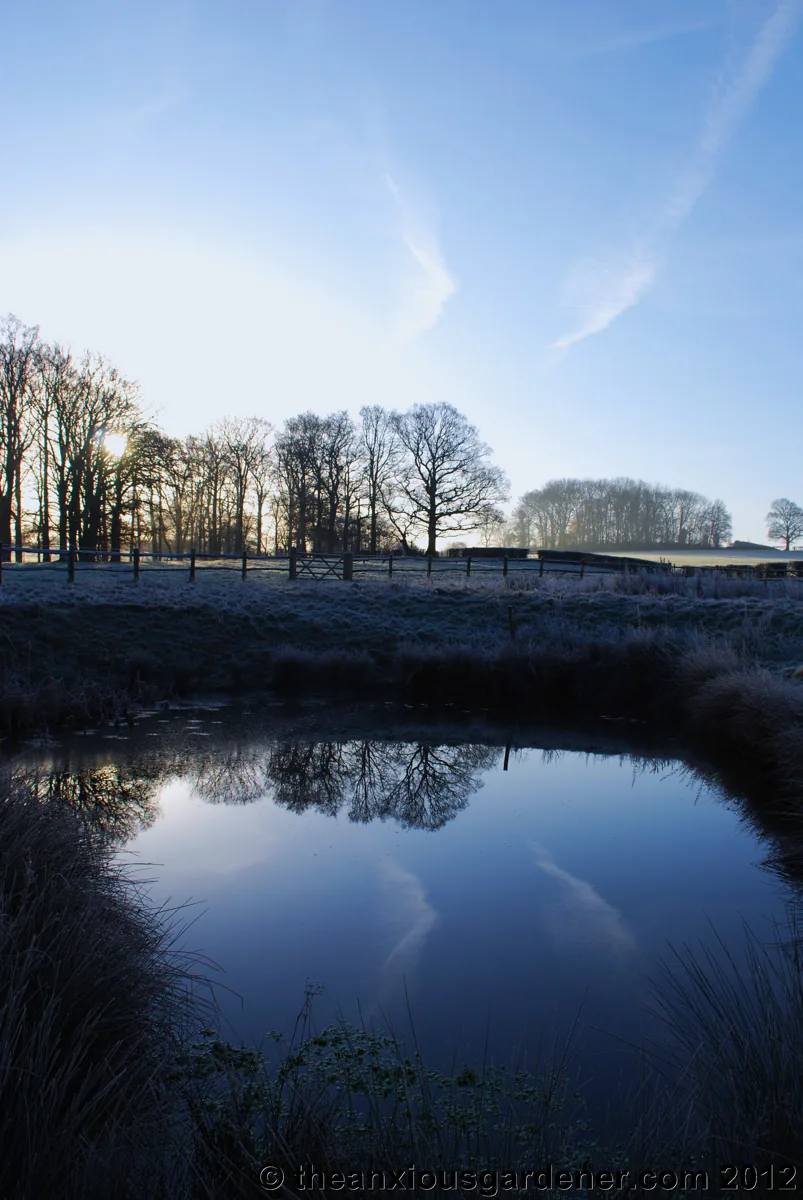
Bare trees and a clear winter sky become a second garden in the surface of this pond. The open water gives nearby planting room to breathe, and the reflection makes a quiet scene feel larger. You do not need to copy a large pond to learn from the layout: avoid crowding every open area with plants. Where a safe, established pond already exists, the winter view can be one reason to keep its surroundings simple.
DIY level: This is a layout reference, not a pond-building tutorial. Water features need appropriate child and pet safeguards, and an icy surface is not safe to stand on. Keep any pumps or electrical equipment on their own suitable winter maintenance plan.
11. Sarcococca Flowers near a Sheltered Path
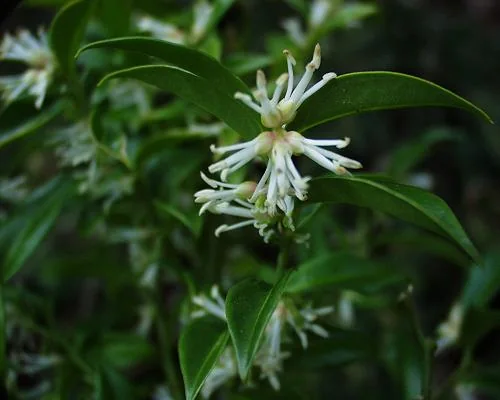
Tiny white sarcococca flowers sit against glossy leaves rather than shouting across the whole garden. This is the kind of plant to place where you pass close enough to appreciate winter fragrance, provided the site suits the species. A sheltered path-side border can make a modest flower more useful than a larger display hidden at the back of the yard. Keep the mature shrub clear of the walking space.
Quick facts: Evergreen winter-flowering shrub · Partial to full shade · Check species hardiness
Small-space tip: Choose a named species and allow for its mature spread. For example, S. confusa is a substantial shrub, not a permanently miniature edging plant; do not put a young plant in a narrow gap and expect it to stay that size.
12. Hellebores and Snowdrops for Midwinter Color
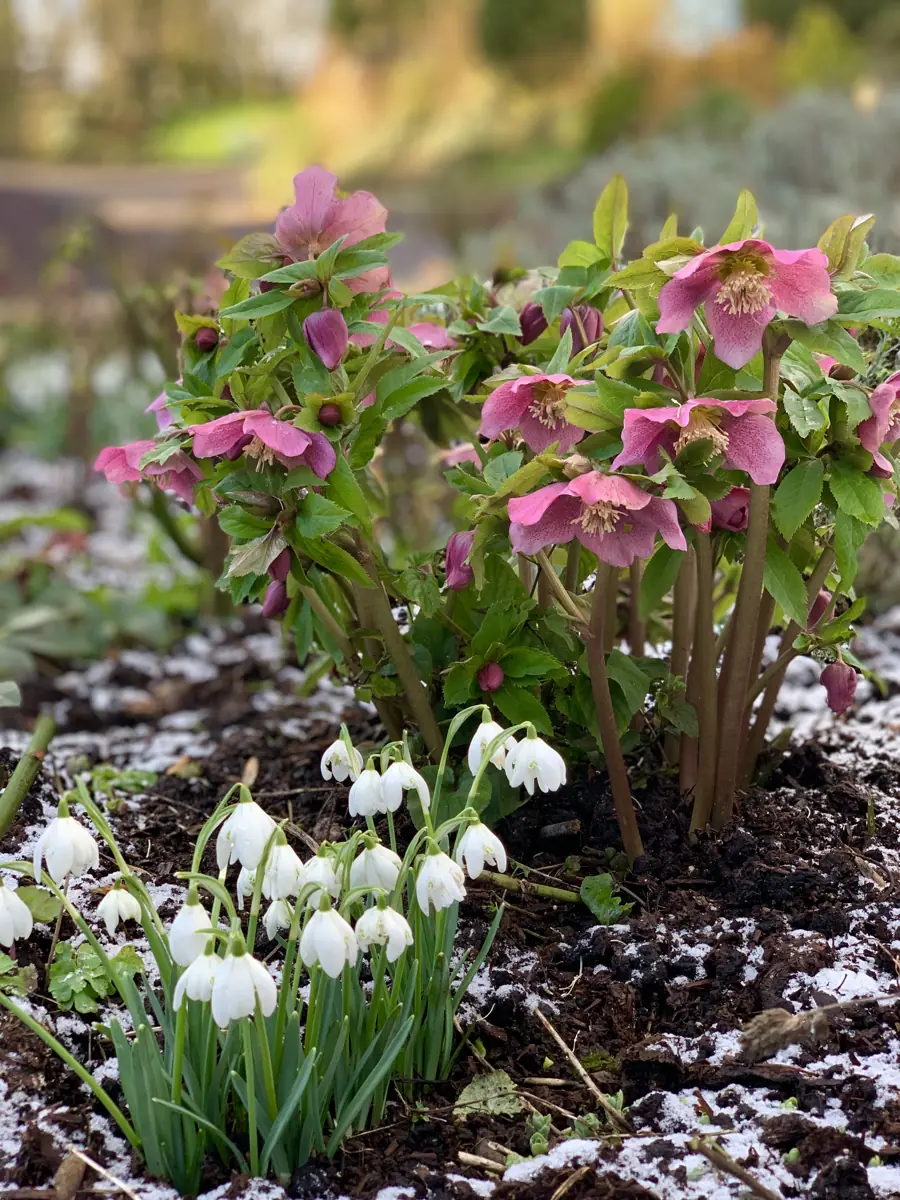
Pink hellebores standing above a cluster of snowdrops give this winter bed both height and a low white edge. The combination is useful near a path or doorway, where you can see the flowers without crossing wet soil. Choose hellebore species or hybrids suited to your climate, and remember that snowdrops usually flower later than midwinter in many gardens. This photograph is a late-winter scene, not a promise of December bloom.
Quick facts: Midwinter to late-winter flowers · Partial shade often preferred · Toxic if eaten
Make it last: Leave foliage to ripen after flowering, and keep leaves, flowers, and seedpods away from pets and children who may chew them. Avoid working saturated soil simply to tidy the scene.
Get the look: a similar small hand rake for clearing leaves around low winter flowers; not a tool identified in the photograph.
Shop the Look: Simple Winter Garden Care Tools
These practical helpers are for planning and selective maintenance around winter-interest planting. They are not plants or exact products from the photographs; choose only what your existing garden and upcoming work actually need.

- CLEAN CUTS FOR LIVE GROWTH: Bypass blade design is ideal for pruning delicate flower stems and green growth, helping reduce crushing and plant damage while cutting stems and small branches up to 5/8” in diameter
- BLADES STAY SHARP: Precision-ground steel blades are engineered to stay sharp through heavy use, & all-steel construction provides lasting durability, delivering consistent cutting performance for regular garden maintenance & detailed pruning tasks
- SMART BLADE FEATURES: Blade coating helps reduce friction for smoother cuts, minimizes sap buildup & gumming, and enhances resistance to rust for longer-lasting performance in outdoor conditions; sap groove keeps the blades from sticking during use
- COMFORTABLE, CONTROLLED GRIP: Ergonomic, non‑slip handle enhances control and reduces hand fatigue during repetitive cuts; easy‑open safety lock secures the blade for safe transport and compact storage
- INCLUDES: (1) Fiskars Bypass Pruning Shears designed for everyday gardening and plant care and backed by a Lifetime Warranty. Product care tips: Wipe pruners clean after each use to prevent sap build-up and lightly oil blade for longer product life


- GARDENING ESSENTIAL: Heavy duty, ergonomic hand cultivator with sharp tines ideal for a variety of gardening tasks like digging in tough soil, aerating soil, removing weeds, and more to encourage overall plant health and appearance
- MAXIMUM POWER AND PRECISION: Cast-aluminum head and tines boost power for digging in tough soil and enhance rust resistance; Ergonomic handle allows for more control of cultivator and reduces fatigue
- LONG-LASTING AND RELIABLE: Polished aluminum tines stay sharp through heavy use and provide excellent durability for lasting value; Fiskars hand cultivators and garden tools are built to last
- QUALITY GARDEN TOOLS: Designed to help you cultivate a better garden, Fiskars garden and yard tools are equipped with smart technologies and award-winning, ergonomic features that make it easier and more enjoyable to transform your outdoor space
- INCLUDES: 1 Fiskars Ergo Cultivator with hang hole; Lifetime Warranty

- Superior Cushioning: The WORKPRO kneeling pad is constructed from ultra-thick, high-density foam, and the 1.5-inch thick pad provides 70% shock absorbency for maximum comfort, making it perfect for long-term kneeling work
- Waterproof and Dirt-resistant: The foam kneeling pad is made of NBR, which has strong oil and abrasion resistance. Designed to withstand rocks, rubble, and moisture, this pad is water-resistant and absorbs minimal water while you're outside on moist ground. Minimal water absorption ensures easy cleaning and quick drying
- Humanized Design: The smooth and soft surface adds more comfort to your knees, and long-term use will not cause marks on the knees. The textured bottom prevents slipping and sliding while in use, ensuring your safety and comfort
- Long-Lasting Durability: The thick and solid design of the knee pad can withstand long-time use, with great compression resistance and a thick foam that won't compress or deform over time, making it a long-lasting investment
- Versatile Use: With a built-in handle, our knee mat is great for gardening, workout, baby bath time, exercise and yoga, sports events, camping, everyday household chores, auto repair, and more. It is a good gardening gift for men/women

- Material: These vegetable garden markers are made from 100% natural bamboo, plant bamboo label is durable, does not pollute the soil, will not cause harm to the earth, and is environmentally friendly and renewable.
- Easy to Write: The surface of the plant label is smooth, and the marker is very easy to write on it, and please don’t worry at all about the ink in the plant tags wash off in the rain.
- Product Size: Bamboo Plant Label approx 3.9 inch in length, 2.4 inch in width, they are T-type designs that provide you with a lot of space to name your plants, record dates, mark types, etc.
- Great for Gardener: These plant markers can be widely used in gardens, fruit trees, seedlings, flowers, plants, vegetables, potted plants and so on. The use of labels will not have any impact on plants.
- Value Package: Our package includes 75 pieces of plant labels and 1 marking pen, sufficient quantity can be used for gardens, classroom projects, greenhouses, commercial gardens, kindergartens handmade craft DIY, etc.
Which Winter Garden Idea Fits Your Yard?
Pick the feature you can see and care for most easily, then build the rest of the winter view around it.
| Your garden situation | Ideas to consider | First check |
|---|---|---|
| A main window looks onto a bare bed | 1, 3, or 4 | Mature plant size, winter sun, and local hardiness. |
| A sheltered, shaded path | 7 or 11 | Soil drainage and room beside the walkway. |
| A wildlife-minded border | 2, 5, 8, or 9 | Local suitability, pet safety, and a realistic care routine. |
| An established yard with little planting space left | 6, 10, or 12 | Existing views, clear edges, and safe access. |
Design from the View You Actually Use
Take a photo from your kitchen window or the path to your door on a dull day. Look for one place that needs a steady outline and one place that could use a small accent. Repeat a compatible leaf shape or stem color rather than buying a different plant for every gap. Your winter garden will still need room for spring and summer growth, so leave space for the other seasons.
Choose Locally Suitable Plants, Not a Photograph’s Climate
A winter image cannot tell you a plant’s root hardiness, soil preference, or summer watering needs. Read a named plant’s full profile and ask your local extension service about regional problems before planting. The NC State Extension profile for sweet box is a good example: it gives mature dimensions and shade preferences, not just an attractive winter flower. Soil that is frozen or saturated is a reason to wait, not force a planting date.
Keep the Useful Parts of a Less-Tidy Garden
Keep healthy stems, selected seedheads, and some habitat where they help wildlife and do not block access. Remove diseased material and tackle genuine trip or drainage hazards. Plant identity matters especially in gardens shared with animals: the ASPCA’s milkweed guidance explains why an attractive wildlife plant is not automatically suitable beside a pet run. For bulbs, NC State’s snowdrop profile provides growing and toxicity notes.
Choose one winter feature that belongs in your garden, not twelve that compete for attention. A steady evergreen shape, a well-placed stem group, or a clear view of the birds is plenty to begin with.
Featured photo: 📷 Chloris at The Blooming Garden.