
This post contains affiliate links. As an Amazon Associate I earn from qualifying purchases.
Winter bird feeding station ideas can bring movement to a quiet garden without redesigning the beds. These eight real-garden examples focus on feeder layouts: a multi-arm pole, covered and tubular feeders, compact hanging food holders, and spread-out stations. They are alternatives to choose from, not eight things every garden needs. Start with a manageable setup, check local wildlife advice, and build in easy cleaning access. Feeding is a supplement to a bird-friendly garden, not a replacement for natural habitat or safe water.
Before you choose: Follow local disease, bear, and wildlife-feeding guidance before installing feeders. A good view from the kitchen is not enough: assess glass-collision risk, predator cover, spilled seed, and how you will clean the equipment in winter. Pause feeding when local authorities advise it or sick birds appear.
1. Hanging Tube Feeder with Several Ports
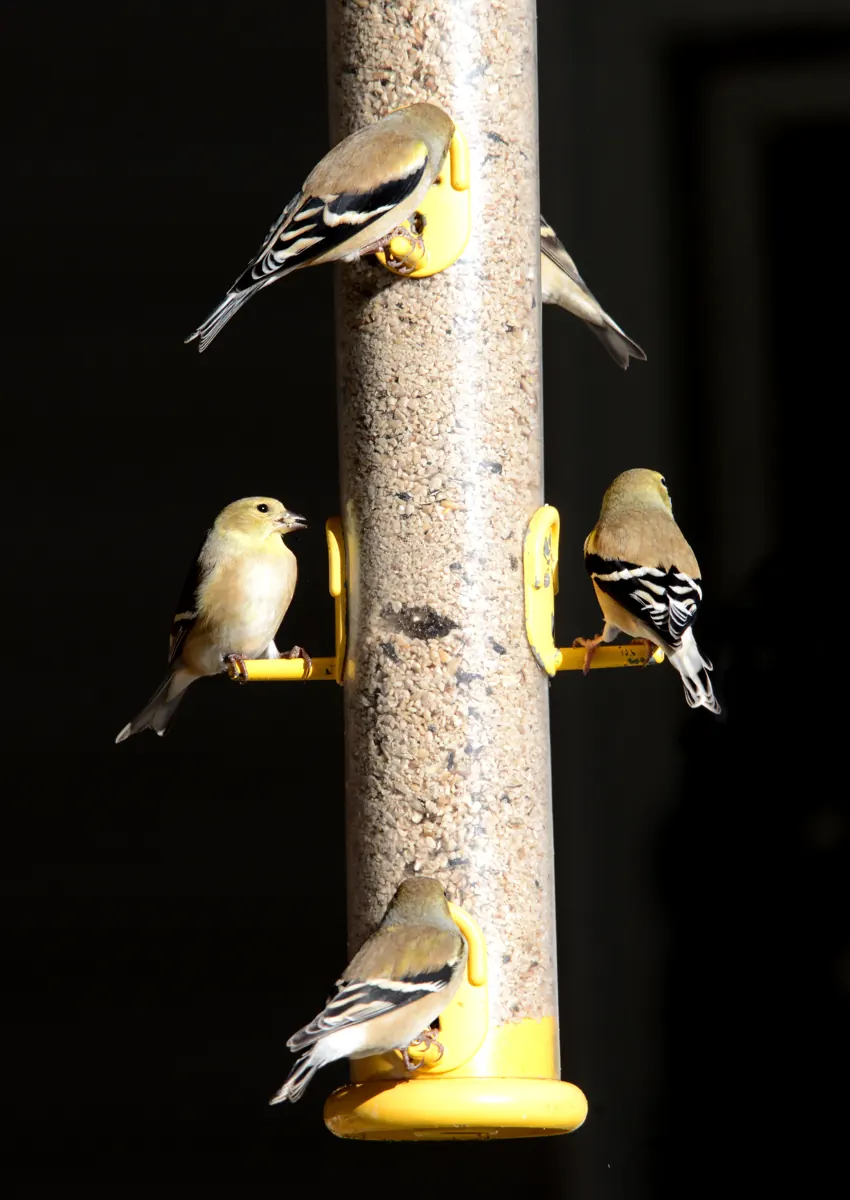
This hanging tube feeder gives several goldfinches a place to cling at once, so one support can serve more than one bird without a broad platform. The vertical form is a compact option for a small garden, provided the tube is not hung so close to glass or walls that birds risk collisions. Choose a feeder designed for the seed you intend to offer, and do not assume every visitor in the photograph will appear in your yard.
Care tip: Put out only what you can empty, dismantle, and wash regularly, and keep an accessible route to the hanger after snow or heavy rain. A hanging tube still needs a stable hook or pole suited to the load.
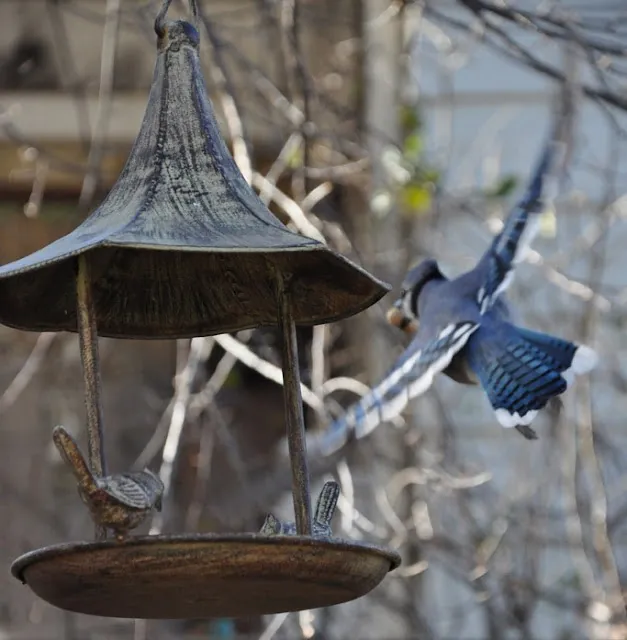
2. Roofed Hanging Platform for Larger Visitors
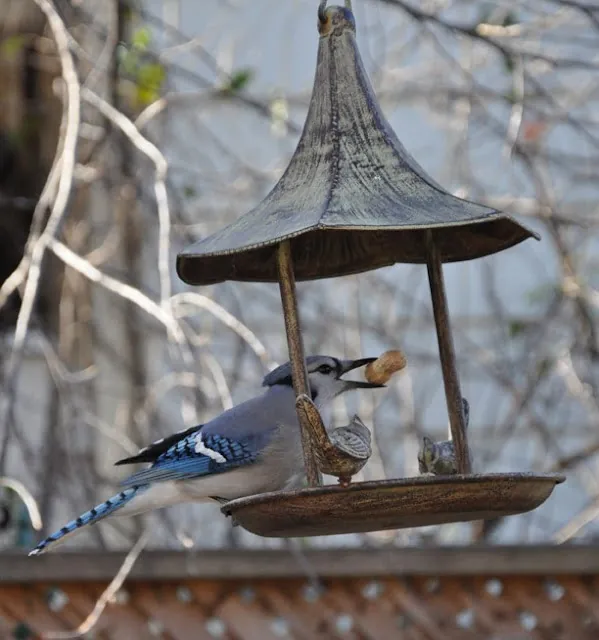
A blue jay visits this open-sided wooden platform beneath a pitched roof. The broad landing surface gives larger birds room to stand, while the roof offers some shelter to the feeding area. It does not make exposed food automatically dry or hygienic, so think of it as a feeder you can inspect easily rather than a seed bin to fill and forget.
Make it last: Put out only the amount likely to be eaten that day, especially on open platforms. Remove wet or soiled food promptly and clean the surface rather than topping fresh seed onto old residue.
Get the look: similar black-oil sunflower seed is a practical food option for compatible seed-eating birds, not a confirmed identification of every seed in the photograph.
3. Small Mesh Tray Feeder on a Narrow Support
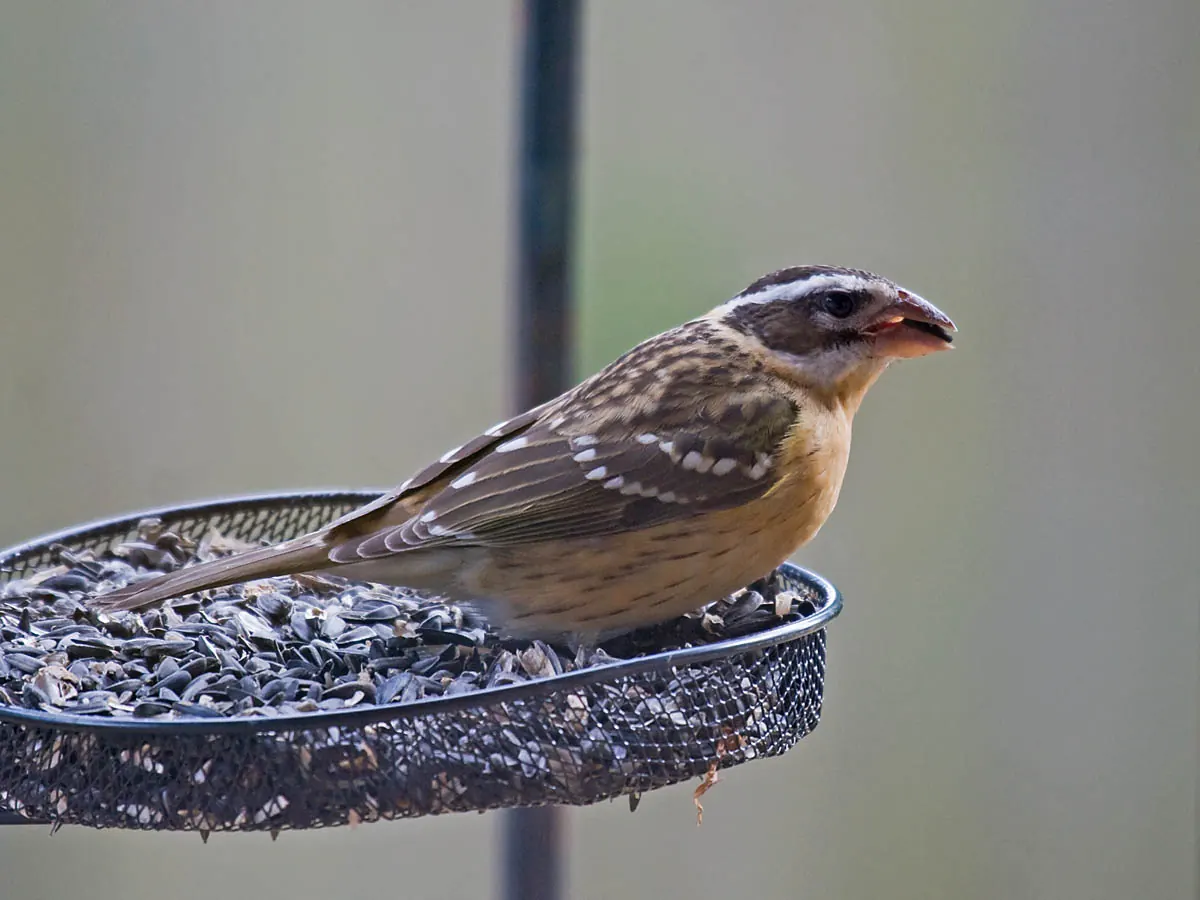
A black-headed grosbeak uses this small open mesh tray, a compact alternative to a broad platform. The shallow form can sit on a pole or other narrow support and is easier to inspect than a deep hopper. Choose a tray you can remove and wash, and put out only as much food as birds will finish before it gets wet or soiled.
Small-space tip: Look for components that come apart so the interior and ports can be washed and dried. A slim shape can fit a small garden, but leave safe clearance from walls, glass, and nearby footholds.
Get the look: a similar compact hanging seed feeder is a hanging alternative, not the mesh tray shown; follow its clearance and filling instructions.
4. Stacked Suet Cage for Clinging Birds
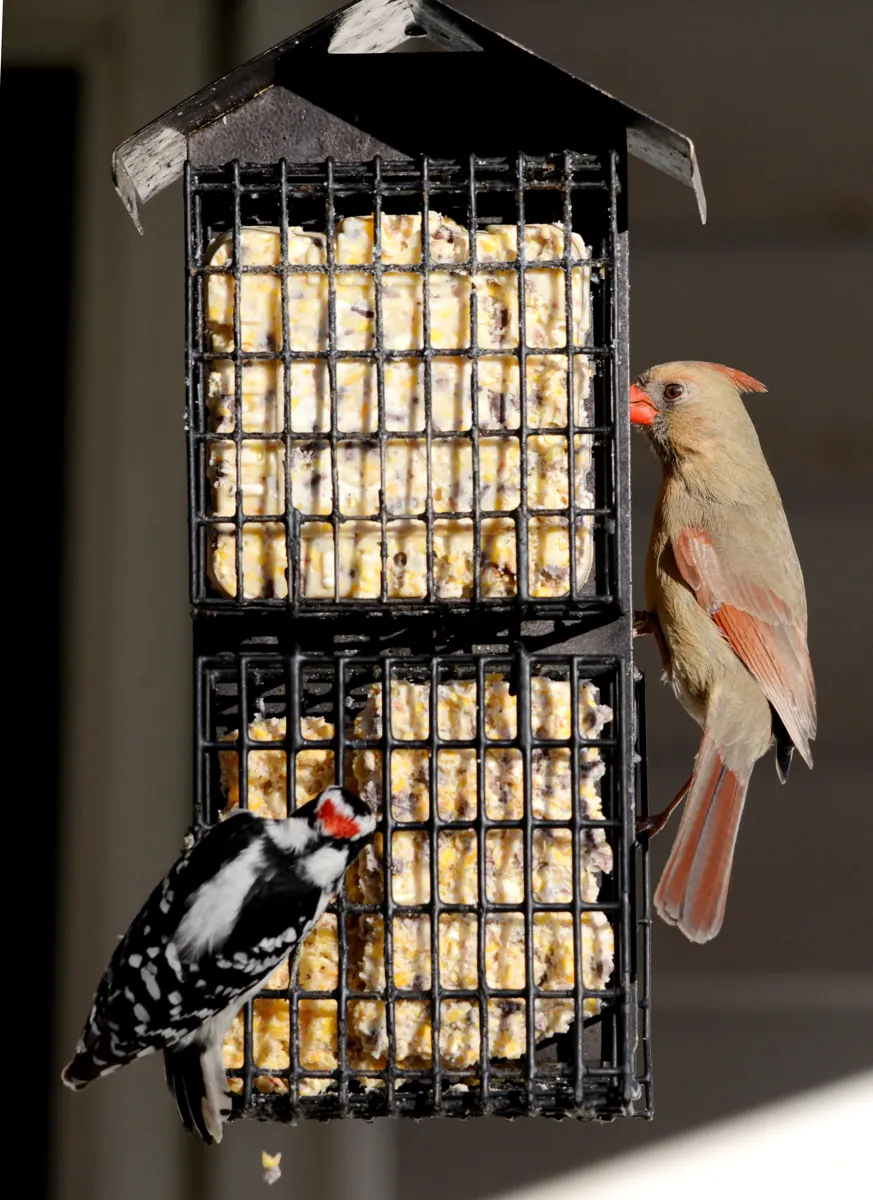
A female northern cardinal and a downy woodpecker share this stacked two-cake suet cage. The vertical cage gives clinging birds a foothold and is a compact alternative to another seed tube. The photographed visitors should not be taken as a promise of which birds will appear in your own region.
Best season: Use food intended for wild birds and a feeder designed to hold suet cakes securely. Keep suet fresh, and avoid loose plastic net bags that can entangle birds. Do not substitute kitchen leftovers.
5. Hanging Metal Food Basket for Clinging Birds
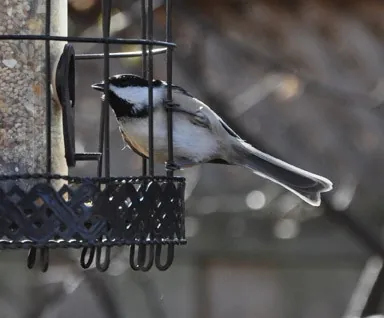
This small hanging metal basket gives a bird a place to cling while feeding. Its compact outline can sit alongside a seed feeder without demanding another large platform. Keep the distinction between the photographed shape and your food choice: the basket must be suitable for the particular seed block, suet cake, or other wild-bird food you intend to offer.
DIY level: Use a ready-made food holder rather than improvising sharp wire openings or dangling loops. Inspect it for damage and remove empty wrapping completely.
Get the look: a similar small suet-cake cage offers a square alternative. For a wall-mounted version, a suitable hanging bracket needs secure, load-appropriate fixings and safe feeder clearance; that bracket is not pictured here.
6. Low Feeding Area for Ground-Level Visitors
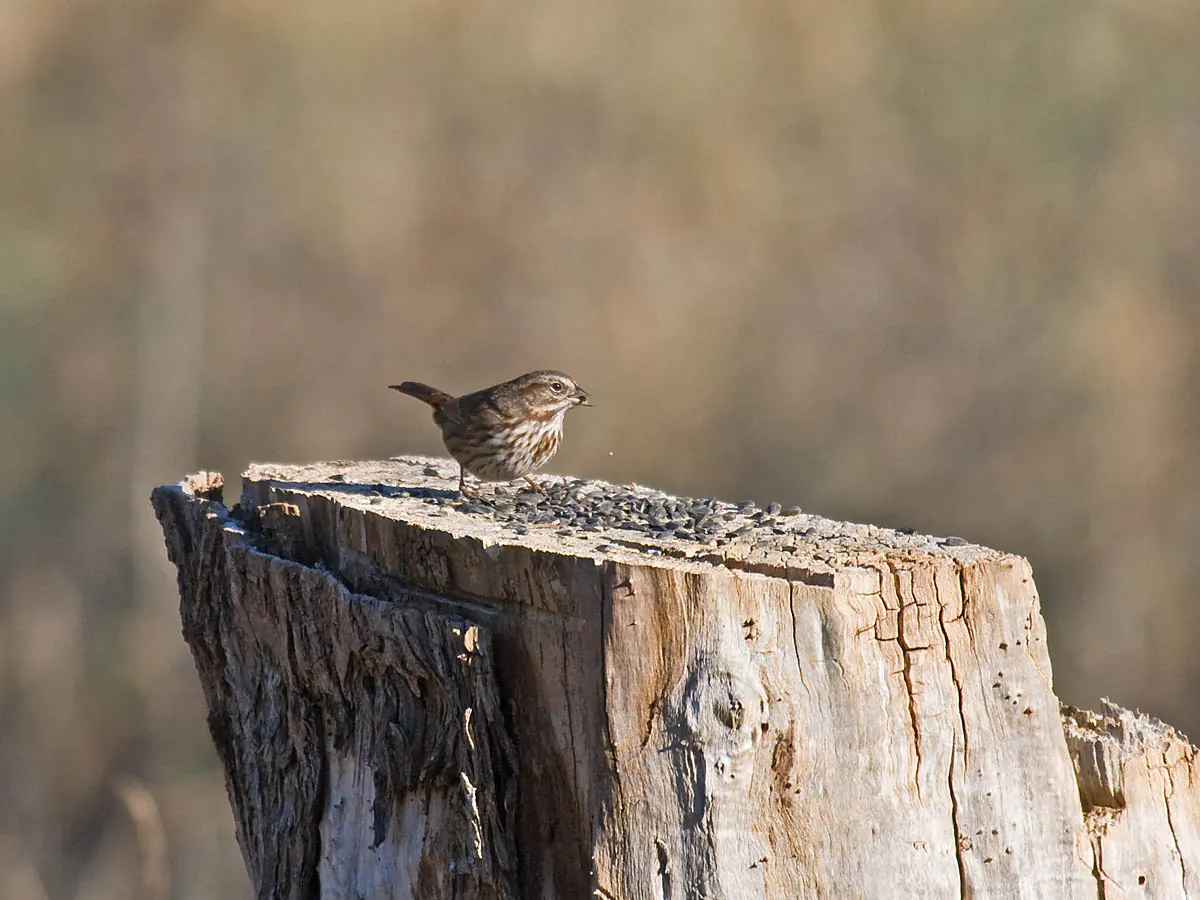
A song sparrow feeds from a weathered stump sprinkled with seed, a simple low feeding area that broadens the station beyond hanging containers. It makes the garden feel active at more than one level. Use the layout as inspiration rather than expecting the same species in every yard.
Pet note: Only consider a low feeding area where cats and other predators cannot use nearby cover to ambush birds. Keep pet cats indoors. A stump or other low surface still needs regular cleaning; a removable tray is often easier to wash than a porous stump, and is better than scattering generous amounts of seed into damp soil, where waste can accumulate and attract rodents.
7. Wooden Tray Feeder for Small Visitors
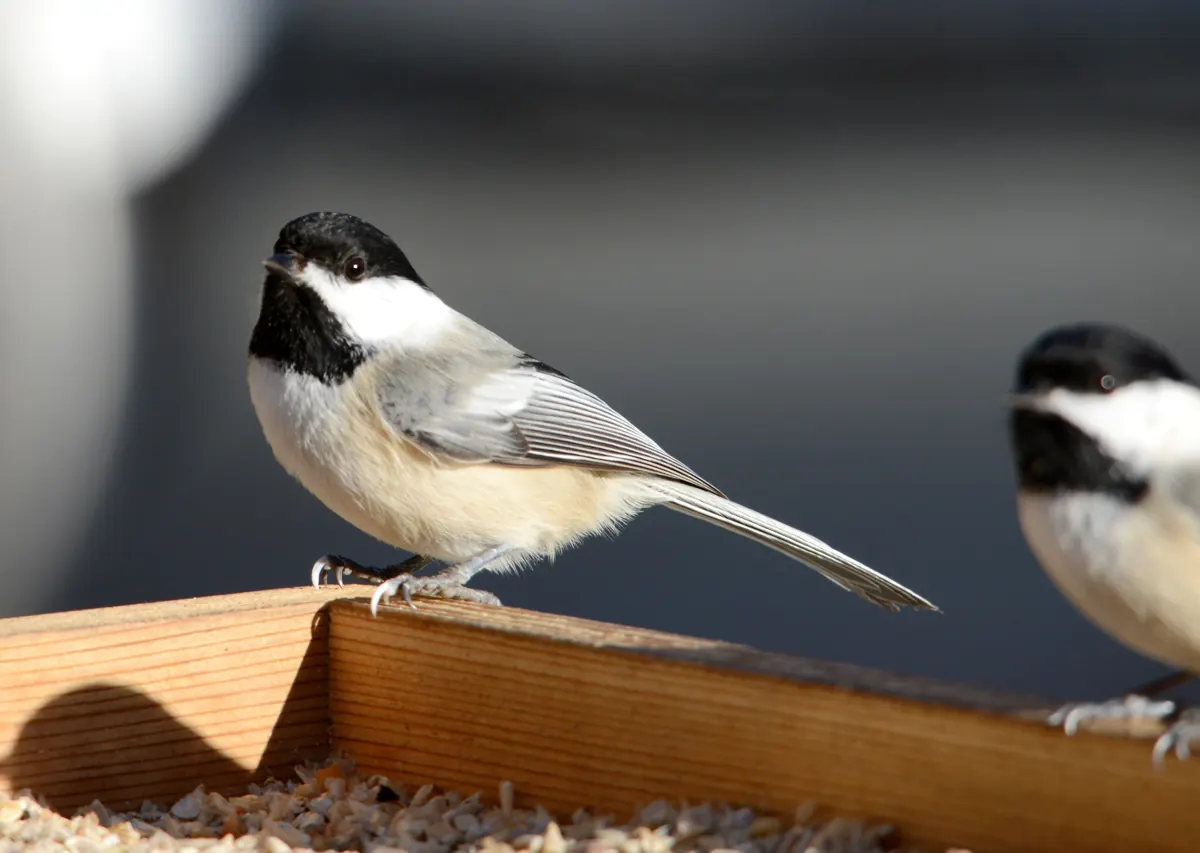
Two chickadees use this open wooden tray, a simple raised surface that is easy to see and inspect. The broad landing area suits small clinging and perching birds, and the open form makes it obvious when food needs refreshing. It does not keep seed automatically dry, so think of it as a feeder you can clean easily rather than a bin to fill and forget.
Budget note: Put out only the amount likely to be eaten that day. Remove wet or soiled food promptly, and clean the corners of a wooden tray rather than topping fresh seed onto old residue.
8. Separate Feeder Poles Along a Garden Edge
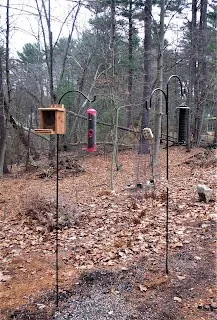
Neal’s garden uses several individual poles spaced beside trees instead of one crowded feeding hub. That spread-out arrangement creates separate stopping points and lets you place different foods where they can be reached and maintained. It suits a garden with room to distribute activity, while still keeping the feeding equipment distinct from the surrounding planting.
Renter-friendly: Freestanding supports may avoid drilling into walls, but check permission and install them safely. Do not put stations directly in dense cover: University of Minnesota Extension advises at least 10 feet of separation from dense vegetation to reduce predator ambush opportunities. Leave enough room to move between the stations for cleaning.
Shop the Look: Winter Bird-Feeding Supplies
A compact seed feeder, a small suet cage, sunflower seed, and a mounting bracket cover different parts of these layouts. They are optional alternatives rather than the exact equipment in every photograph; choose only what suits your site and cleaning routine.

- Squirrel Proof Bird Feeder
- Bird Feeder,Gardening Gifts for Women,Fathers.christmas gifts for dad,mom and more bird lovers
- Metal Bird Feeders for Outdoors Hanging
- Squirrel Proof Wild Bird Feeders with Finch Cardinal Chickadee
- Large Capacity Bird Feeders

- SUET CAKE FEEDER: Holds a single suet cake to provide food and energy to birds during cold months when food is scarce
- CLINGING BIRDS: Cage grid designed with clinging birds in mind – feed woodpeckers, nuthatches, chickadees, and more
- NOT JUST FOR SUET: Great for small seed cakes, nesting materials in spring, and oranges in summer
- EASY USE: Easy-open, double-locking closure system secures tightly to keep suet or birdseed cakes in place
- DURABLE CONSTRUCTION: Solid steel construction with durable weather-resistant, powder-coated black finish


- Attracts the widest variety of birds
- Thin shelled sunflower - makes it easy for small beaked birds to open
- This seed has the high energy content that all birds need
- Highest quality grains used in blending
- Made in the USA

- 1.SIZE & CORE KEYWORDS:11 inch plant hangers 2 pack, heavy duty plant brackets for hanging baskets, metal plant hooks wall mount, perfect plant wall hooks for bird feeders, wind chimes and lanterns.
- 2.30LBS HEAVY DUTY CAPACITY:Heavy duty metal plant hangers support up to 30lbs, solid metal plant brackets with triangle load-bearing design, stable plant hooks for hanging heavy baskets without bending.
- 3.RUSTPROOF METAL OUTDOOR USE:Matte black powder coated metal plant hooks, waterproof and rust-resistant plant hangers outdoor, durable premium metal brackets for garden patio porch all-weather use.
- 4.EASY SCREW MOUNT INSTALL:Wall mounted plant hangers require drilling with 1/4 inch drill bit, includes screws and anchors, easy to install on walls, fences, posts or trees for secure hanging.
- 5.MULTI-PURPOSE PLANT HOOKS:Outdoor indoor plant hooks for hanging baskets, bird feeders, wind chimes, lanterns and décor, versatile heavy duty metal plant hangers for garden patio porch home use.
Which Feeding Station Fits Your Garden?
Choose for the space you can maintain, not the maximum number of feeders you can display.
| Your situation | Ideas to consider | Main responsibility |
|---|---|---|
| Small garden with one clear position | 1 or 3: a compact vertical setup | Avoid crowding and keep cleaning access |
| Space for larger platform visitors | 2: a roofed platform | Small daily portions; remove spoiled food |
| One extra hanging food type | 4 or 5: coil or metal basket | Suitable fresh food and safe openings |
| A wider garden with separate feeding areas | 6 or 8: low or spaced stations | Predator awareness, spill control, and hygiene |
| A garden feature with planting interest | 7: planted-roof bird table | Structural load, drainage, and local plant suitability |
Make cleaning part of the design
Choose equipment you can dismantle and reach without a risky icy ladder. Penn State’s feeder-disease guidance emphasizes clean feeding surfaces and removal of waste. Wash, rinse, and disinfect as appropriate to the product directions, then let parts dry before refilling. Clean the ground or surface underneath as well; a handsome station above a layer of wet hulls and droppings is not a well-maintained setup.
Look at the route between feeder and glass
Feeders should not turn a reflective window into a flight hazard. Project FeederWatch’s safe-feeding advice recommends exterior window markings with gaps no greater than two inches, or suitable external screens, to make glass visible. Check the full reflected area, not just the pane closest to the feeder. Keep feeders separated from dense predator cover while allowing birds access to safer shelter beyond it.
Leave room for clean water and local advice
A manageable feeding area can include a separate, regularly cleaned shallow water source. Refresh it rather than adding salt, antifreeze, or other chemicals to stop freezing. Any outdoor electrical de-icer must be designed for that use and installed exactly as instructed. Consult University of Minnesota’s winter-feeding guidance and current local wildlife notices; severe disease alerts or bear activity can make taking feeders down the responsible choice.
One clean, well-placed station is a useful place to begin. Watch which local birds visit, keep the garden safe for them, and expand only when the maintenance remains easy to manage.
Featured photo: 📷 Jennifer at Three Dogs in a Garden.