
This post contains affiliate links. As an Amazon Associate I earn from qualifying purchases.
Raised garden bed ideas are easiest to compare in winter, before spring planting and lumber deliveries compete for your weekends. Start with the bed itself: a low wooden frame, an elevated planter, or a durable masonry or metal design. These eight real garden projects show different ways to hold soil, change working height, and fit a useful growing area into your yard. Pick the construction that suits your reach, available materials, and long-term plans—not just the prettiest finish.
Before you pick: Measure your comfortable reach, check drainage underneath the proposed bed, and price the soil as well as the frame. Open-bottom beds and planters with a built-in floor need different growing media. A tall bed also needs a design strong enough to resist the outward pressure of wet soil.
1. A Simple Single-Board Wooden Frame
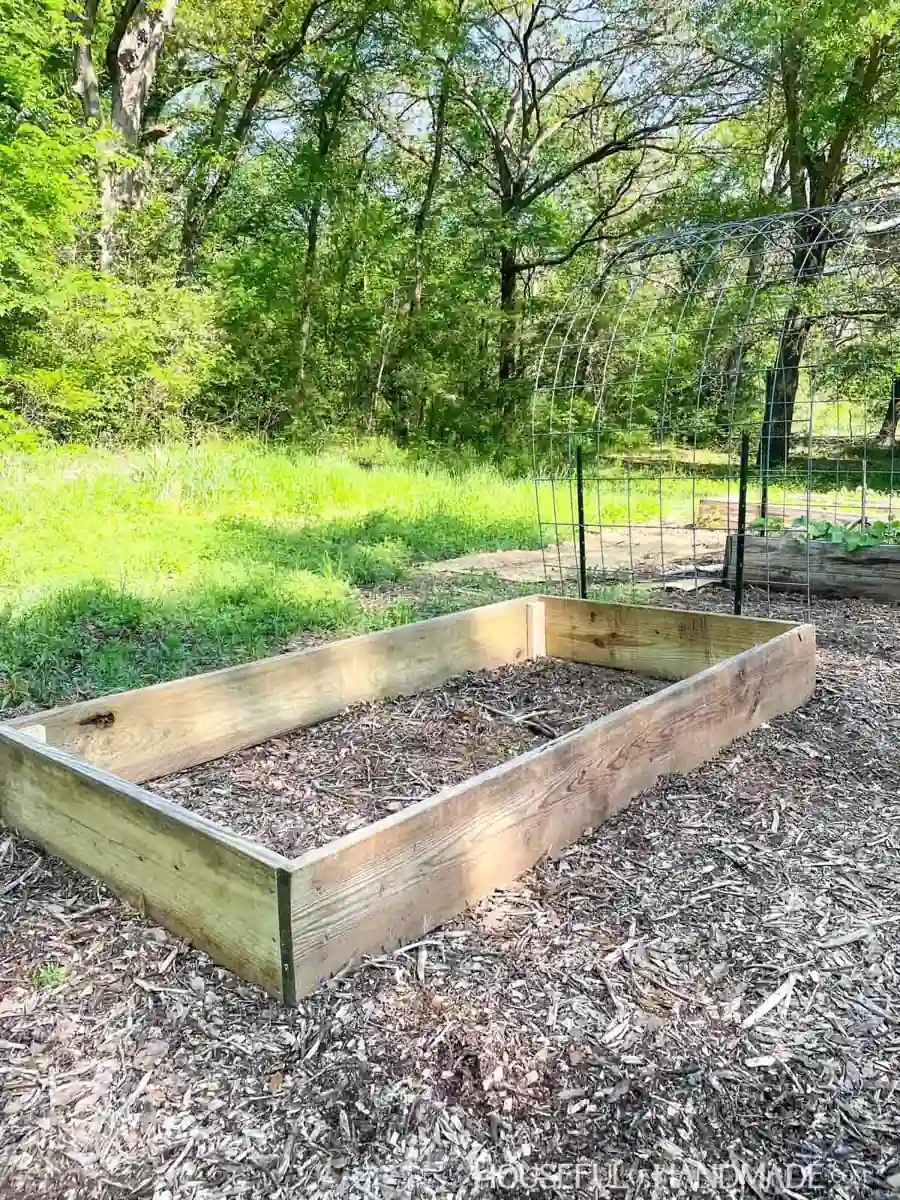
This low wooden rectangle keeps the growing soil clearly separated from the surrounding mulch without creating a bulky wall. Its straight sides make the footprint easy to measure and adapt, especially when you want one modest bed rather than an entire kitchen-garden makeover. The open, uncomplicated form also makes it easy to see where a future path belongs. For cheap raised garden bed ideas, compare the full materials list before deciding that the smallest frame is always the best value.
Budget note: Locally available, untreated lumber can be a practical starting point; durability varies with wood species and climate. Avoid old railroad ties or unidentified reclaimed timbers.
2. Rounded Modular Metal Beds
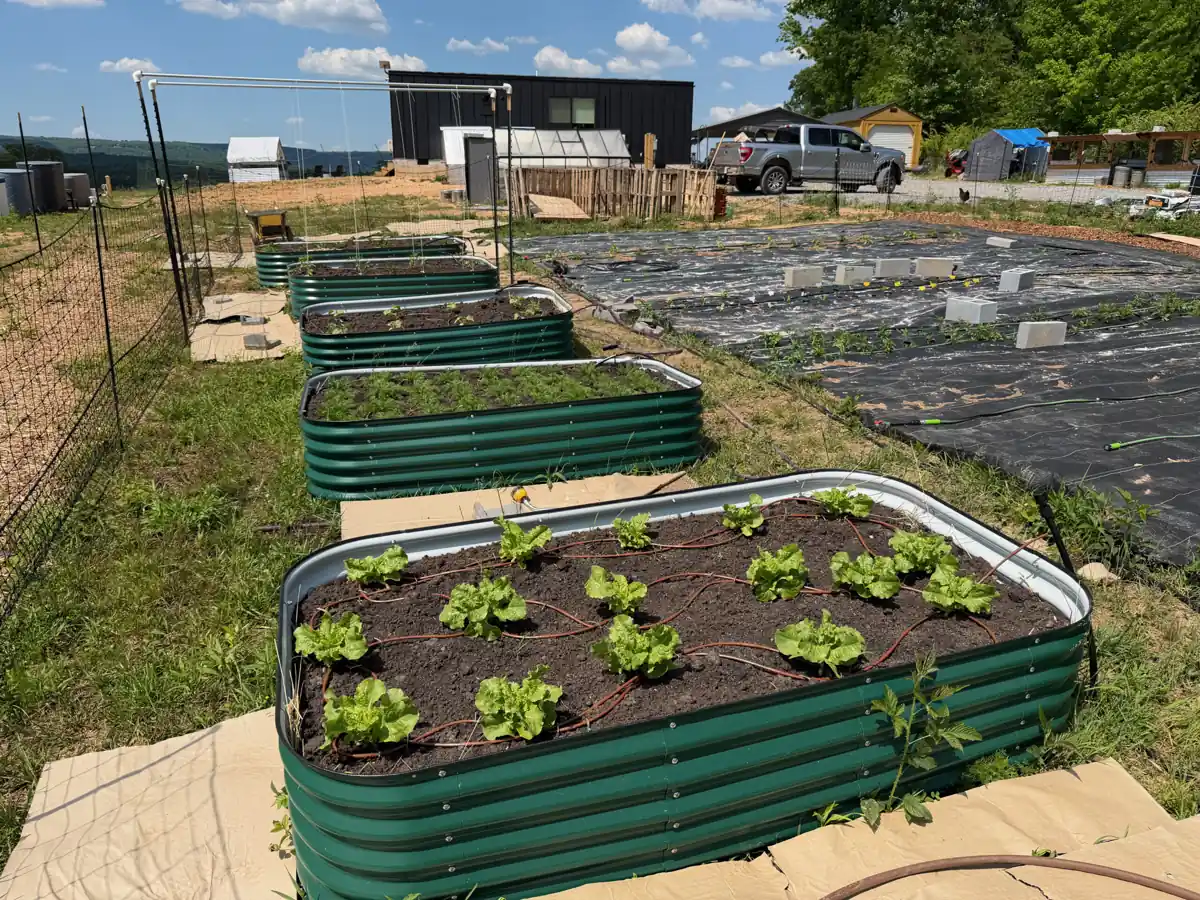
The curved corners soften these green metal beds, while repeated sections create a clean, consistent outline. Unlike a timber frame assembled board by board, a modular kit offers a defined set of shapes and connection points. That can make planning less fiddly, although it is still worth sketching the exact outside dimensions rather than relying on a product photograph. This modern raised garden bed style looks particularly clear against a simple, uncluttered ground surface.
Make it last: Assemble every brace and fastener required by the manufacturer. Check the top edge and connections for sharp spots before adding soil.
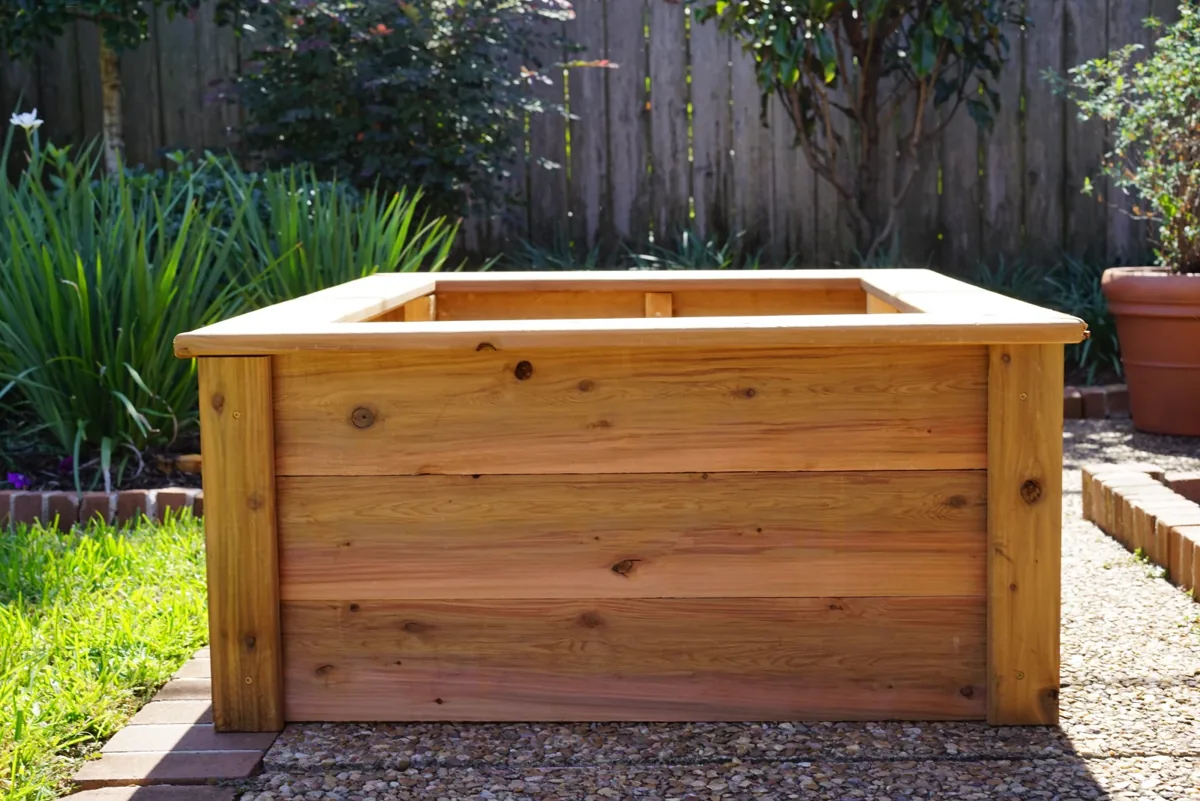
3. A Wooden Planter Raised on Legs
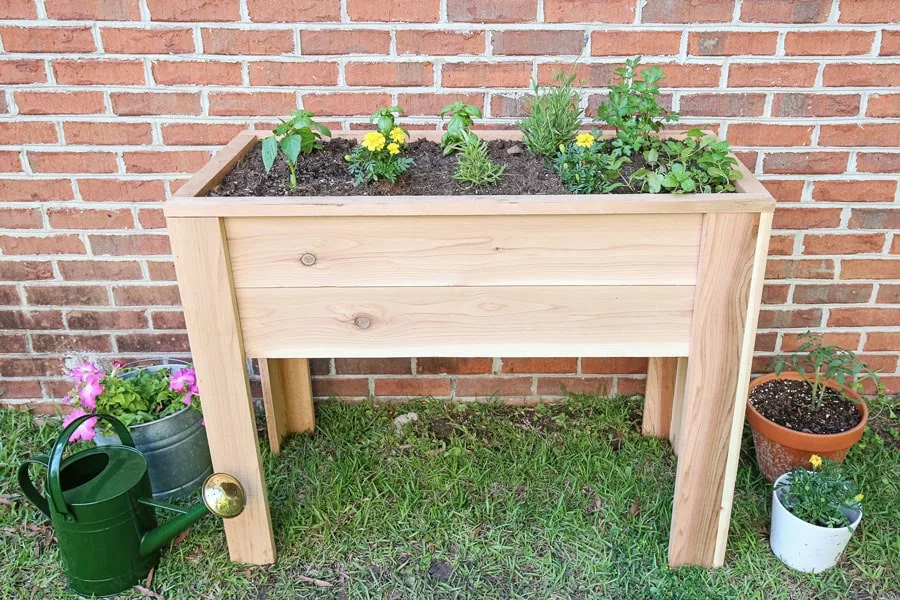
This elevated wooden box puts a small planting area above the lawn instead of sitting directly on it. Open space beneath the planter keeps the shape light and leaves the legs easy to inspect. It is a useful direction to explore when bending to a low bed is uncomfortable, but the photograph alone cannot tell you whether the height or knee clearance will suit your body. Measure those needs before borrowing any set of plans.
Small-space tip: A planter with a floor needs drainage openings and a growing mix intended for containers, not heavy garden soil.
4. Low Concrete-Block Borders
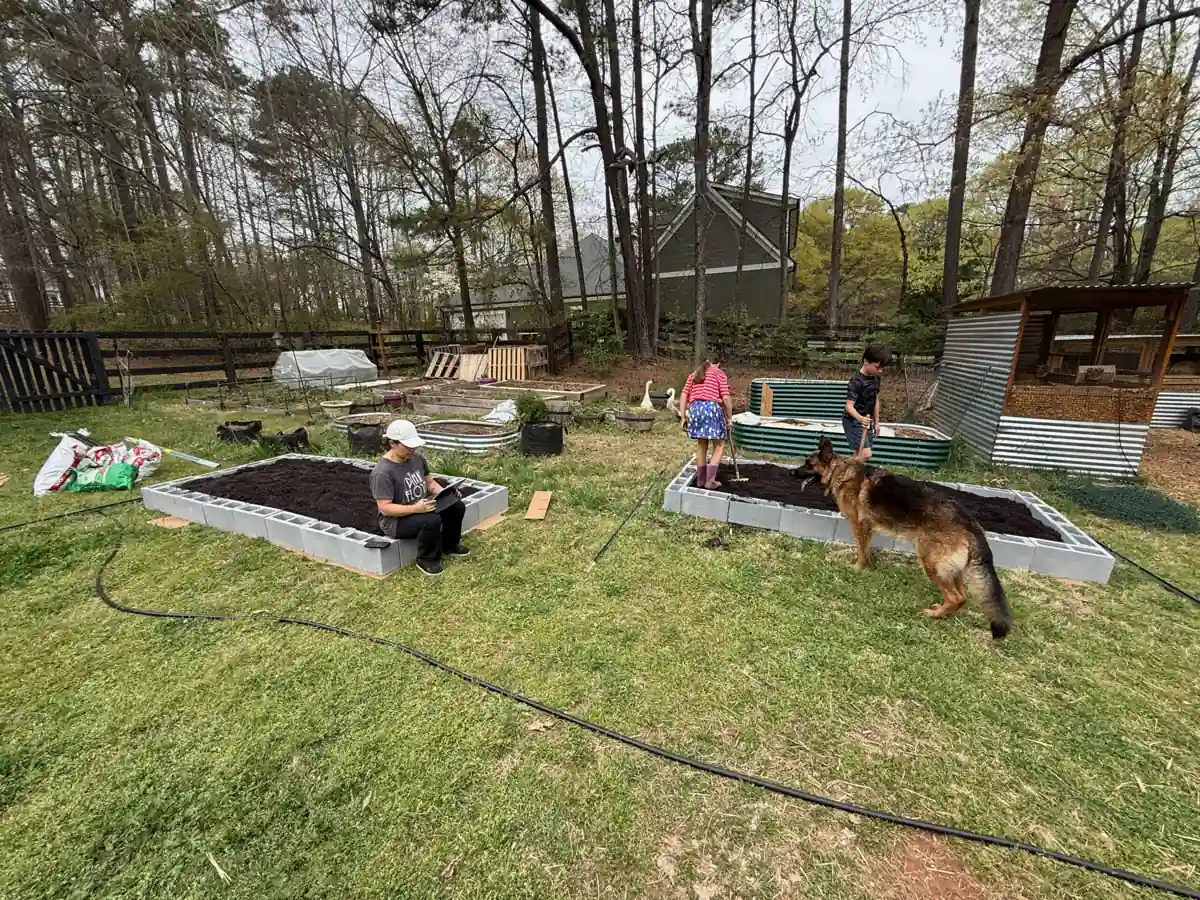
Pale concrete blocks form the low walls of these beds, creating a strong contrast with the surrounding lawn. The individual units make the edge easy to visualize before a permanent build, and their weight gives even a shallow bed a substantial appearance. Keep the design about the planting area rather than treating the small block openings as mandatory extra pockets. Roots, working space, and the material’s condition matter more than squeezing in another handful of soil.
DIY level: Use known, sound construction materials and a stable base. Taller masonry walls may need reinforcement or professional advice; stacked blocks are not automatically safe at any height.
5. A Double-Height Stacked-Board Bed
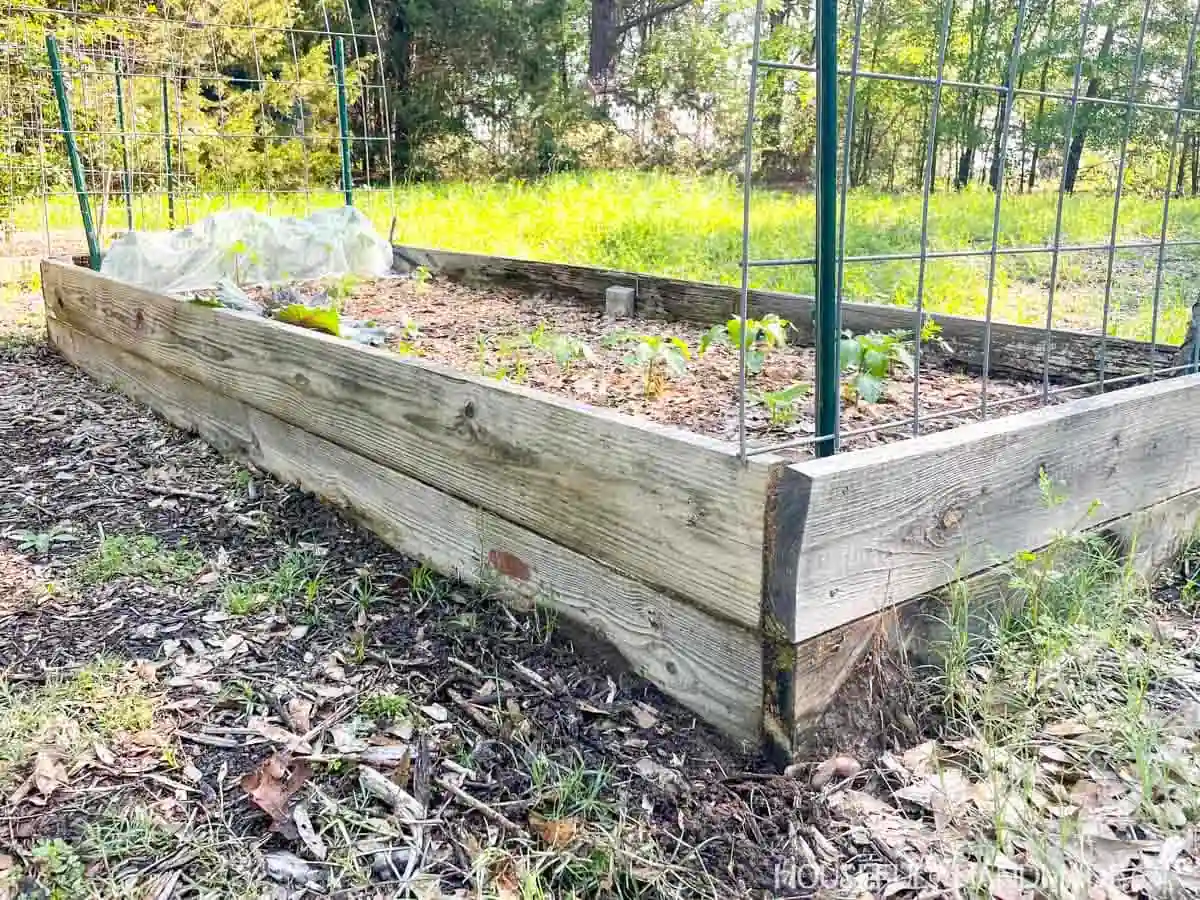
Two courses of boards give this wooden bed a deeper side wall and a more substantial profile than a single-board frame. The increased height can help separate a growing area from surrounding ground and reduce the distance you bend, but it also means buying more fill. Notice the repeated upright supports along the edge: a taller side is not simply a low bed with another loose board balanced on top. This is a useful winter planning project when you want a deeper bed without changing its footprint.
Make it last: Follow a proven design for corner joints and midspan bracing. Calculate soil volume from the inside dimensions before ordering a delivery.
Get the look: similar corner brackets designed for a 20–24-inch wooden bed; check that the bracket height matches your chosen plan.
6. Brick Walls for a Permanent Kitchen Bed
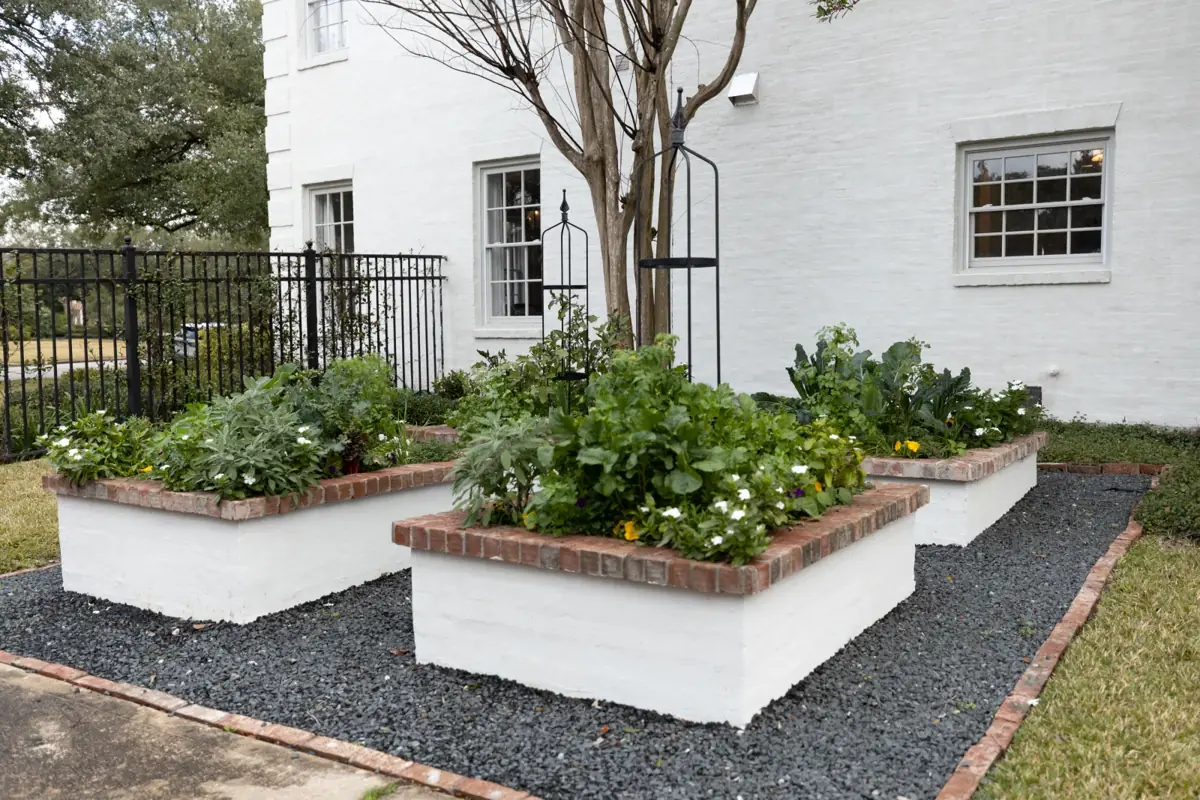
Brick gives the planting area a crisp, masonry edge that feels settled into the garden rather than temporarily placed on it. Repeated courses create a strong horizontal line, making the construction itself part of the view even when the bed is empty in January. It is a lovely choice to consider beside existing brickwork, provided the proportions and drainage work for the site. Treat this as a permanent investment: moving a finished masonry bed is a very different job from shifting an empty timber frame.
Best season: Use winter to price foundations, drainage, and installation. Build only when local conditions and the mortar or construction system allow it.
7. A Galvanized Stock-Tank Planter
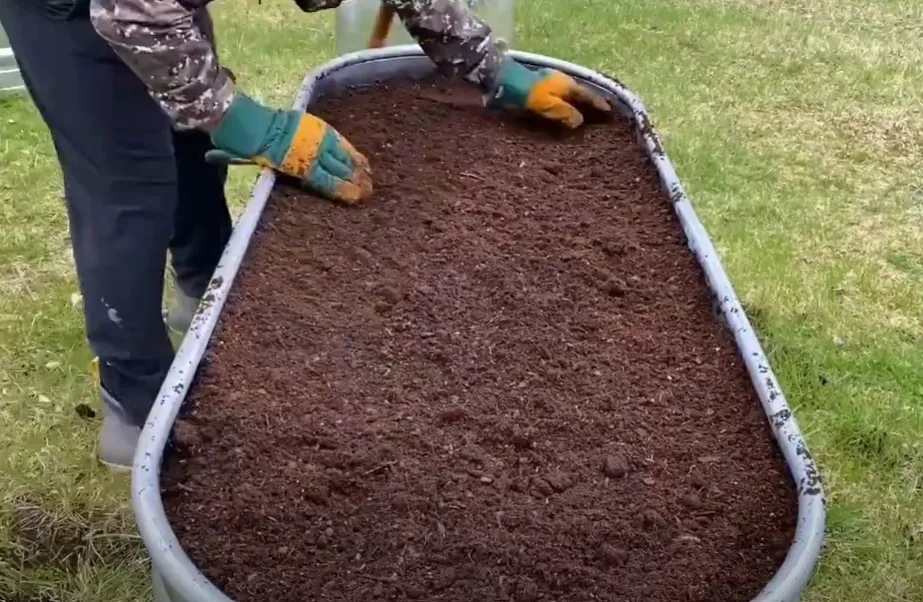
The rounded tank makes a self-contained growing vessel, with a continuous metal side instead of a wall assembled from separate boards. Its rim gives the planting area a tidy finish and makes the shape easy to place on a measured plan. Choose a tank with a known history rather than an old container that may have held chemicals. In a small garden, the curved ends can make the bed feel less boxy without pretending that the tank takes up no space.
Care tip: Provide drainage and set the tank on a stable, suitable surface before filling it. A filled tank is very heavy, so choose its position first.
8. Corrugated Metal Inside a Wooden Frame
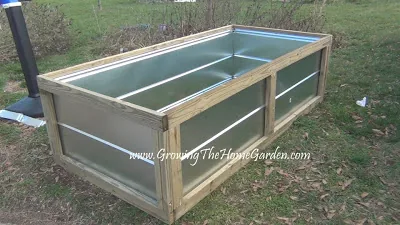
This bed combines shiny corrugated sides with a timber outline, giving the metal panels a clearly defined border. The narrow image shows the construction rather than a planted display, which is useful when you want to compare how the two materials meet. It offers a different look from an all-metal modular kit, but it also creates more joints to plan and inspect. For a farmhouse raised bed, let the practical frame proportions lead the design instead of adding decorative weight.
DIY level: Use a tested plan that secures cut metal edges and accounts for soil pressure. Wear appropriate hand and eye protection when handling panels.
Shop the Look: Raised-Bed Planning Supplies
A few useful supplies can support more than one design: appropriately sized corner brackets for a taller wooden build, garden twine for laying out a footprint, a hand trowel, and labels for the first planting plan. These are similar supporting supplies, not a claim that they appear in the creator photos.
For marking the future footprint, garden twine is easy to adjust; a hand trowel and plant labels can wait until the planting plan is settled.

- Heavy-Duty Steel: Made from thick powder-coated steel, these L-shaped raised bed corner brackets are rust-resistant, corrosion-proof, and provide strong support. They are durable, resistant to deformation or breakage, ensuring stable use in various outdoor environments
- Stackable Design: The garden bed corner brackets are stackable, allowing you to easily create taller garden beds, providing more space for plant growth. This reduces weed intrusion, prevents excessive bending, and minimizes the workload for daily maintenance
- Safety Protection: Featuring rounded corners to prevent sharp edges from causing harm to family members, children, or pets. Additionally, the raised bed brackets protect garden bed edges from damage caused by trimmers or lawnmowers
- Easy Installation: The staggered double screw holes ensure a tight and stable installation, enhancing the structural strength of your raised bed. Quick to assemble, saving time and effort, making it easy for garden enthusiasts to set up
- Wide Application: These metal corner brackets are not only suitable for garden beds but can also be used for building wooden furniture, sandbox frames, and other DIY projects

- 【NEW ARRIVAL】Bengal Imported 100% Natural Jute Twine String. 3 ply Φ/ 2 mm * 600 Feet (182M approx) twine. Larger amount, cost saving!!! Made of natural jute fiber, and won’t hurt environment.
- 【PURE NATURAL】Our twine is made from high-quality natural fibers. High quality, soft tone, natural texture of jute. No harmful substances, no extreme stinky smell. Eco-friendly, biodegradable, and easy to use around the house. Our jute twine is soft but strong, and it will prevent items you beading or hanging from damaging.
- 【DECORATION&CRAFT】Make a pretty gift wrap, gift card string, photos string, art crafts and DIY projects. For wedding, birthday, and more, to create a handmade rural style decoration.
- 【FEATURES】Our jute twines are widely used in packaging, strapping, gardening, greenhouses, pastures, bonsai because of its abrasion resistance, corrosion resistance, rain resistance and easy to use.
- 【MANUFACTURER】We are the professional manufacturer engaged in the research, development, production, sale and service of many kinds of ropes. Our products are exported to North America, Europe, Australia and Southeast Asia and other areas. We are committed to providing best products and services. If you have any questions, please contact us.

- Thickened Aluminum Alloy Material: Our gardening shovel is made of high-quality aluminum alloy material, allowing the garden trowel to dig deeply into the soil and cut through hard turf easily. The 0.08 inch thickness makes our spade shovel more sturdy and long lasting, ensures durability and stability during use, and makes the trowel not easy to break and long lasting
- Ergonomic Design: The trowel garden tool is designed with an ergonomic rubber-grip handle that reduces hand and wrist fatigue while digging. The high-quality non-slip TPR material of the handle makes the trowel garden tool easy to hold and comfortable to use. Saving your labor, time and energy
- Easy to Store: The small hand trowel is lightweight and compact, makes it easy to store on your garden bag and carry out for gardening. The hanging hole in the handle is designed to accommodate a rope. You can hang the hand shovel for gardening on everywhere you want when you need to do gardening works in your own garden or other places
- Easy to clean: Our hand trowel has a smooth surface, with a polished aluminum knife head that is rustproof and long lasting. The small garden shovel is also easy to clean after use, ensuring its smooth appearance and remaining rust resistant for an extended period of time
- Multi-function: This small shovel is suitable for a wide range of horticultural tasks, including digging, weeding, loosening soil, aerating, transplanting, etc. The great gardening tools for women, small shovels for gardening, digging shovel, small plant tools

- 【Value for Money】: Great value plant labels pack included 500 Pcs white plastic plant tags 4inch*0.62inch(10cm*1.6cm) with a bonus permanent marking pen, enough plant markers can meet your different needs and plant makers name tags will make plant header look clearer.
- 【Durable Waterproof Materials】: These plant markers plant labels for seedlings are made of high standard quality PVC plastic. Water resistance, and will not rust like metal tags or rot like wooden labels, not easy to break and brittle.
- 【Easy to Use】: These plastic plant labels markers, pointed on end and square on the other, The shape of the garden labels is very easy to insert into the soil, easily cleaned with household cleaner for reuse. Plant tags' smooth edge without injuring plants and hands.
- 【Easy to Write】: Garden tags labels both side are blank, you can write on any side, matte surface easy to write on the plant labels to record the true condition of the plants or flowers. With the bonus permanent marking pen, the ink on the plant label will not easy to be washed away by rain, or fade in the sunlight.
- 【Wide Application】: Our plastic seed tags can be used to write cultivar name, plant names.They really help you remind what is where, perfect for vegetable seedlings, greenhouses, gardening project, pot experiments, etc.
Which Raised Garden Bed Fits Your Plans?
Choose by construction and working height first; leave the whole-yard arrangement until you know the size of the bed you can actually maintain.
| Your priority | Ideas to compare | Plan for |
|---|---|---|
| Simple, low starting point | 1 and 4 | Reach across the bed and a stable ground surface |
| A higher working surface | 3 and 5 | Personal working height, structural strength, and more growing medium |
| Metal rather than timber walls | 2, 7, and 8 | Safe edges, drainage, and secure connections |
| A lasting masonry feature | 6 | A permanent position and site-appropriate construction |
Measure reach, not just the empty rectangle
A bed about 3–4 feet wide can be workable when both long sides are accessible, but your own comfortable reach is the better test. A bed against a wall usually needs to be narrower. Mark the outline and pretend to plant the middle before committing to it. UNH Extension’s small-space raised-bed advice explains why access matters more than maximizing square footage.
Match the growing medium to the construction
An open-bottom bed can connect with suitable soil underneath, while an elevated box or tank behaves more like a large container. Do not solve drainage by adding a deep gravel layer beneath fine growing mix. Choose an appropriate bed-soil blend or container mix for the actual structure, and leave drainage outlets clear. More height should buy you useful root space, not simply an expensive volume to fill.
Choose materials with a known history
Avoid creosote-treated railroad ties, old wood of uncertain treatment, and containers that once held hazardous substances. Modern treated lumber is a more nuanced question than “all treated wood is unsafe”; follow current local guidance and product information. University of Georgia’s raised-bed materials guide is a helpful place to compare options before paying for a long-lived frame.
Winter planning tip: Keep a sketch with the bed’s inside dimensions, wall height, material list, and soil calculation. That one page makes it much easier to compare two designs fairly.
Pick one construction you can build or buy well, then give it enough room to work around. A useful bed is a better spring starting point than an ambitious frame that is awkward to reach.
Once you have picked a bed, plan what goes in it with these small vegetable garden layout ideas and the cool-season vegetables to direct-sow in early spring, or extend the season with these small greenhouse ideas.
Featured photo: 📷 Nicole Burke at Gardenary.