
This post contains affiliate links. As an Amazon Associate I earn from qualifying purchases.
Small vegetable garden layout ideas work best when they leave room for you as well as the crops. Winter is a useful time to compare a single bed, a compact group of beds, a keyhole footprint, or a separate container zone before spring planting begins. These eight real gardens focus on where to walk, reach, and grow upward—not which material to build a bed from. Borrow the arrangement that suits your available sunlight and everyday routes, then scale it to your own backyard.
Before you draw: Mark the sunniest usable area, the water source, and the route you need to keep clear. Measure your reach and any wheelbarrow or mobility equipment. A layout that leaves generous working space can be easier to maintain than one that fills every spare inch with soil.
1. Four Beds Around Clear Cross Paths
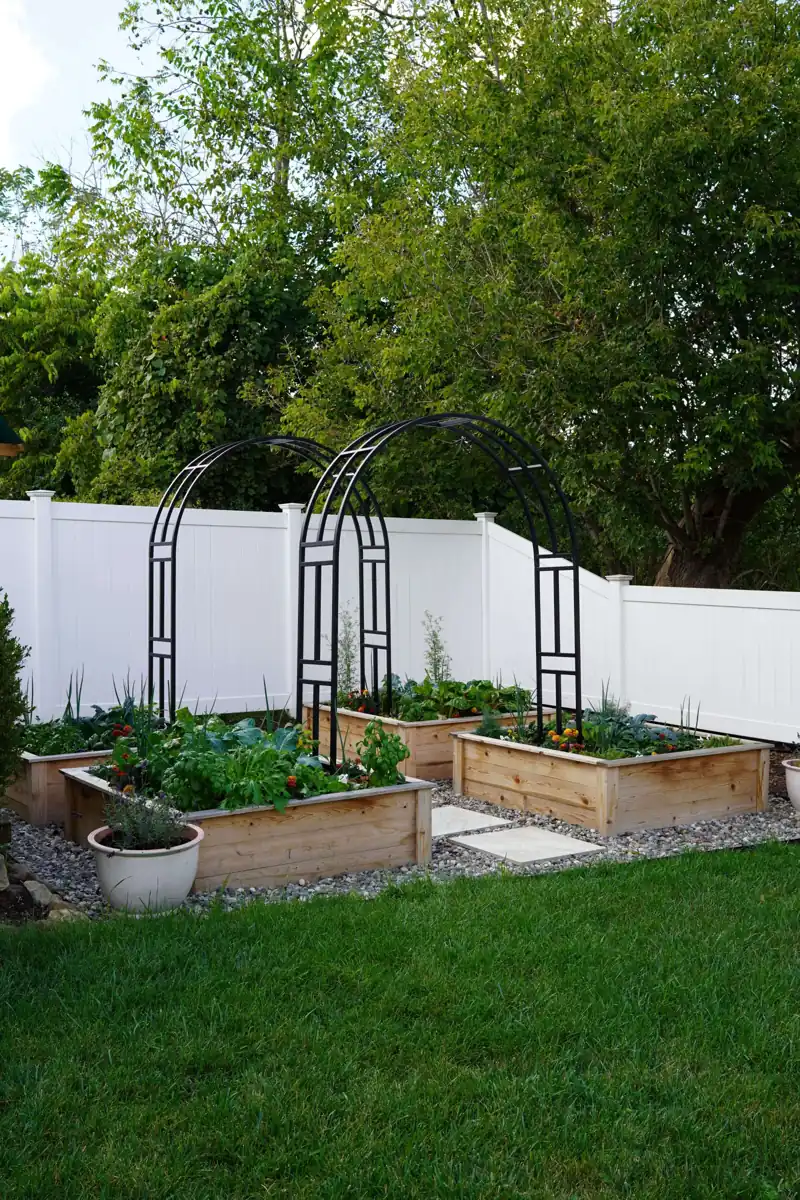
Four compact beds give this backyard growing area a deliberate center and clear divisions. The paths break a larger plot into manageable pieces, so you can tend one planting area without stepping through another. This arrangement is useful when you want separate crop groups or a tidy view from the house, but the spaces between beds must be measured as carefully as the beds themselves. A small four-bed kitchen garden should feel easy to enter, not like a puzzle you have to squeeze through.
Small-space tip: Mock up the whole footprint with temporary markers, including every path, before ordering beds. Leave room for opening a gate or turning with a basket.
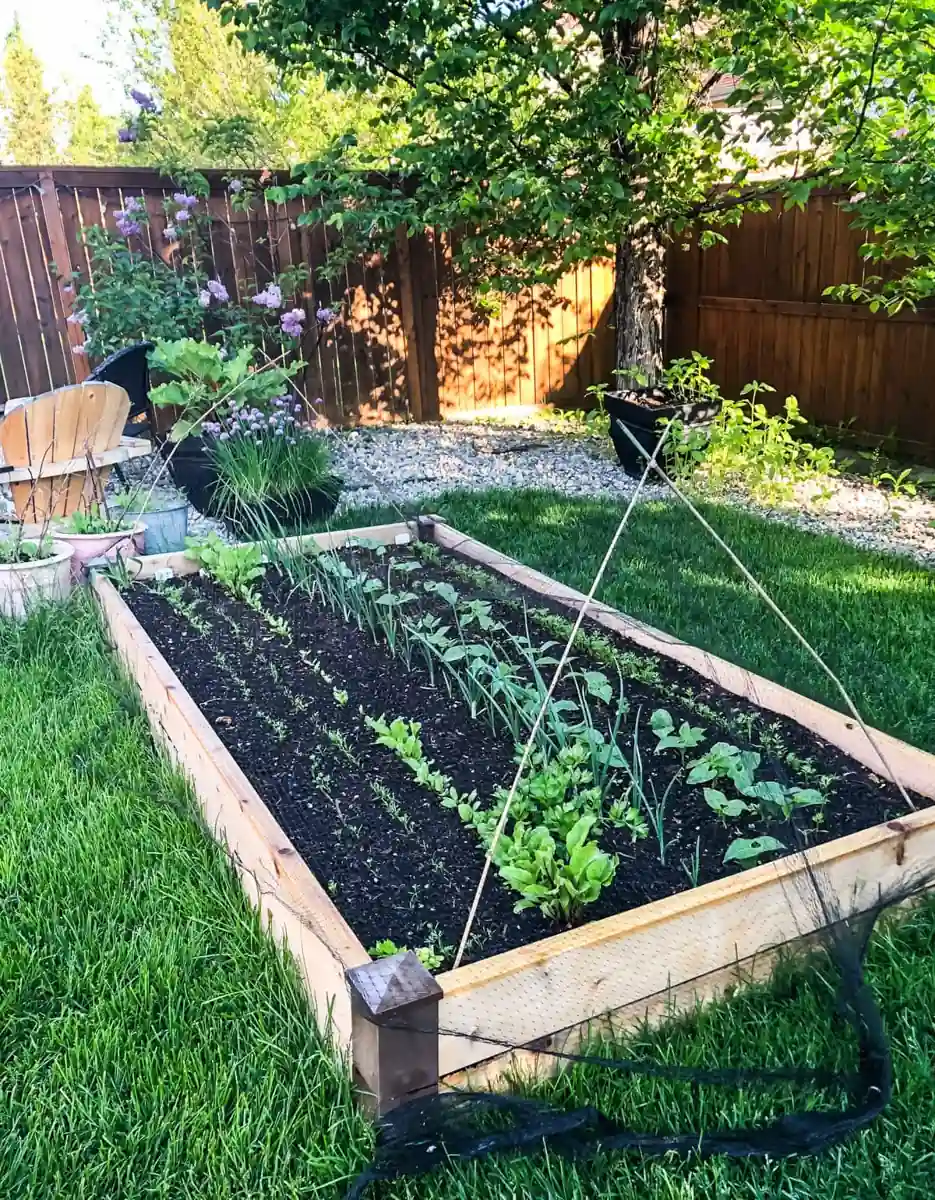
2. One Main Bed Beside an Open Lawn Edge
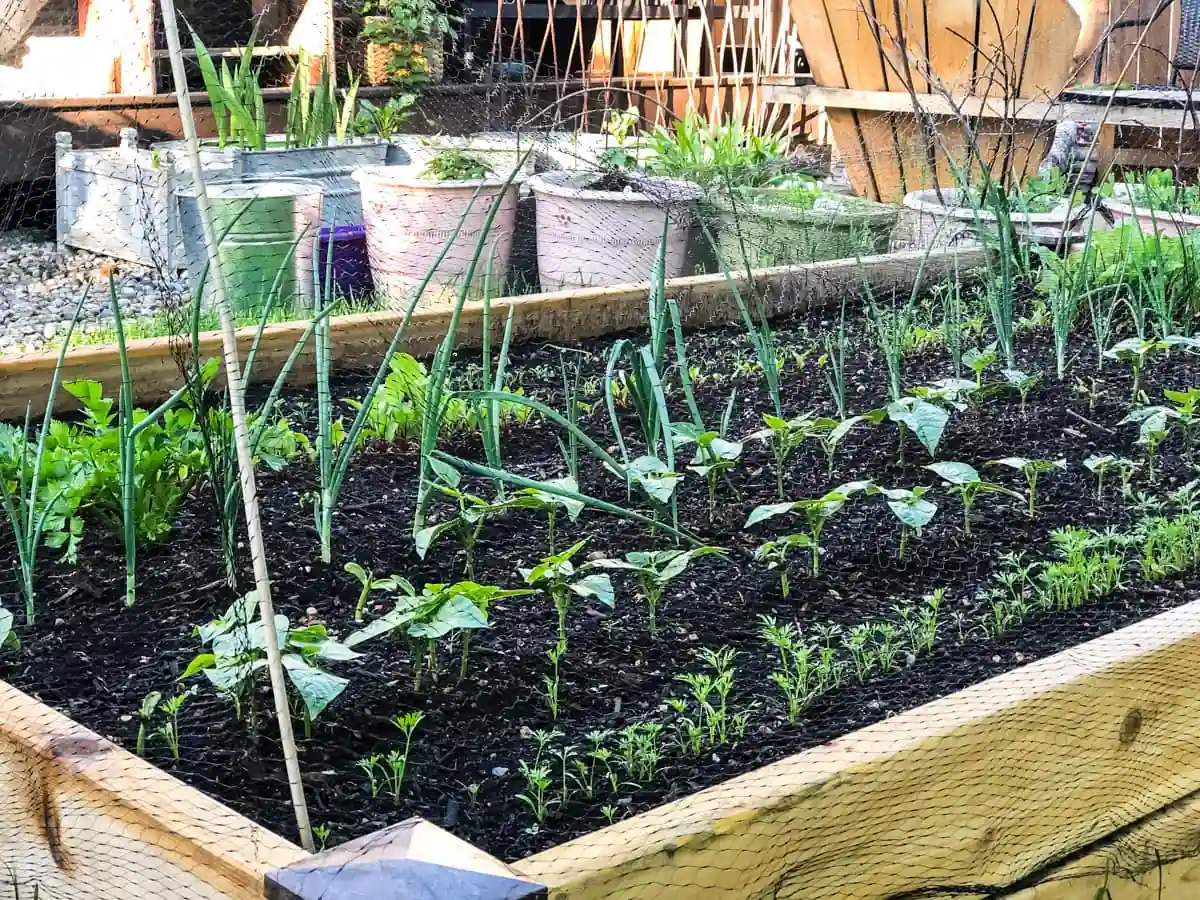
One long bed keeps this vegetable garden concentrated instead of scattering small plots across the yard. The grassy edge provides a clear working side, while the planting remains close enough to notice during an ordinary walk outside. It is a practical starting layout when you want to learn how much food gardening you enjoy before expanding. Keep the useful idea simple: one main growing area with straightforward access, not an automatic instruction to copy every length or planting density in the photograph.
Budget note: Start with one manageable footprint and keep the expansion area unbuilt. A hand trowel is a similar planting supply, not the tool identified in this photo.
3. A Keyhole Bed With an Inset Access Bay
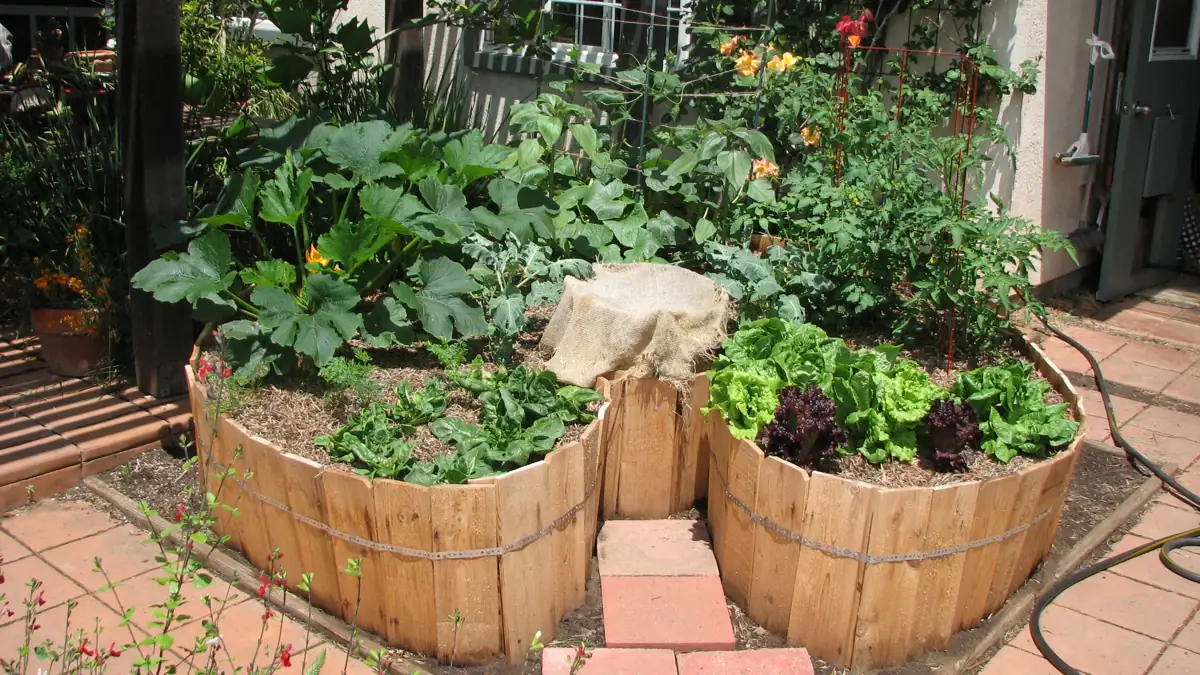
The circular planting area includes a wedge-shaped opening, bringing the gardener farther into the footprint without adding a path all the way through it. That changes how you reach the center and makes a rounded bed behave differently from a plain, broad circle. The pictured garden belongs to a specific creator; use its access idea rather than assuming its dimensions will suit every body or small yard. A keyhole vegetable garden layout only earns its place if you can comfortably tend the entire planted area.
DIY level: Test the reach from both the outside edge and the inset bay. Do not promise automatic water savings or copy an oversized diameter without trying the access first.
4. A Separate Cluster of Vegetable Pots
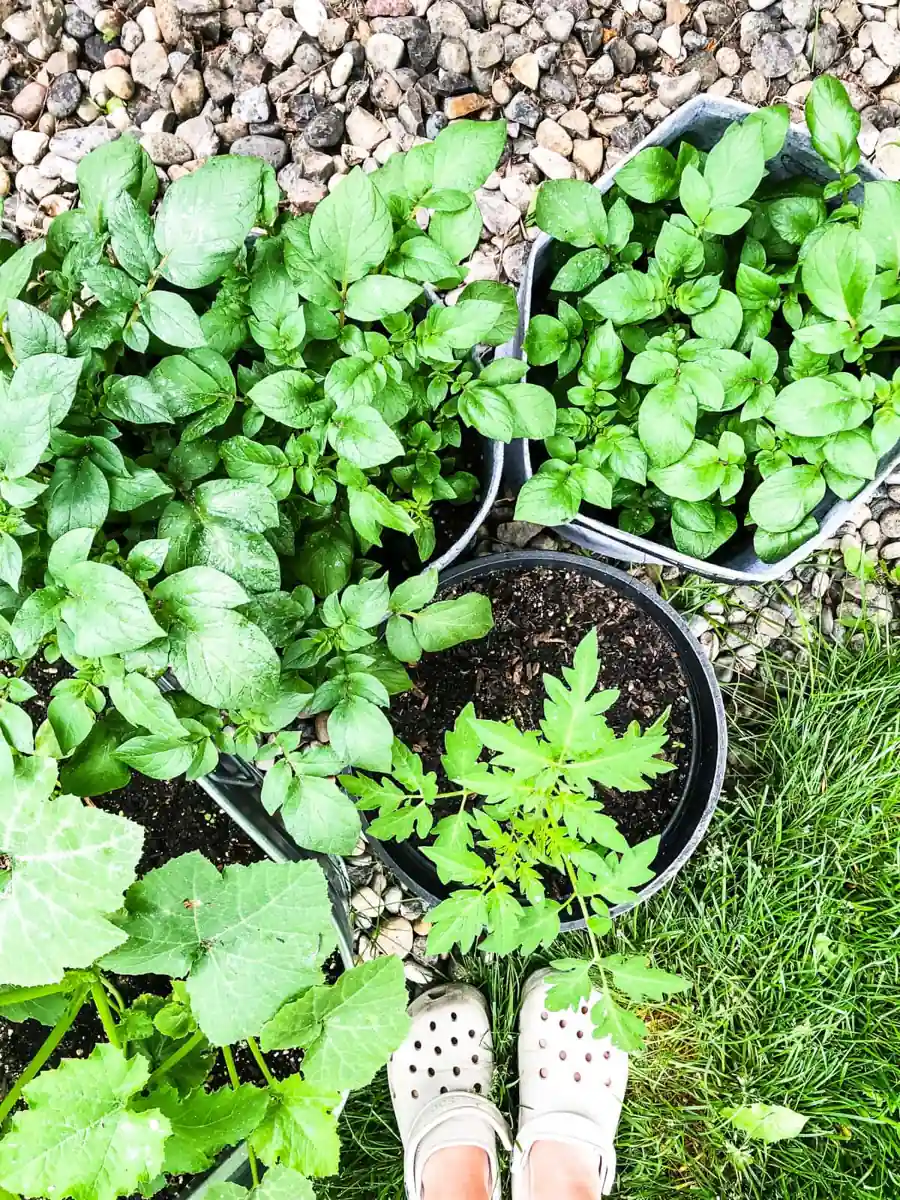
Grouped pots create a growing zone without turning the whole yard into permanent beds. Here, several containers sit together beside a gravel edge, keeping related tasks in one place while the individual pots remain distinct. This is useful for borrowing sunny space near a patio or keeping a few crops separate from the main plot. Once containers are filled, however, they are heavy; treat the arrangement as a planned cluster rather than assuming every pot can be shifted casually during summer.
Quick facts: Tomatoes and potatoes: grown as annual crops · Full sun · Moderate effort · Keep foliage and green potato parts away from pets
Renter-friendly: Confirm that the surface can support the filled pots and that drainage will not damage it. Keep a clear walking route and leave the drainage holes unobstructed.
5. An Upright Trellis Along One Bed Edge
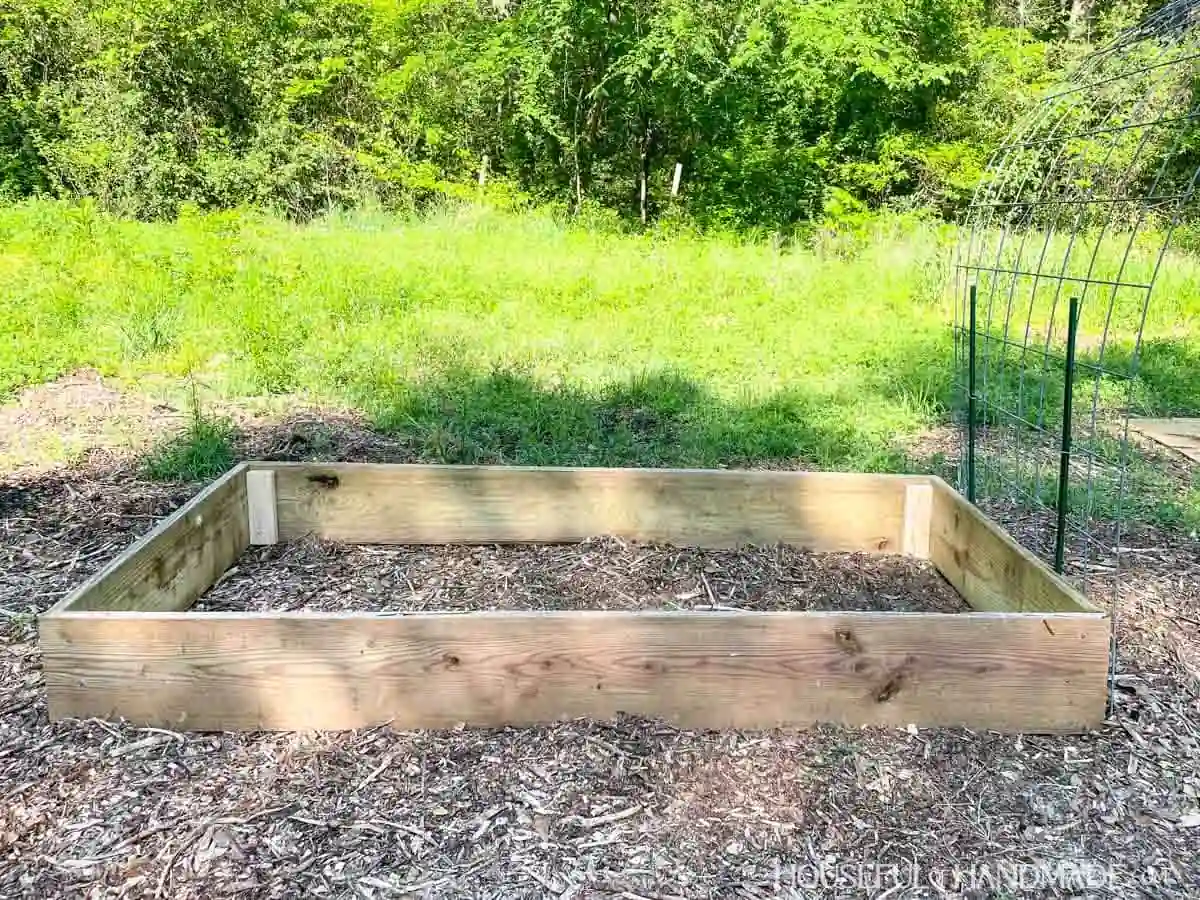
The tall panel sits at one side of the bed rather than in the middle of the working path. That simple placement can give climbing crops a vertical zone while preserving a clear edge for planting and harvesting. In a Northern Hemisphere backyard, the northern side is often worth considering to reduce shade on lower crops, but the actual fence, trees, and sun path still matter. This vertical vegetable garden layout is about putting height in the right place, not attaching a trellis wherever a gap happens to be.
Make it last: Secure the structure for wind and the mature crop’s weight. For light plant ties, similar natural jute garden twine is not a substitute for structural fastening.
6. A Gated Kitchen-Garden Room
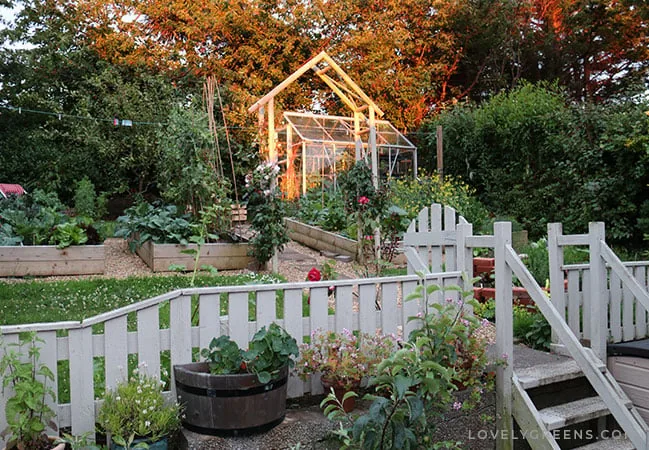
A white picket fence and a clear entrance make this edible garden read as one intentional area. Inside, the beds and paths share a common boundary rather than spilling across every available corner. Borrow that sense of enclosure for a small backyard when you want a tidy vegetable area beside other garden uses. The fence is a visual and access feature; its appearance alone does not prove it excludes every animal. Plan the entrance around the route you actually use from the house.
Small-space tip: Keep labels inside the growing area so crop changes do not make the layout confusing. Similar plant markers are useful for temporary row and succession notes.
7. Short Bed Rows Following a Gentle Slope
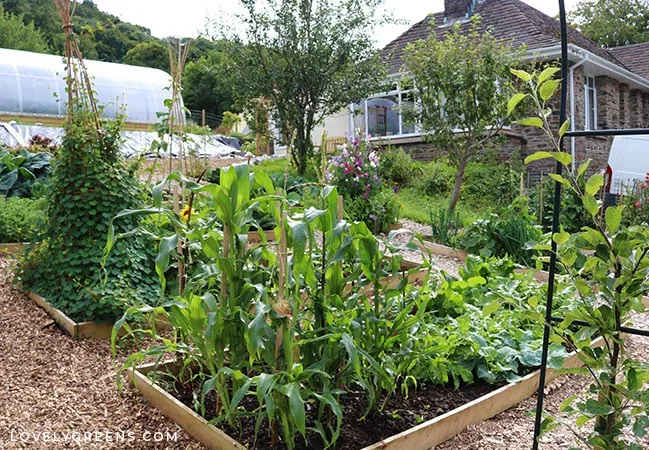
The larger garden in this photograph shows a useful principle for a smaller yard: repeat manageable planting areas and leave a clear route between them. The ground is not perfectly flat, so the sequence of beds and paths matters more than forcing one enormous rectangular plot onto the space. Borrow the rhythm at a smaller scale instead of copying the full garden. This is a starting point for a gently sloping backyard, not an engineering plan for a steep bank or retaining wall.
DIY level: Check drainage and footing before building across a slope. Significant changes in grade or retaining structures may need qualified local advice.
8. Lettuce Beneath a Leaning Cucumber Trellis
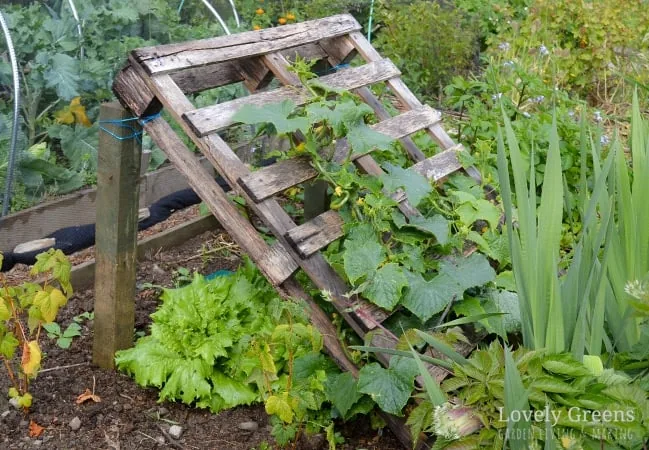
A leaning wooden support creates an upper growing plane while lettuce occupies the lower space. Unlike the upright edge trellis in idea 5, this arrangement deliberately uses the sheltered pocket underneath. It is a useful way to think about layers, provided both crops receive suitable light and remain reachable. The summer shade that may help lettuce can be too much in a cool, dim garden, so do not treat the combination as a guaranteed yield trick. Keep the harvest route open as the vines grow.
Quick facts: Annual crops · Cucumbers need sun and warmth; lettuce can use some summer shade · Moderate effort · Keep equipment and seed treatments away from pets
Care tip: Check soil warmth before setting out tender cucumber plants; a soil thermometer is a useful supporting tool. Use only sound, known-safe wood for any food-garden structure.
Shop the Look: Small-Garden Planning Supplies
Garden twine, a hand trowel, plant labels, and a soil thermometer support laying out and planting a compact food garden. These are similar practical supplies, not products identified in the creator photos.

- 【NEW ARRIVAL】Bengal Imported 100% Natural Jute Twine String. 3 ply Φ/ 2 mm * 600 Feet (182M approx) twine. Larger amount, cost saving!!! Made of natural jute fiber, and won’t hurt environment.
- 【PURE NATURAL】Our twine is made from high-quality natural fibers. High quality, soft tone, natural texture of jute. No harmful substances, no extreme stinky smell. Eco-friendly, biodegradable, and easy to use around the house. Our jute twine is soft but strong, and it will prevent items you beading or hanging from damaging.
- 【DECORATION&CRAFT】Make a pretty gift wrap, gift card string, photos string, art crafts and DIY projects. For wedding, birthday, and more, to create a handmade rural style decoration.
- 【FEATURES】Our jute twines are widely used in packaging, strapping, gardening, greenhouses, pastures, bonsai because of its abrasion resistance, corrosion resistance, rain resistance and easy to use.
- 【MANUFACTURER】We are the professional manufacturer engaged in the research, development, production, sale and service of many kinds of ropes. Our products are exported to North America, Europe, Australia and Southeast Asia and other areas. We are committed to providing best products and services. If you have any questions, please contact us.

- Thickened Aluminum Alloy Material: Our gardening shovel is made of high-quality aluminum alloy material, allowing the garden trowel to dig deeply into the soil and cut through hard turf easily. The 0.08 inch thickness makes our spade shovel more sturdy and long lasting, ensures durability and stability during use, and makes the trowel not easy to break and long lasting
- Ergonomic Design: The trowel garden tool is designed with an ergonomic rubber-grip handle that reduces hand and wrist fatigue while digging. The high-quality non-slip TPR material of the handle makes the trowel garden tool easy to hold and comfortable to use. Saving your labor, time and energy
- Easy to Store: The small hand trowel is lightweight and compact, makes it easy to store on your garden bag and carry out for gardening. The hanging hole in the handle is designed to accommodate a rope. You can hang the hand shovel for gardening on everywhere you want when you need to do gardening works in your own garden or other places
- Easy to clean: Our hand trowel has a smooth surface, with a polished aluminum knife head that is rustproof and long lasting. The small garden shovel is also easy to clean after use, ensuring its smooth appearance and remaining rust resistant for an extended period of time
- Multi-function: This small shovel is suitable for a wide range of horticultural tasks, including digging, weeding, loosening soil, aerating, transplanting, etc. The great gardening tools for women, small shovels for gardening, digging shovel, small plant tools

- 【Value for Money】: Great value plant labels pack included 500 Pcs white plastic plant tags 4inch*0.62inch(10cm*1.6cm) with a bonus permanent marking pen, enough plant markers can meet your different needs and plant makers name tags will make plant header look clearer.
- 【Durable Waterproof Materials】: These plant markers plant labels for seedlings are made of high standard quality PVC plastic. Water resistance, and will not rust like metal tags or rot like wooden labels, not easy to break and brittle.
- 【Easy to Use】: These plastic plant labels markers, pointed on end and square on the other, The shape of the garden labels is very easy to insert into the soil, easily cleaned with household cleaner for reuse. Plant tags' smooth edge without injuring plants and hands.
- 【Easy to Write】: Garden tags labels both side are blank, you can write on any side, matte surface easy to write on the plant labels to record the true condition of the plants or flowers. With the bonus permanent marking pen, the ink on the plant label will not easy to be washed away by rain, or fade in the sunlight.
- 【Wide Application】: Our plastic seed tags can be used to write cultivar name, plant names.They really help you remind what is where, perfect for vegetable seedlings, greenhouses, gardening project, pot experiments, etc.

- Easy-to-read green, yellow, and red tick marks for easy monitoring
- 5-inch stainless steel stem penetrates soil and worm compost to the perfect depth.
- Worms are happiest between 55F and 90F. This thermometer lets you know when to cool them off or to move them to a warmer place
Which Small Vegetable Garden Layout Fits Your Backyard?
Choose the arrangement around your main constraint, then adapt its scale before deciding where individual crops will go.
| Your situation | Ideas to compare | Why they help |
|---|---|---|
| You want a simple first growing area | 2 and 4 | One main bed or one pot cluster limits the footprint |
| You want distinct crop zones | 1 and 6 | Cross paths or a boundary make separate areas easy to read |
| Reach is the main difficulty | 3 | An inset bay can bring you closer to the center |
| Floor space is limited | 5 and 8 | Vertical or layered planting uses another plane |
| The ground is gently uneven | 7 | Short repeated beds can fit the space more flexibly |
Keep paths useful after plants grow
A path that looks generous beside an empty bed may narrow once leaves and support structures fill out. Check access with the equipment you actually use, including a wheelbarrow or mobility aid where relevant. Firm, stable surfaces and enough turning space matter more than squeezing in one additional row. UNH Extension’s raised-bed access advice is a useful reference when balancing bed width and working space.
Draw summer shade onto the winter plan
A leafless tree can make a December corner look sunnier than it will be in June. Include fences, buildings, future trellises, and the mature canopy when comparing growing spots. Fruiting vegetables usually need a sunny position, while some leafy crops can tolerate less direct light. Keep the layout flexible enough to adjust crop placement without rebuilding the whole space.
Reserve a small working zone
Leave a practical spot for a watering can, harvest basket, or tray of transplants without blocking the main route. You do not need a permanent potting bench in every small yard, but you do need somewhere to pause while gardening. Plan water access now, especially for container clusters that may need more frequent attention than crops rooted in a bed.
Winter planning tip: Photograph the proposed footprint from the house and walk it with a basket. If it interrupts an everyday route now, it is unlikely to become more convenient when the plants are full-sized.
Choose one layout principle that solves your biggest problem, then leave a little breathing room. Small vegetable gardens feel more generous when you can reach, walk, water, and harvest comfortably.
Featured photo: 📷 Jo-Anna Rooney.