
This post contains affiliate links. As an Amazon Associate I earn from qualifying purchases.
The best Christmas plants to grow and give match the recipient’s home, not just the wrapping paper. Amaryllis offers the pleasure of watching a bulb flower, holiday cactus can become a lasting houseplant, and a rosemary tree suits someone with a genuinely sunny spot. This list separates short seasonal projects from plants that need years of room and care. Before choosing, ask about light, pets, and whether the recipient wants a flowering surprise or a green companion beyond December.
How these plants were chosen: These are established holiday plants with different growing needs, not a ranked list from personal trials. Outdoor USDA zones are background information; most gifts should stay in frost-free indoor conditions. Mature sizes may be much larger than the plant in the gift pot.
1. Amaryllis (Hippeastrum Hybrids)
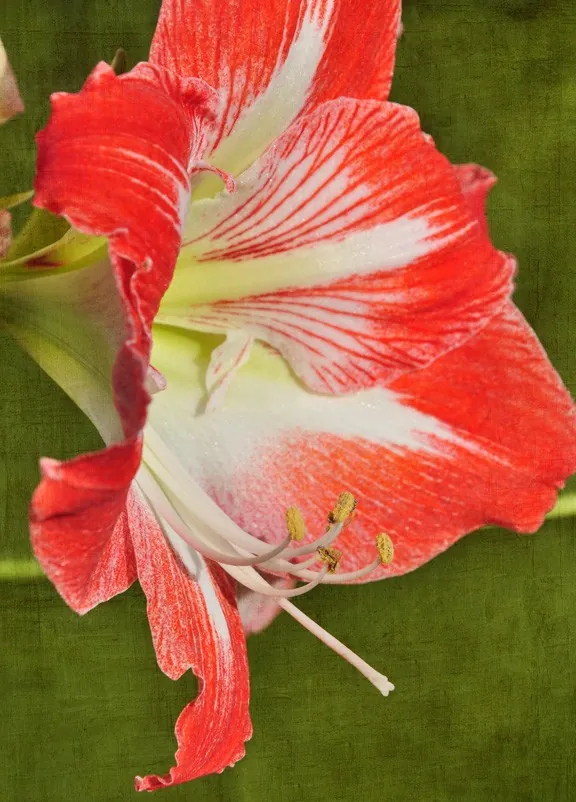
Zones: 7–10 in the broad genus reference; hybrid hardiness varies—keep gift bulbs frost-free · Light: Bright light during growth · Size: 1–3 ft. · Interest: Large winter flowers when forced · Pets: Treat as toxic; bulbs are a particular concern
A bare or newly planted amaryllis bulb is a gift with a little anticipation built in. The striped flower here illustrates the dramatic bloom shape, not a guarantee that any unnamed bulb will produce the same color. It is a better choice for someone who enjoys following new growth than for a recipient who needs flowers open on a fixed party date.
Container note: Give the bulb a draining pot only 1–2 inches wider than itself. A similar 6-inch terracotta pot with drainage may fit some bulbs, but measure first; the pot size is not universal. Avoid presenting a waxed, rootless novelty bulb as equivalent to a normal bulb for long-term growing.
2. Holiday Cactus (Schlumbergera)
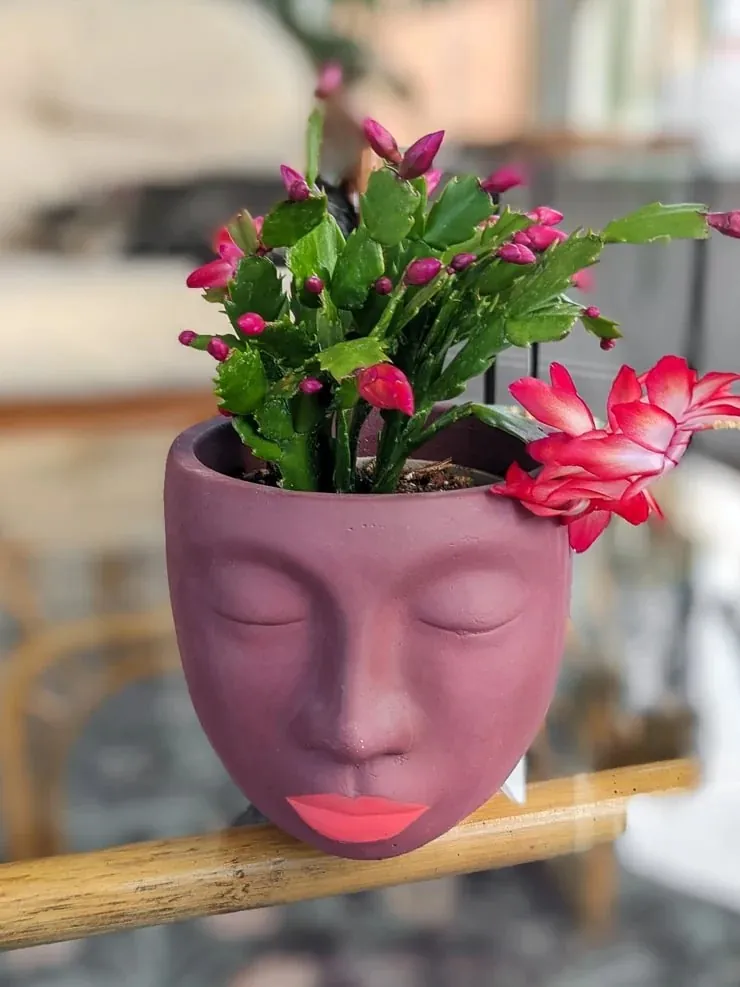
Zones: 10–12 for S. truncata; keep indoor gifts frost-free · Light: Bright indirect light · Size: About 9–12 in. tall and 1–2 ft. wide for S. truncata · Interest: Seasonal flowers and arching stems · Pets: Christmas cactus is listed non-toxic by ASPCA; confirm the plant’s identity
The pink flowers and jointed stems make this a cheerful living gift that does not have to disappear with the decorations. Plants sold as Christmas cactus may actually be Thanksgiving cactus or hybrids, so keep the care card at the holiday-cactus level unless the nursery provides a reliable name. The exact cultivar in the photograph is not identified here.
Winter note: Treat it as an epiphytic cactus, not a desert cactus that should stay bone-dry for weeks. Give it drainage, bright indirect light, and a reasonably steady position; do not promise another flush of flowers just because the calendar reaches Christmas.
3. Rosemary Tree (Salvia rosmarinus)
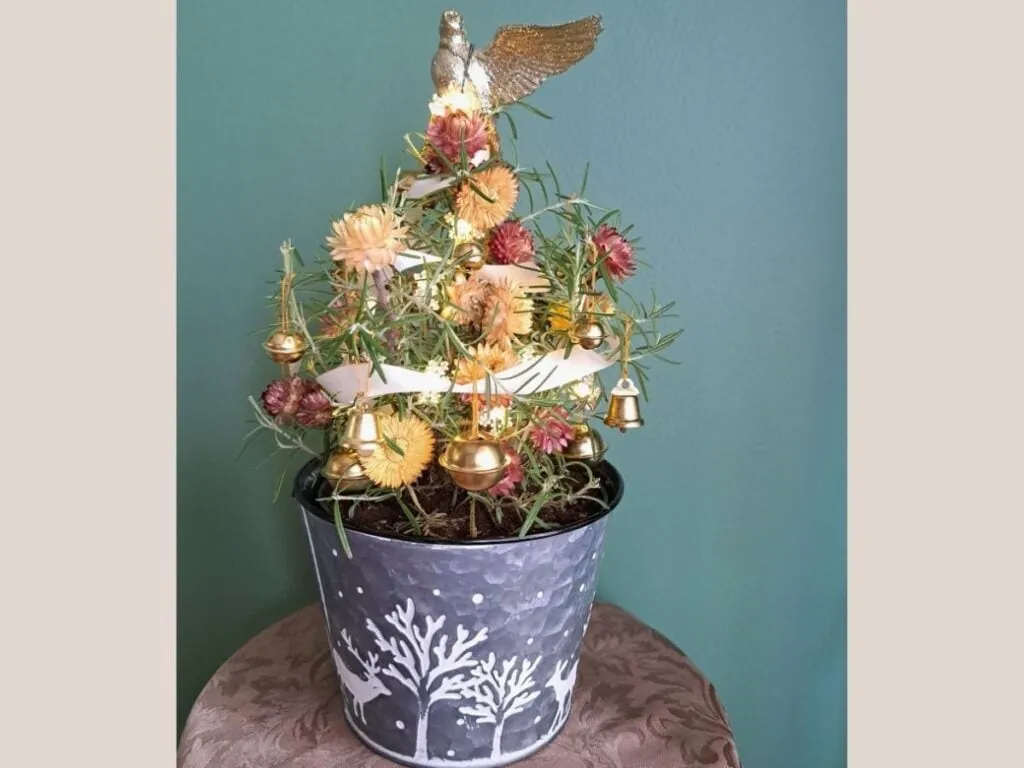
Zones: 8–10, cultivar-dependent · Light: Sunny indoor window; full sun outdoors · Size: Species about 4–5 ft. untrimmed; gift topiaries kept smaller · Interest: Fragrant evergreen leaves · Pets: Non-toxic to cats and dogs (ASPCA, under Rosmarinus officinalis)
A rosemary tree is a clipped herb, not a miniature conifer. Its fine leaves give a small plant a convincing tree silhouette, but keeping that silhouette is only part of its care: winter light and root health matter more than the ribbon. Choose it for a recipient with a sunny growing position rather than a dim mantel.
Care tip: Keep the root ball from drying completely while allowing surplus water to drain. Small herb snips are useful for modest shaping. Only suggest kitchen use if the plant is sold for culinary growing and its treatment history is suitable; an ornamental holiday label is not that assurance.
4. Norfolk Island Pine (Araucaria heterophylla)
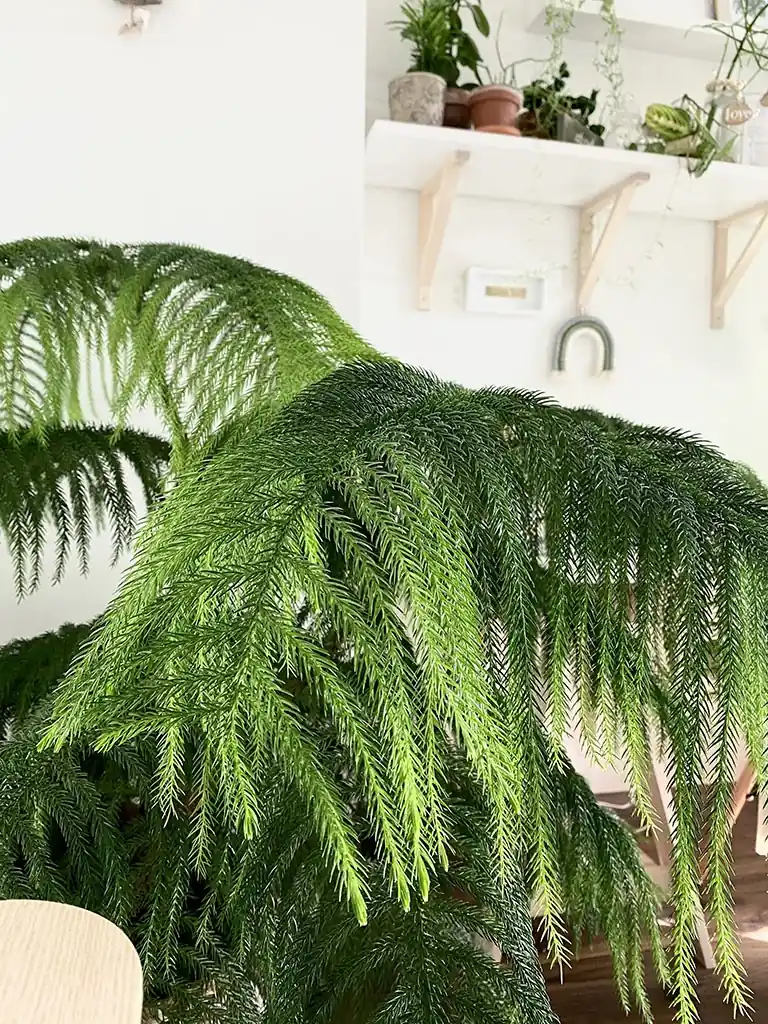
Zones: 9–11 outdoors; protect indoor gifts from cold · Light: Bright light · Size: Can reach about 9 ft. indoors; far larger outdoors · Interest: Soft-looking, tiered evergreen branches · Pets: Non-toxic to cats and dogs in ASPCA’s Araucaria heterophylla listing
Norfolk Island pine gives you a living tree shape without being a cold-hardy Christmas-tree conifer. Cecilia’s mature indoor specimen shows the important part of this gift: it can become a substantial plant, not remain a tiny tabletop tree. Choose it for someone willing to make space for its layered branches and bright position after the holidays.
Container note: Use only very light decorations, if any, and remove them after the season. Keep the growing pot draining and away from heater blasts. The ASPCA listing uses the common name Australian pine but gives the botanical name Araucaria heterophylla; do not confuse it with unrelated plants sharing that common name.
5. Paperwhites (Narcissus, Paperwhite Group)
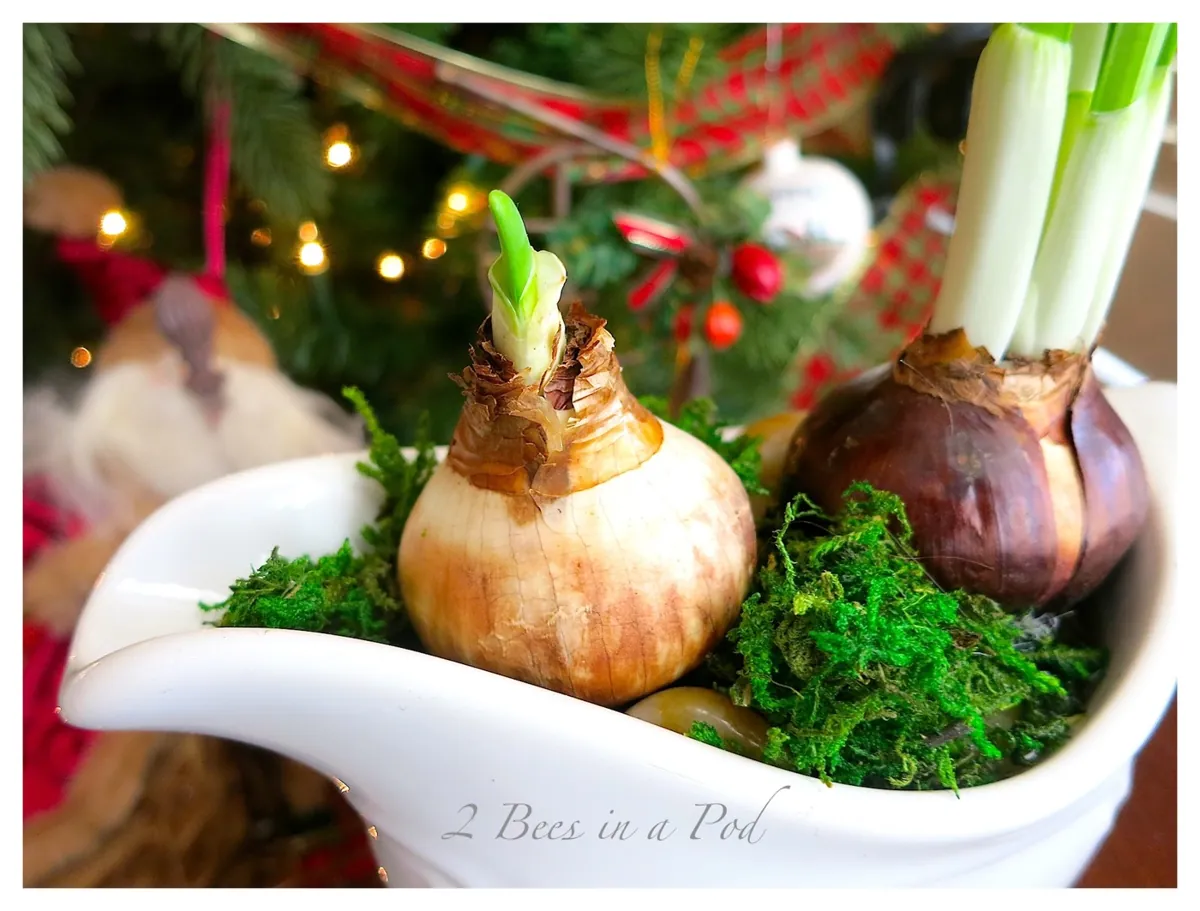
Zones: Hardy from about zone 8 where locally suitable; seasonal indoor project in colder areas · Light: Bright light during growth · Size: N. papyraceus about 14 in.; named varieties vary · Interest: Fragrant clusters, often 4–6 weeks after planting · Pets: Toxic to cats and dogs; bulbs are especially risky (ASPCA)
Paperwhites suit a short winter growing project with a visible beginning: the photograph shows bulbs and green shoots, not an already flowering arrangement. They do not need the chilling period required by many spring bulbs. The scent is part of the gift, so ask first if the recipient is sensitive to strong floral fragrance or prefers a less scented plant.
Budget note: Add blank plant labels with the name, planting date, and a pet caution. Do not store loose bulbs beside onions or other food.
Variety choices: Illinois Extension describes white-flowered ‘Ziva’ as strongly scented and ‘Inbal’ as a less objectionable-scent option for some people; neither is confirmed as the pictured variety.
6. Poinsettia (Euphorbia pulcherrima)
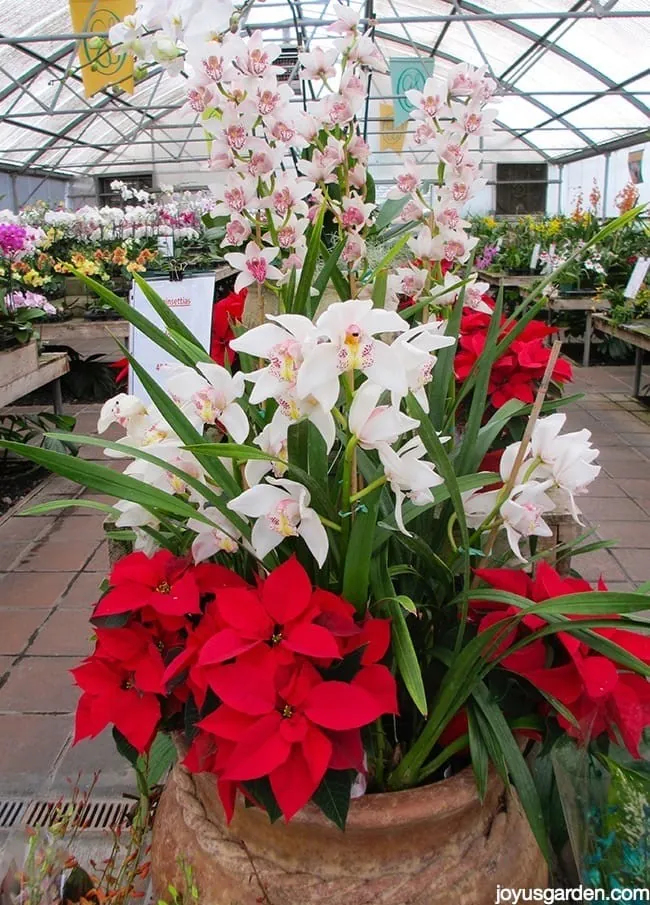
Zones: 9–11 outdoors; gift plants need frost-free conditions · Light: Bright indirect light indoors · Size: 3–12 ft. as an outdoor shrub; nursery gift pots much smaller · Interest: Colorful winter bracts · Pets: Irritating sap; usually mild mouth/stomach upset, not harmless (ASPCA)
The red poinsettias in this nursery display are the gift choice here; the tall white flowers behind them are cymbidium orchids, not part of the poinsettia. Look for healthy foliage and a plant that has not been exposed to cold during transport. Its red parts are bracts surrounding the small true flowers, so choose for overall condition rather than expecting large petals.
Winter note: Remove or open decorative foil so water can escape, and protect the plant on the trip home. A small 300 mL watering can can help direct water into a small pot without soaking the wrapping. Keep sap and chewed leaves away from pets.
7. Florist Cyclamen (Cyclamen persicum)
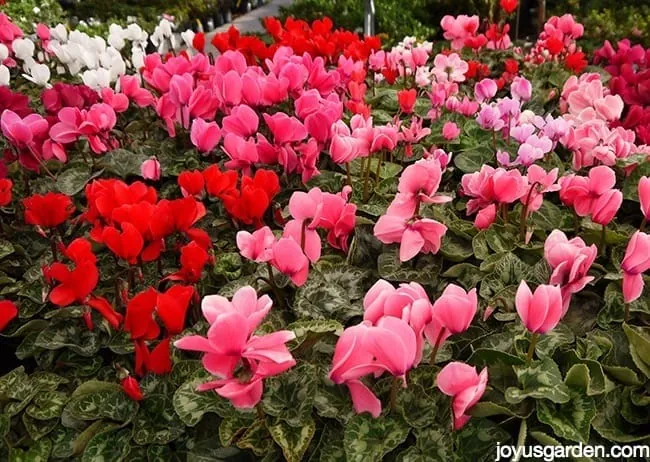
Zones: 9–11 outdoors; not the hardy garden cyclamen · Light: Bright indirect light · Size: About 6–9 in. in the species reference; cultivars vary · Interest: Winter flowers and patterned foliage · Pets: Toxic to cats and dogs; tubers are especially concerning (ASPCA)
Florist cyclamen is a lovely option for someone with a cool, bright room. The flowers rise above patterned leaves, giving a small plant plenty of detail without needing extra decoration. Its preference for cool conditions makes it a poor match for a hot room beside a fireplace, even if the colors look perfect there.
Care tip: UMass Extension suggests cool conditions around 50–65°F for holiday cyclamen. Keep the mix appropriately moist without soaking the crown or leaving the pot in water. Do not present florist cyclamen as interchangeable with cold-hardy outdoor Cyclamen hederifolium or C. coum.
8. Moth Orchid (Phalaenopsis)
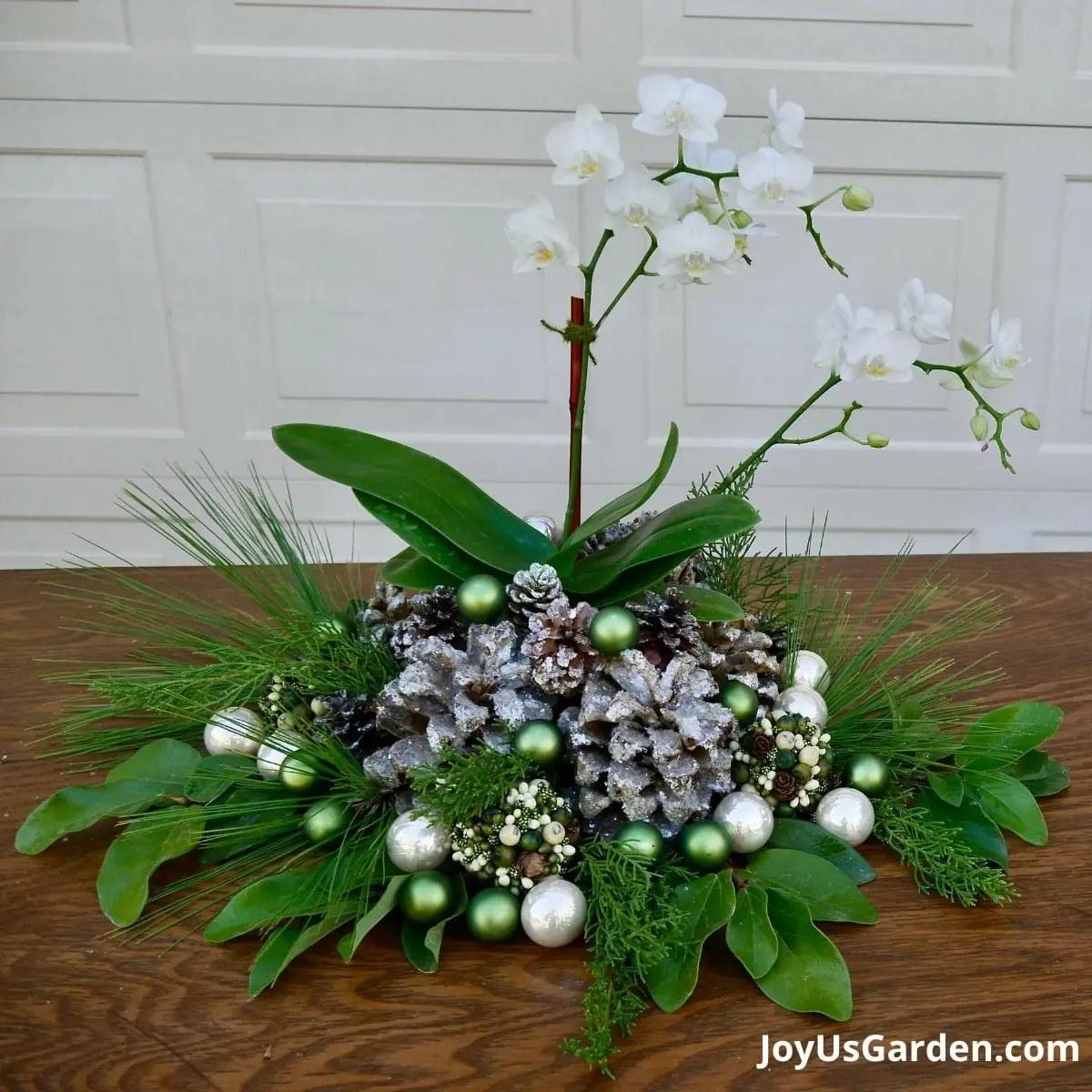
Zones: 10–11 outdoors; usually a frost-free houseplant · Light: Bright indirect light · Size: About 18–24 in., depending on hybrid and flower spike · Interest: Long-lived flower display when conditions suit · Pets: Non-toxic to cats and dogs (ASPCA)
A flowering moth orchid is a good alternative when the recipient would rather enjoy an open display than wait for a bulb. The broad leaves and arching white blooms are the living plant in this arrangement; evergreen clippings and ornaments around the base are temporary extras. Keeping those extras removable makes it easier to inspect the actual growing pot.
Container note: Check for drainage and an airy orchid-growing medium rather than treating the roots like those of a soil-grown shrub. Do not let a decorative outer pot hide standing water. Non-toxic plant status does not make decorative picks, moss treatments, clips, or fertilizers safe to eat.
Match the Christmas Plant to the Recipient
| Plant | Outdoor zones/reference | Likely long-term commitment | Pet caution |
|---|---|---|---|
| Amaryllis | 7–10 genus only; hybrid varies | Bulb aftercare and possible reblooming | Treat as toxic |
| Holiday cactus | 10–12 for S. truncata | Long-term indoor plant | Christmas cactus non-toxic; identify |
| Rosemary tree | 8–10; cultivar varies | Sunny, actively tended herb | Non-toxic (ASPCA) |
| Norfolk Island pine | 9–11 | Potentially 9 ft. indoors | Non-toxic (ASPCA) |
| Paperwhites | About 8+ where suitable | Often one forced indoor season | Toxic (ASPCA) |
| Poinsettia | 9–11 | Seasonal color; longer care optional | Irritant; usually mild effects |
| Florist cyclamen | 9–11 | Cool-room flowering plant | Toxic (ASPCA) |
| Moth orchid | 10–11 | Ongoing orchid-specific care | Non-toxic (ASPCA) |
Useful Extras for a Living Plant Gift
Choose an appropriate draining pot, a small watering can, herb snips, or blank care labels only when they suit the plant. These are supplies, not the exact containers or tools shown in the creator photographs.

- Premium Quality: These terra cotta pots are constructed of high-quality clay, which allows more water and air to circulate freely within the pots while yet maintaining their structural integrity. It's an excellent choice for cactus, succulents, and other plants that thrive in dry soil, and it's also appropriate for areas with lower temperatures. The high air permeability of the pot walls helps the soil to dry out more quickly
- Safe Packaged: Orceler clay pots are fired at a temperature of 1922℉, deliver superior breathability, durability, and crack resistance. All packages have undergone a drop test from a height of 3 feet to ensure they will remain intact during delivery
- Tiny and Cute: The terracotta pots have a height of 5.3 inches and a width of 6 inches, while the attached saucers measure 0.98 inches in height and 4.6 inches in diameter. They are specifically intended for growing succulents, cactus and herbs. Plants and soil are not included in our 4pcs plant pots set
- Drainage Hole & Saucer: A small hole on the bottom of each flower pot enables water to drain and ventilate the soil. This helps avoid root rot, which may be caused by overwatering. The saucer serves to collect any extra water and maintain a clean environment around it
- Ideal for Indoor & Outdoor Usage: The cute clay pots for plants are perfect for plants nursing, ornament for balcony or room, wedding, baby shower, and other party decoration, crafts creation and more. Suitable for school projects of teaching children about growing plants

- Flexible watering options: This watering can features a detachable shower head that switches between a direct stream and a soft spray; it suits both indoor and outdoor plants, giving you flexible control over water flow
- Precision with long spout: This plant watering can features a long spout that reaches deep into pots and corners, delivering water straight to soil without splashing. Its twist-tight joint prevents leaks, so every drop goes where needed
- Right-size for daily watering: This small watering can holds 1.8L for several pots in one go, saving refill trips without being heavy. Compact size allows easy storage, semi-open inlet for simple filling, ergonomic handle for comfort
- Built to last: This indoor watering can, made of thick-walled plastic, resists falls, compression, and aging; it stays intact with daily use, making it a durable small watering can for indoor plants that avoids cracks or breakage
- Style meets function: Available in seven trendy colors, this flower watering can adds a decorative touch to your home or garden; it works for flowers, trees, and potted plants, blending practicality with aesthetics

- GARDENING ESSENTIAL: With these stainless steel blade gardening shears, pruning tasks like cutting flower stems or maintaining your herb garden are easier with fast and clean cuts
- MAXIMUM POWER AND PRECISION: Micro-tip blades on these garden clippers (handheld) cut all the way to the tip for clean, healthy cuts making these great plant pruning shears
- LONG-LASTING AND RELIABLE: Stainless steel blades stay sharp through heavy use and provide excellent durability for lasting value; Fiskars garden pruners and tools are built to last
- QUALITY GARDEN TOOLS: Designed to help you cultivate a better garden, Fiskars hand pruners are equipped with smart technologies and award-winning, ergonomic features that make it easier and more enjoyable to transform your outdoor space
- INCLUDES: (1) Pair of 6" Fiskars Micro-Tip Pruning Shears with Sheath; Lifetime Warranty


- 【Value for Money】: Great value plant labels pack included 500 Pcs white plastic plant tags 4inch*0.62inch(10cm*1.6cm) with a bonus permanent marking pen, enough plant markers can meet your different needs and plant makers name tags will make plant header look clearer.
- 【Durable Waterproof Materials】: These plant markers plant labels for seedlings are made of high standard quality PVC plastic. Water resistance, and will not rust like metal tags or rot like wooden labels, not easy to break and brittle.
- 【Easy to Use】: These plastic plant labels markers, pointed on end and square on the other, The shape of the garden labels is very easy to insert into the soil, easily cleaned with household cleaner for reuse. Plant tags' smooth edge without injuring plants and hands.
- 【Easy to Write】: Garden tags labels both side are blank, you can write on any side, matte surface easy to write on the plant labels to record the true condition of the plants or flowers. With the bonus permanent marking pen, the ink on the plant label will not easy to be washed away by rain, or fade in the sunlight.
- 【Wide Application】: Our plastic seed tags can be used to write cultivar name, plant names.They really help you remind what is where, perfect for vegetable seedlings, greenhouses, gardening project, pot experiments, etc.
Make the Gift Easier to Keep
Give the growing instructions, not a watering calendar
Write the plant’s name, light needs, and how to check its growing medium on a short card. Include the nursery’s cultivar label if available. The UMass holiday-plant care guide shows why a sunny rosemary, cool cyclamen, and bright-light bulb project should not share one generic “water weekly” instruction. Check that the recipient can remove wrapping and drain the pot.
Treat bulbs as living projects with a timetable
Paperwhites commonly flower around four to six weeks after planting; amaryllis often takes six to eight weeks, with variation by bulb and conditions. Give a growing plant without promising a precise bloom date. Illinois Extension’s paperwhite guidance also explains the scent differences among named varieties. A labeled bulb from a reputable source makes a more useful gift than an unidentified bargain.
Check the botanical name in a pet household
The ASPCA listing for Araucaria heterophylla is a useful example of why scientific names matter: common names can refer to unrelated plants. For all gifts, keep toxic bulbs and loose plant material inaccessible, and remember that “non-toxic” is not an invitation to chewing. If ingestion occurs, contact a veterinarian rather than relying on a holiday-plant myth.
The nicest living gift is one the recipient can genuinely grow. Match the plant to their light, space, and pets, and include enough information to make January feel as welcoming as December.
For more indoor gift ideas, browse these low-light indoor plants for winter or these indoor herb garden ideas.
Featured photo: 📷 Jennifer at Three Dogs in a Garden.