
This post contains affiliate links. As an Amazon Associate I earn from qualifying purchases.
The best low-light indoor plants for winter tolerate a dimmer season without needing a sunny windowsill all day. Snake plant and ZZ plant suit a restrained watering routine, while cast-iron plant is worth considering when pet safety narrows your choices. None is a plant for a dark, windowless corner: low-light tolerance means coping with limited usable light, not living without it. Choose a plant for the light it actually receives in December and January, then give it a brighter position or supplemental light if growth struggles.
How these plants were chosen: Each has documented tolerance of lower light and is grown for foliage rather than dependable winter flowers. Zones below describe outdoor, in-ground hardiness—not a safe temperature for an indoor pot. Pet listings concern the identified plant only; even a non-toxic plant is not pet food.
1. Snake Plant (Dracaena trifasciata)
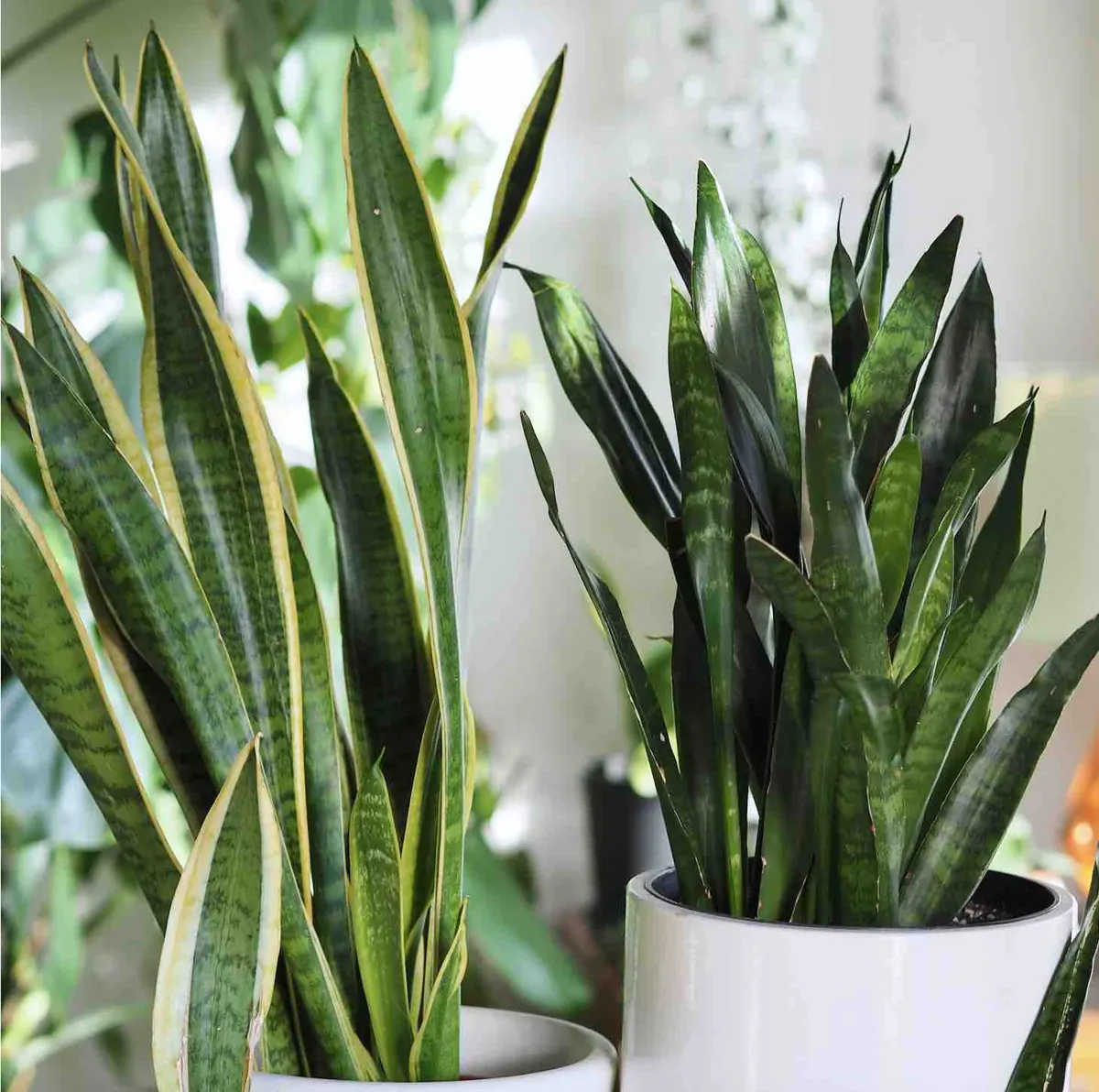
Zones: 10–12 · Light: Low tolerated; brighter indirect light preferred · Size: Typically 2–4 ft., cultivar-dependent · Interest: Upright evergreen leaves · Pets: Toxic to cats and dogs (ASPCA)
The upright leaves make snake plant a useful choice when floor space is narrow but you want some height. Its thick foliage stores water, which is helpful in a slower-growing winter season but does not excuse a permanently wet pot. The plant pictured shows the straightforward, vertical effect; compact cultivars create a very different silhouette.
Winter note: Let the mix dry between waterings and check the pot before adding more. A small 300 mL watering can can help direct water around a compact pot; larger specimens will need multiple fills.
Other varieties: NC State lists compact ‘Hahnii’ forms and yellow-edged ‘Laurentii’; these are alternatives, not cultivar identifications for the photograph.
2. Cast-Iron Plant (Aspidistra elatior)
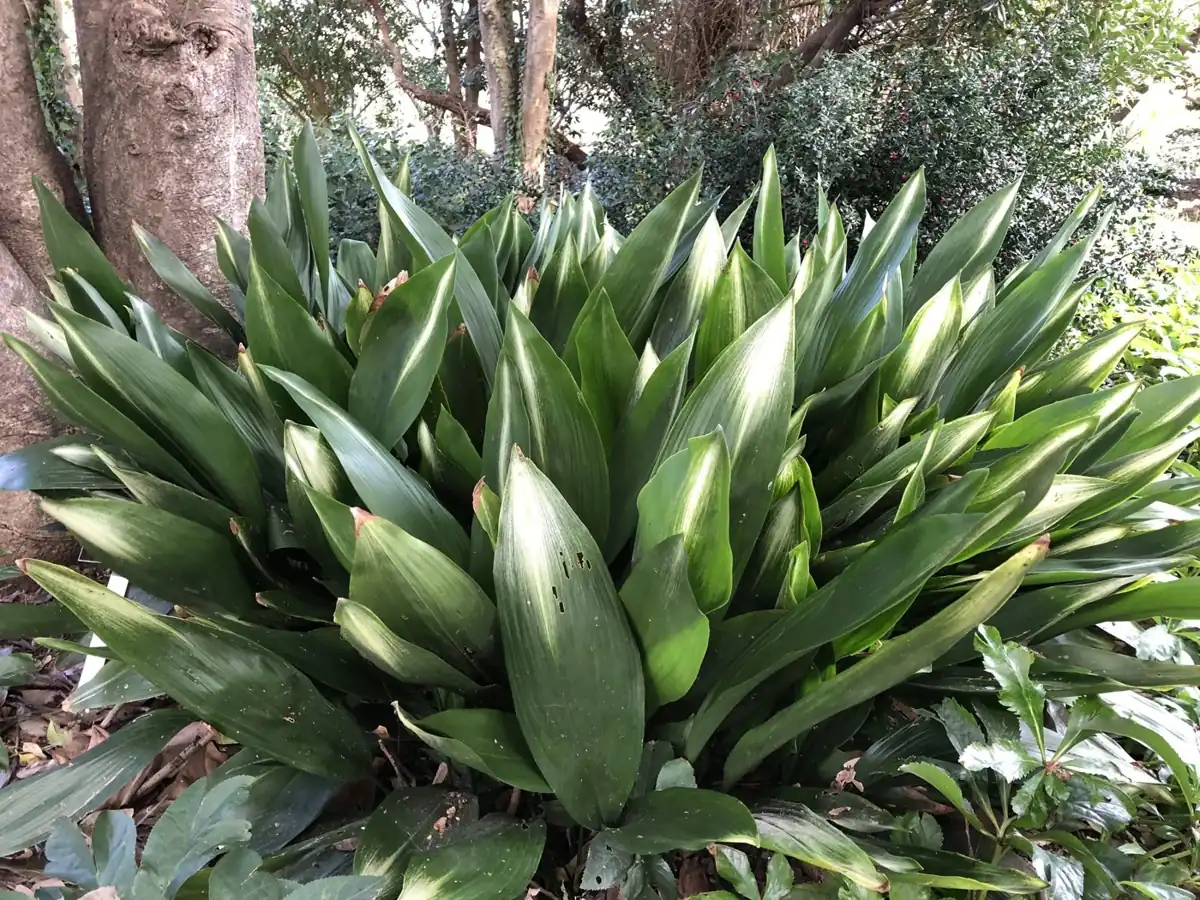
Zones: 7–11 · Light: Low to medium indirect light · Size: 1–3 ft. tall and wide · Interest: Broad evergreen leaves · Pets: Non-toxic to cats and dogs (ASPCA)
Cast-iron plant offers broad, plain green leaves without the trailing stems that invite a curious cat to play. Its reputation for tolerance makes it a sensible candidate for a dimmer room, although it still needs natural or supplemental light. Brie Arthur’s photograph shows an outdoor clump of the same species, illustrating the leaf shape—not an indoor placement to copy.
Container note: Choose a pot with drainage and avoid burying the plant in an oversized volume of wet mix. Its outdoor hardiness does not mean a houseplant should sit against freezing window glass; keep its indoor conditions reasonably steady.
3. Pothos (Epipremnum aureum)
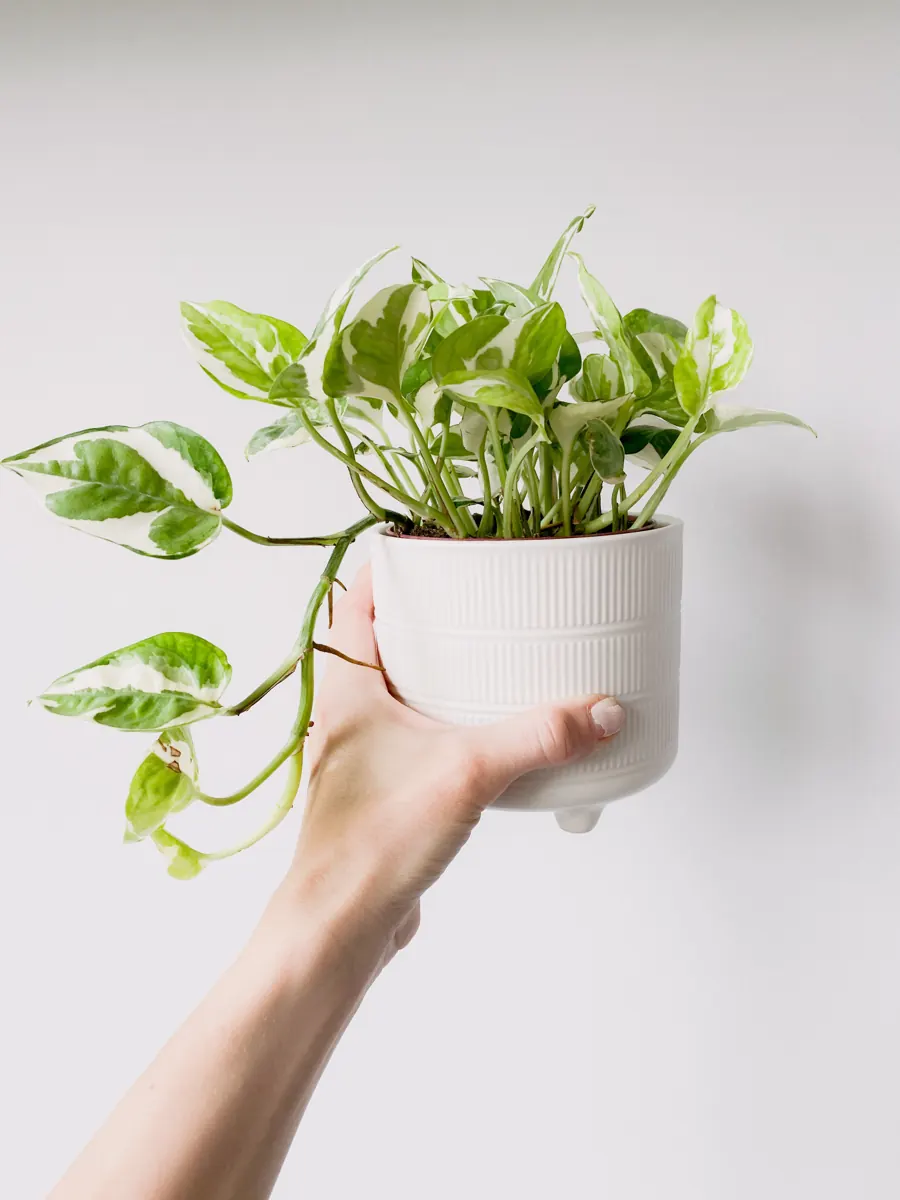
Zones: 10–12 · Light: Low tolerated; filtered bright light preferred · Size: Trailing/climbing vines can reach 40 ft.; prune to fit · Interest: Heart-shaped foliage · Pets: Toxic to cats and dogs (ASPCA)
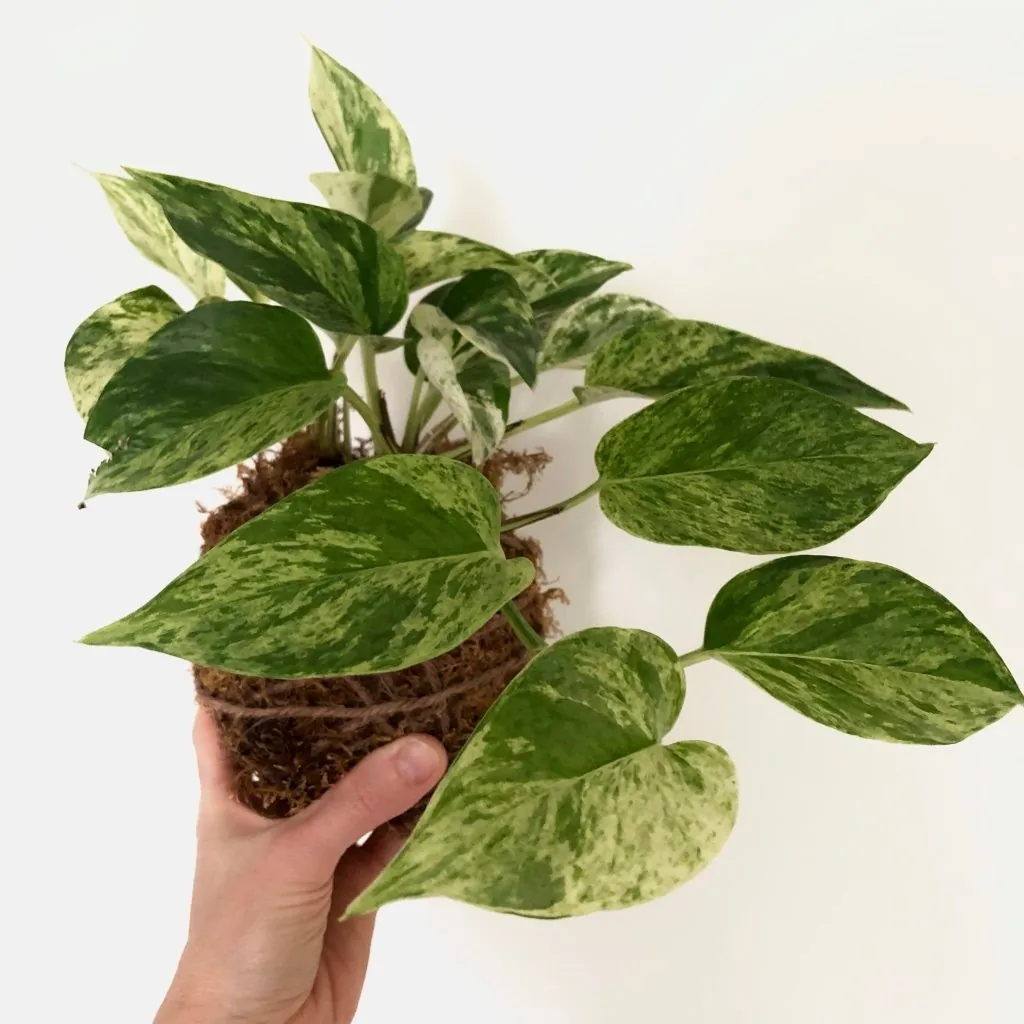
Pothos gives you a soft, trailing option instead of another upright clump. The plant pictured is a compact, variegated pothos; greener forms generally make a more practical low-light choice than heavily white-variegated ones. A small plant can sit on a shelf with its stems guided where you want them, but it should not be left to become a tangle over a heater or a pet’s favorite perch.
Budget note: Start with the size your shelf can hold and prune stems as needed rather than buying a large hanging plant immediately. Use blank plant labels to record the plant name and last soil check—not an automatic watering date.
Variety to look for: ‘Jade’ is a solid-green option identified by both NC State and Wisconsin Extension as suitable for low-light positions; the photograph shows a variegated plant, not that cultivar.
4. Chinese Evergreen (Aglaonema)
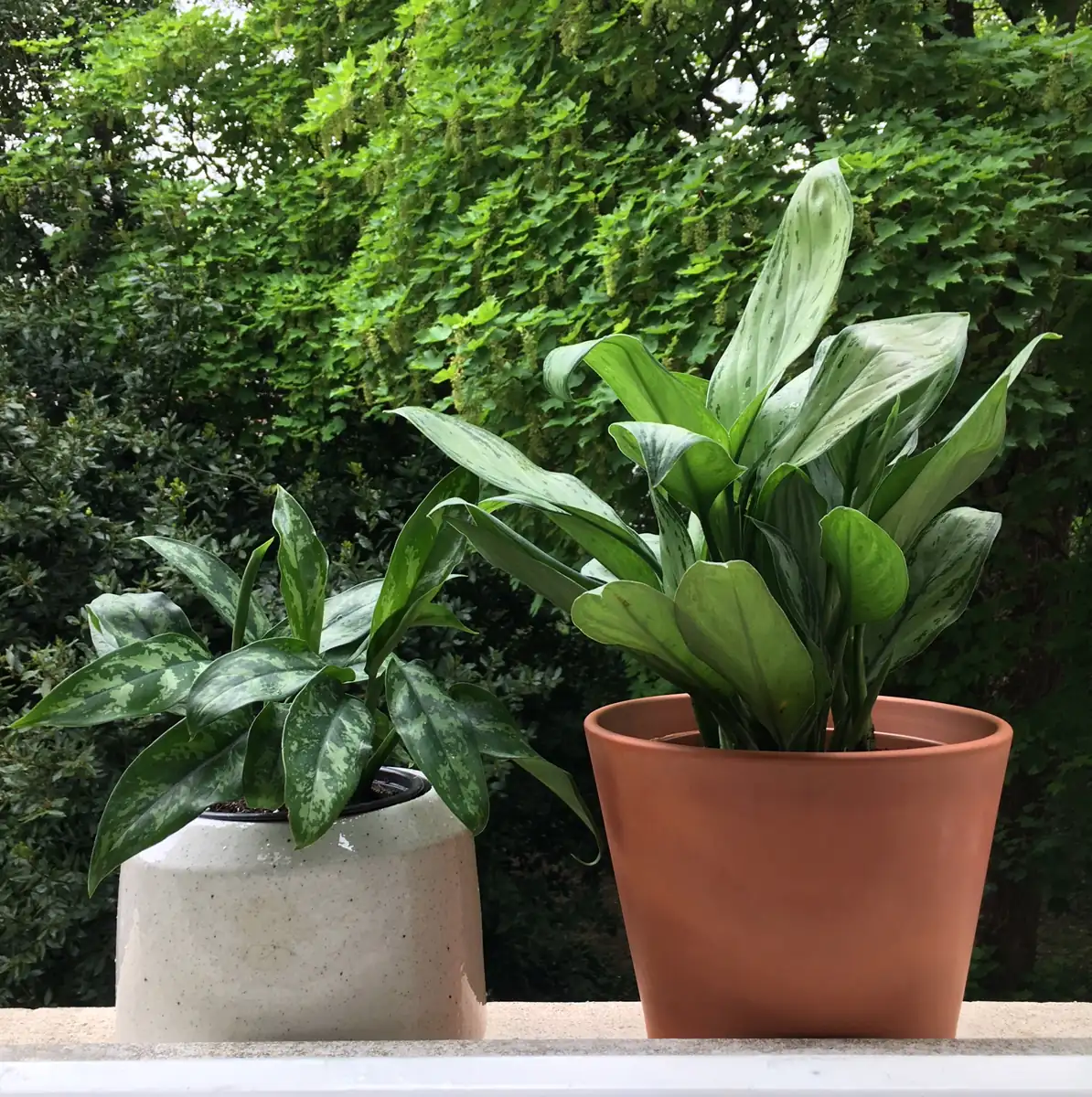
Zones: 10b–11 (genus reference) · Light: Low to medium indirect light · Size: About 12–20 in. tall in the NC State genus profile; hybrids vary · Interest: Patterned foliage · Pets: Treat as toxic; irritating calcium oxalates (Extension)
The two plants pictured show both silver-patterned and solid-green leaves, adding pattern without relying on flowers. The recommendation stays at genus level rather than pretending every modern hybrid has identical needs. In a winter room, a greener or silver-green plant is generally a more cautious starting point than expecting bright pink foliage to hold its color in the darkest spot.
Winter note: Keep the plant away from cold drafts and do not respond to slower winter growth by soaking the pot. Pet-safety wording here follows the Extension genus warning; an ASPCA listing for a different Aglaonema species is not proof of an exact hybrid match.
5. Peace Lily (Spathiphyllum)
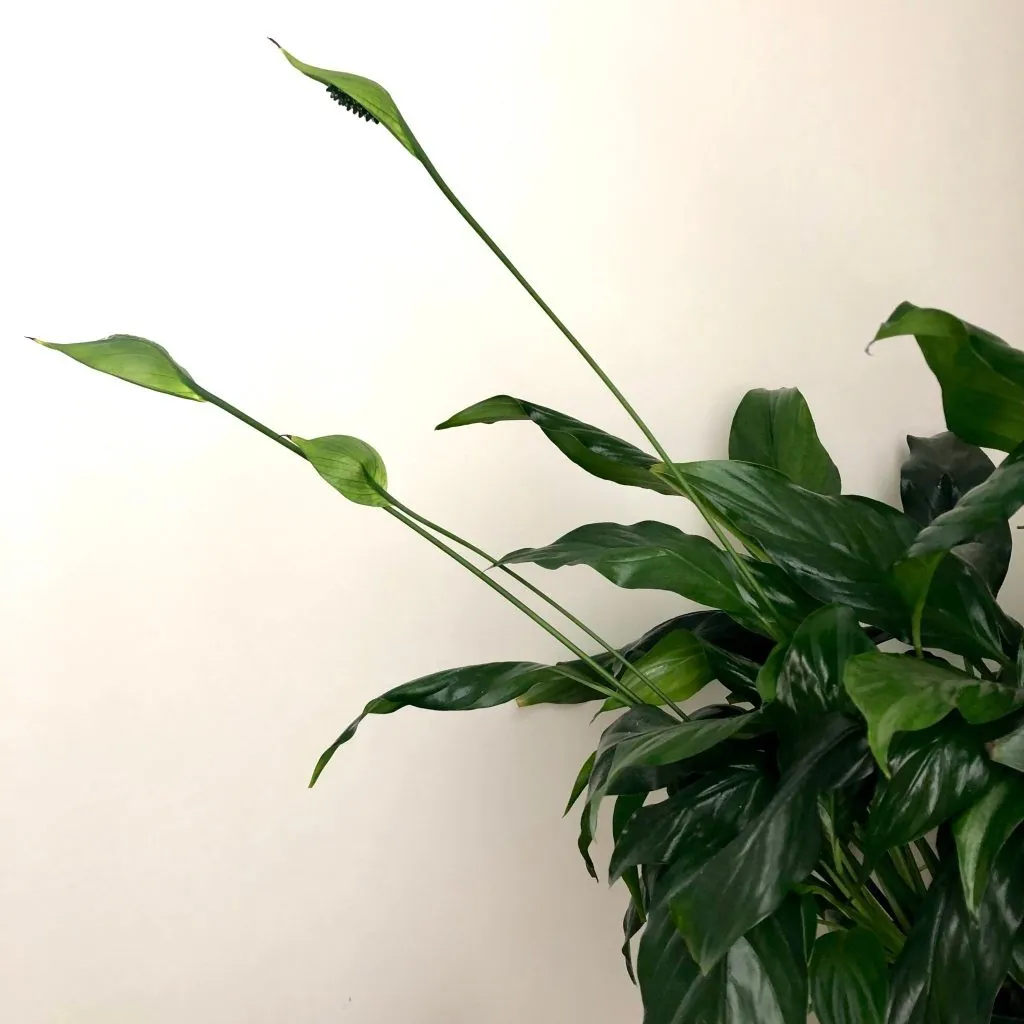
Zones: 11–12 · Light: Low tolerated; brighter indirect light improves flowering · Size: 1–6 ft., depending on species/cultivar · Interest: Glossy leaves; white spathes when conditions suit · Pets: Toxic to cats and dogs (ASPCA)
Peace lily is a foliage choice first in a low-light winter room. The white spathe in Cecilia’s photograph shows its flowering potential, but it does not promise repeat blooms on a dim January desk. Check the mature size when shopping: a compact desktop plant and a large floor specimen can both be sold under this common name.
Care tip: Aim for evenly moist, draining mix rather than waiting for repeated dramatic collapse. Check moisture before watering, empty the saucer, and keep leaves clear of heat vents. It is not a true Lilium lily, but its irritating crystals still make it unsuitable for pets to chew.
6. ZZ Plant (Zamioculcas zamiifolia)
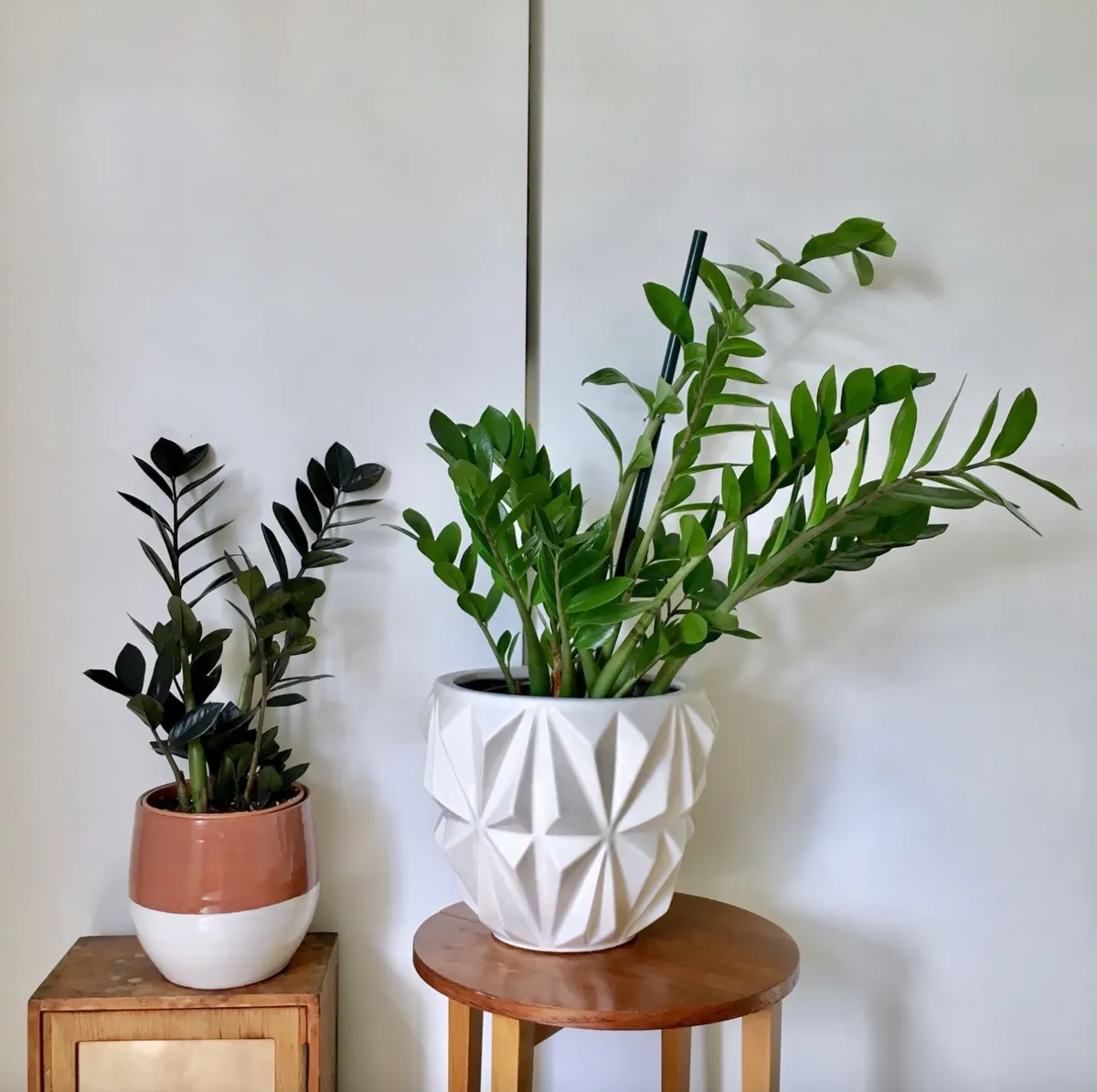
Zones: 9–10 (NC State range) · Light: Low tolerated; indirect light preferred · Size: 2–4 ft. tall and wide · Interest: Glossy leaflets and upright stems · Pets: Treat as toxic; calcium oxalates (Extension)
ZZ plant gives a room a sturdy outline without needing frequent attention. Its underground storage structures help it cope with dry spells, so the bigger winter mistake is often too much water rather than too little fuss. Give the stems enough space that they are not pressed against a cold pane or continually brushed by people passing.
Container note: Use a draining pot and let the mix dry between waterings. If the available winter light is inadequate, a small shelf grow-light set can supplement it when installed at the manufacturer’s recommended distance. Do not confuse a brighter bulb across the room with useful light at leaf level.
7. Heartleaf Philodendron (Philodendron hederaceum)
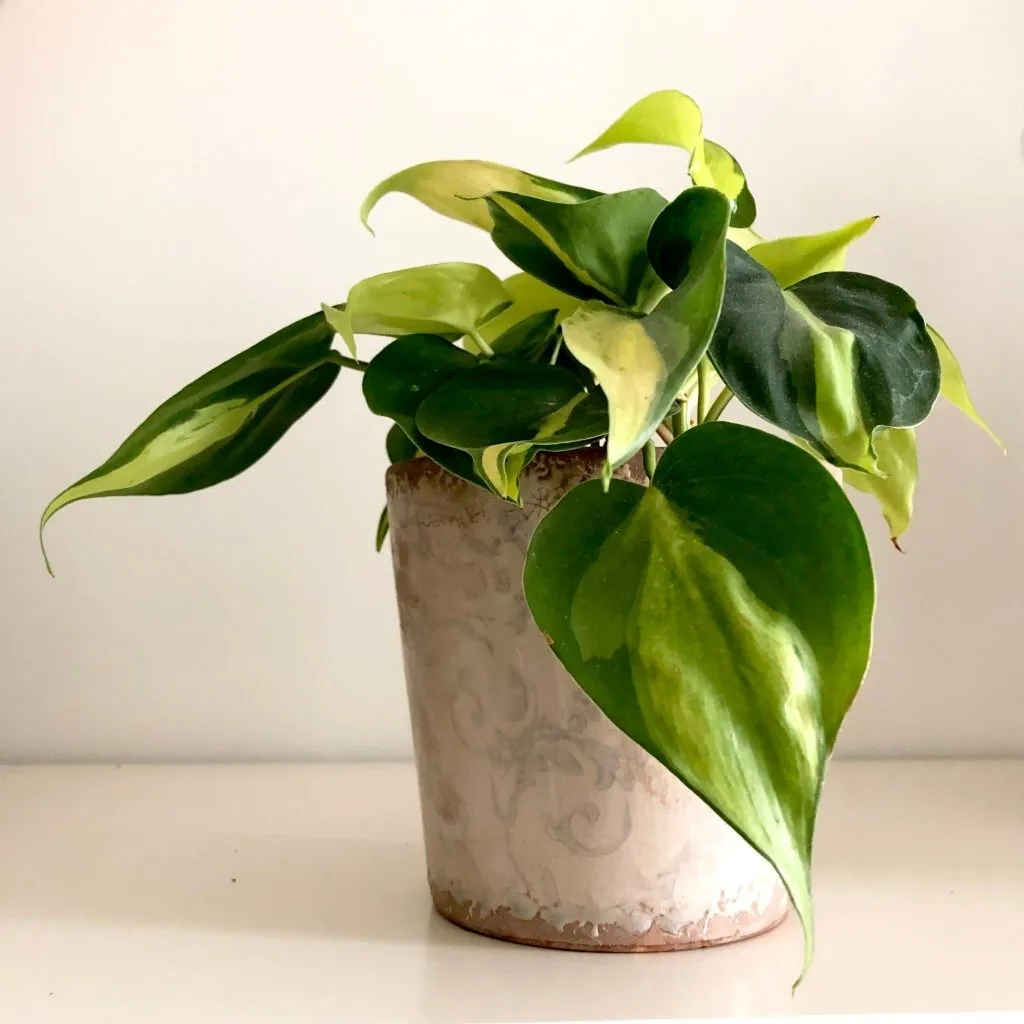
Zones: 11–12 · Light: Low to medium indirect light · Size: Trailing/climbing stems up to about 6 ft. in the NC State profile · Interest: Heart-shaped leaves · Pets: Toxic to cats and dogs (ASPCA)
Heartleaf philodendron suits a shelf where you want a gentle cascade rather than a stiff outline. The photographed plant has two-tone leaves; greener forms are a more cautious choice when the room is especially dim, and the exact cultivar is not confirmed here. Place the pot where you can still lift it, inspect the soil, and remove fallen leaves.
Winter note: Do not let a long trailing stem disguise a struggling plant. New growth with unusually long gaps between leaves suggests it is time to reassess light. Prune only as needed with a clean tool, and keep cuttings and fallen foliage away from chewing pets.
8. Corn Plant (Dracaena fragrans)
Zones: 10–11 · Light: Low tolerated; bright indirect light preferred · Size: 3–14½ ft. in the species profile; buy for your room · Interest: Cane stems and arching leaves · Pets: Toxic to cats and dogs (ASPCA)
Corn plant is the architectural option: bare canes below, a leafy canopy above, and a footprint that can be easier to place than a broad bush. Its potential mature height is a reason to read the nursery label rather than choosing only by today’s pot size. The striped leaves pictured are not an invitation to guess a cultivar from one small photograph.
Care tip: Keep the pot out of hot-air flow and check the temperature near the leaves, not just at the room’s thermostat. A compact room thermometer is useful for spotting a cold window zone; it does not measure soil moisture.
Compare the Eight Low-Light Choices
These are the same ranges and pet cautions used in the profiles; sizes describe potential growth, not a requirement to let an indoor plant fill the room.
| Plant | Outdoor zones | Potential size | Pet caution |
|---|---|---|---|
| Snake plant | 10–12 | 2–4 ft.; cultivar varies | Toxic (ASPCA) |
| Cast-iron plant | 7–11 | 1–3 ft. | Non-toxic (ASPCA) |
| Pothos | 10–12 | Vines to 40 ft.; prune | Toxic (ASPCA) |
| Chinese evergreen | 10b–11; genus | 12–20 in.; hybrids vary | Treat as toxic (Extension) |
| Peace lily | 11–12 | 1–6 ft.; type varies | Toxic (ASPCA) |
| ZZ plant | 9–10; NC State | 2–4 ft. | Treat as toxic (Extension) |
| Heartleaf philodendron | 11–12 | Stems to about 6 ft. | Toxic (ASPCA) |
| Corn plant | 10–11 | 3–14½ ft.; species range | Toxic (ASPCA) |
Supplies for a Dimmer Winter Plant Corner
A shelf light, a small watering can, a room thermometer, and blank labels help you monitor the growing conditions. None replaces a draining pot or a suitable location.

- 6000K White Light - equipped with 10 Red + 74 White LEDs, this growing Lamp is similar to the full-spectrum sunlight at noon,that is professionally designed for indoor garden plants.Moreover, its color rendering index is as high as 95, the light is soft and flicker-free, which is very suitable for reading lamp
- Upgraded Remote with Timer & Dimmable Setting - the remote attached to cord is easy to operate with 3 timer settings of 4Hrs, 8Hrs, or 12Hrs.Once activated, the timer automatically repeats the selected ON and OFF cycle every 24 hours, without manual intervention. You also have full control over the intensity with dimmable options (50%/100%) to suit your plants' precise needs.
- Easy to Install - with flexible Gooseneck & strong clamp,it allows you to place the growth light in any direction to provide the best lighting angle for your plants,meet the cover around the shelf/desk multiple pot plants.
- High Efficiency LED Lamp - as for LED power draw this seedling lights just comsume about 10 w and is equivalent to a 50 watts Halogen Bulb.Estimately monthly cost roughly $2 in electricity (12 hours a day). It is a great gift if you growing some small house plants.
- 【365 Days Warrantty】GooingTop service team offer 365 days warrantty and 24h friendly customer service. If there are ever any issues about the product, please feel fre e to contac t us and we will send you a new replacement.

- Flexible watering options: This watering can features a detachable shower head that switches between a direct stream and a soft spray; it suits both indoor and outdoor plants, giving you flexible control over water flow
- Precision with long spout: This plant watering can features a long spout that reaches deep into pots and corners, delivering water straight to soil without splashing. Its twist-tight joint prevents leaks, so every drop goes where needed
- Right-size for daily watering: This small watering can holds 1.8L for several pots in one go, saving refill trips without being heavy. Compact size allows easy storage, semi-open inlet for simple filling, ergonomic handle for comfort
- Built to last: This indoor watering can, made of thick-walled plastic, resists falls, compression, and aging; it stays intact with daily use, making it a durable small watering can for indoor plants that avoids cracks or breakage
- Style meets function: Available in seven trendy colors, this flower watering can adds a decorative touch to your home or garden; it works for flowers, trees, and potted plants, blending practicality with aesthetics

- 500FT Longer Range: indoor outdoor thermometer wireless with strong signal penetration humidity sensor to get the temperature and humidity records from 500ft/150m remote range away; Tabletop or wall mountable design; Includes 4 AAA batteries
- Wide Temp & Humid Range: Inside outside thermometer hydrometer measures indoor outdoor temperature and humidity simultaneously; Indoor/outdoor temperature sensor range: -58°F to 158°F (-50°C to 70°C), Temperature accuracy is (+/-2°F); Humidity range is (10% ~ 99%), Humidity accuracy is (+/-2 to 3%RH)
- MAX&MIN Records: Weather stations record all time/24 hours max and min temperature and humidity readings; Wireless thermometer indoor outdoor with temperature trend arrows indicates whether it's getting warmer or colder near the remote temperature monitor
- Widely Application: Indoor outdoor hygrometer wireless ensures proper temperature and humidity control, which has important health benefits, thermometer digital can be placed in baby room, nursery, cellar, basement, warehouse and greenhouse
- Compatible with 3 Sensors: Temperature and humidity monitor can display the readings from up to 3 humidity temperature sensors to monitor different locations; Additional sensor can be ordered

- 【Value for Money】: Great value plant labels pack included 500 Pcs white plastic plant tags 4inch*0.62inch(10cm*1.6cm) with a bonus permanent marking pen, enough plant markers can meet your different needs and plant makers name tags will make plant header look clearer.
- 【Durable Waterproof Materials】: These plant markers plant labels for seedlings are made of high standard quality PVC plastic. Water resistance, and will not rust like metal tags or rot like wooden labels, not easy to break and brittle.
- 【Easy to Use】: These plastic plant labels markers, pointed on end and square on the other, The shape of the garden labels is very easy to insert into the soil, easily cleaned with household cleaner for reuse. Plant tags' smooth edge without injuring plants and hands.
- 【Easy to Write】: Garden tags labels both side are blank, you can write on any side, matte surface easy to write on the plant labels to record the true condition of the plants or flowers. With the bonus permanent marking pen, the ink on the plant label will not easy to be washed away by rain, or fade in the sunlight.
- 【Wide Application】: Our plastic seed tags can be used to write cultivar name, plant names.They really help you remind what is where, perfect for vegetable seedlings, greenhouses, gardening project, pot experiments, etc.
Make the Winter Position Work
Assess light at the plant, not at the doorway
A room that looks bright to your eyes may deliver little light to leaves several feet from the glass. Nebraska Extension’s winter houseplant guidance explains that seasonal changes affect window light. Move plants thoughtfully, keep leaves off freezing panes, and use a suitable grow light where daylight is not enough. No plant in this list should be sold as a solution for permanent darkness.
Adjust water to growth and drying
A fixed weekly schedule cannot account for pot size, light, room temperature, root density, and the plant itself. Check the actual mix and drainage. Snake plant and ZZ plant should dry between waterings; peace lily needs a more consistently moist root zone without stagnation. Wisconsin Extension’s pothos profile is a useful reminder that winter dormancy also changes feeding needs; do not fertilize simply because the calendar says to.
Make pet access part of the choice
Cast-iron plant is the clearest non-toxic option among these eight according to the ASPCA list. Non-toxic does not mean unlimited chewing is harmless, and hanging a toxic vine high does not control dropped leaves. Use the ASPCA plant database with the botanical name, and contact a veterinarian if a pet eats an unknown plant or develops symptoms.
Choose one plant that fits both the winter light and the household, then watch how its new growth responds. A smaller collection with suitable conditions is easier to enjoy than a crowded corner of struggling leaves.
Featured photo: 📷 Cecilia at My Tasteful Space.