
This post contains affiliate links. As an Amazon Associate I earn from qualifying purchases.
The best plants for winter containers have something useful to offer when growth slows: lasting leaves, colorful stems, or flowers during milder spells. Hellebores, golden sedges, and winter pansies are good starting points, but they do not all suit the same climate. These ten choices range from cold-climate perennials to milder-winter shrubs. Use the in-ground zones as a first filter, then make a separate plan for protecting roots in pots.
How we chose: These plants offer winter foliage, buds, or seasonal flowers and can work in appropriately sized, well-drained containers. Zones below describe plants in the ground—not guaranteed survival in an exposed pot. “Check: not listed” means no exact taxon match was verified in the ASPCA entries checked; it does not mean pet-safe.
1. Hybrid Hellebore (Helleborus × hybridus)
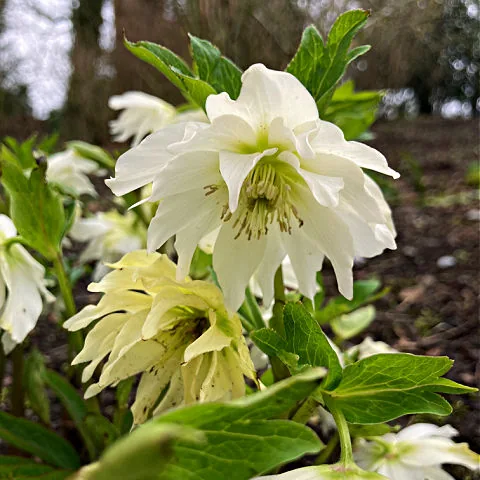
In-ground zones: 4–9 · Light: Partial to dappled shade · Mature size: 1–2 ft tall × 1–2½ ft wide · Interest: Evergreen to semi-evergreen leaves; late-winter flowers · Pets: Treat as toxic; ASPCA hellebore warning
White, nodding flowers stand out against the hellebore’s broad leaves, so one plant can provide a quiet focal point without extra ornaments. Liz Zorab identifies the pictured plant as ‘Double Ellen White’; hybrid flower forms and timing vary. Do not expect a plant bought in December to bloom all winter in every region.
Container note: Use a pot with room for the root ball and keep its crown at the correct planting depth. Good drainage matters more than a tightly packed display. For suitable winter protection, consider a similar breathable frost cover—not as a substitute for root insulation or a species-specific cold plan.
2. Golden Japanese Sedge (Carex oshimensis ‘Evergold’)
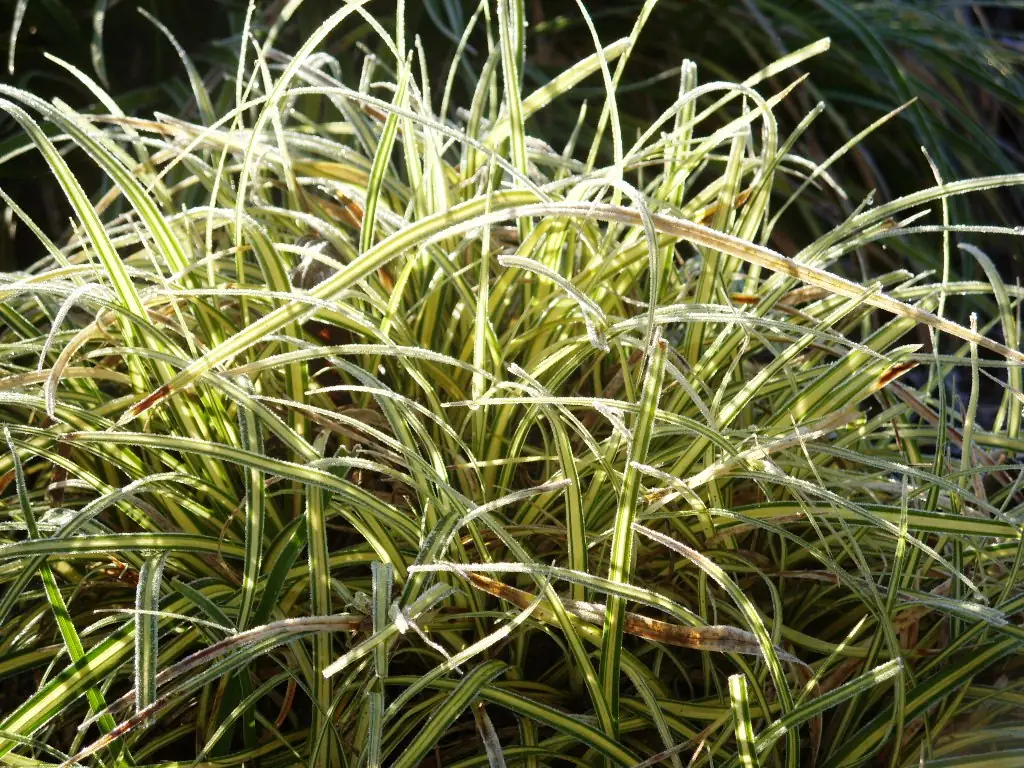
In-ground zones: 5–9 · Light: Sun to partial shade · Mature size: 12–18 in tall × about 12–17 in wide · Interest: Arching striped foliage · Pets: Check: not listed
Fine green-and-gold blades make a useful contrast to broad hellebore or heuchera leaves. The arching shape softens a container’s edge without becoming a long, heavy trail. Kelli Boyle identifies ‘Evergold’ in the original post. In a mixed pot, let the sedge have enough room to show its fountain shape rather than hiding it behind taller foliage.
Winter note: Evergreen foliage can still look weathered after hard cold. Protect the pot from drying wind and check moisture when the mix is unfrozen; a living evergreen is not maintenance-free simply because growth has slowed.
3. Coral Bells (Heuchera Garden Hybrids)
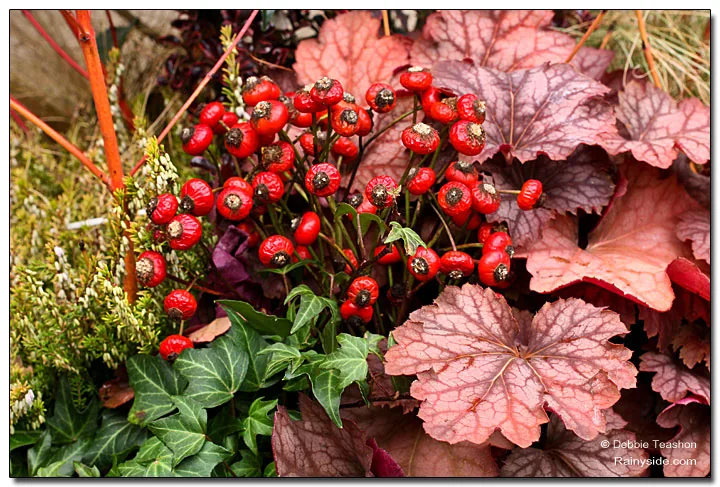
In-ground zones: Often 4–9 for garden hybrids; confirm cultivar · Light: Sun to partial shade, cultivar dependent · Mature size: Foliage mounds roughly 6–20 in tall and wide · Interest: Colorful leaves; later flower stems · Pets: Check exact hybrid; ASPCA lists H. sanguinea as non-toxic
Coral-bells foliage supplies color even when a container has few flowers. Debbie Teashon’s photo shows pinkish leaves beside berries in a mixed winter planting; the profile focuses on the heuchera, not every companion in that display. Leaf color, winter persistence, and sun tolerance differ between hybrids, so choose a named plant rather than buying by leaf color alone.
Care tip: Keep the crown above soggy mix, and avoid a water-holding outer pot. Similar pot risers can help keep a container’s drainage outlets clear; they do not make unsuitable pottery frost-proof.
4. Japanese Skimmia (Skimmia japonica)
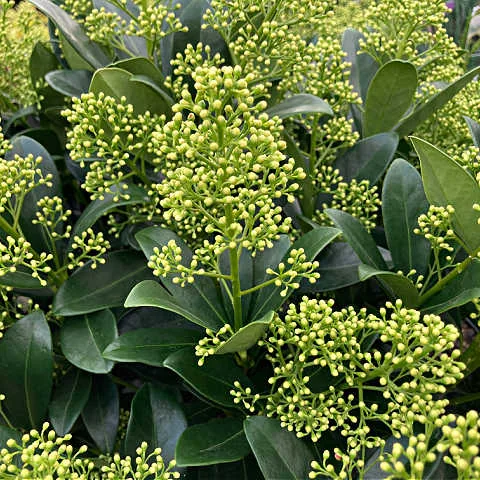
In-ground zones: 7–8 · Light: Partial to full shade · Mature size: Species about 2–7 ft tall × 3–5 ft wide; compact cultivars smaller · Interest: Evergreen leaves and persistent flower buds · Pets: Check: not listed; keep fruit out of reach
Skimmia is a milder-winter choice for a shaded container, with dense bud clusters that look decorative before they open. The creator identifies the pale-budded plant here as ‘Finchy’, a male cultivar, so do not buy that plant expecting berries. It can look compact when young while still needing a realistic long-term plan.
Budget note: Choose a compact cultivar and check its mature dimensions on the nursery label. The species-size range is not a prediction for every dwarf selection. Skimmia prefers moist, well-drained, acidic to neutral conditions; a hot, exposed pot is a poor match.
5. Winter Pansy (Viola × wittrockiana)
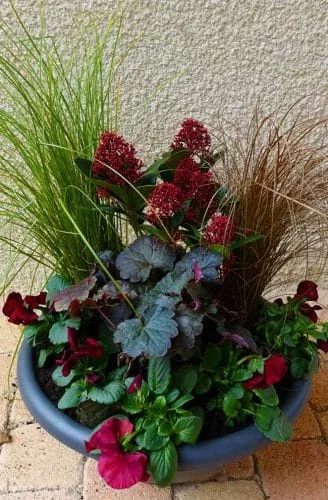
In-ground zones: 6–10; usually grown as a cool-season annual · Light: Sun to partial shade · Mature size: 4–9 in tall × 9–12 in wide · Interest: Cool-weather flowers; bloom pauses in hard cold · Pets: Check: not listed for this exact hybrid
Burgundy pansies tuck around the base of the grasses and skimmia in this creator-made container. Their small flowers bring color close to the rim, where they remain easy to see. Choose winter-flowering stock grown for your area, and remember that surviving a cold spell and flowering continuously are different things. Pansies are not a dependable flowering solution for every exposed northern-winter pot.
Container note: Use fresh container mix rather than dense garden soil, and water according to actual moisture. A similar all-purpose container potting mix is a supply option; adjust your choice to the needs of every plant sharing the pot.
6. Common Snowdrop (Galanthus nivalis)
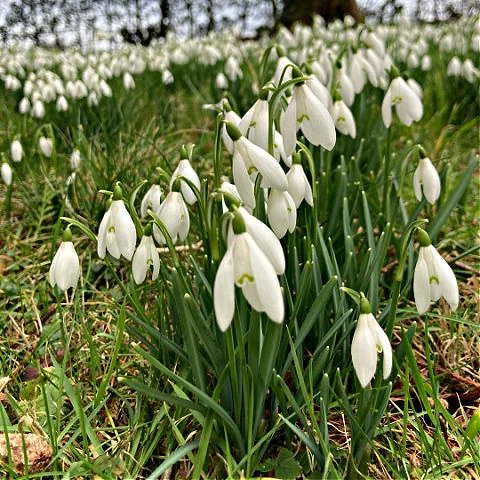
In-ground zones: 3–9 · Light: Sun to partial shade · Mature size: 4–10 in tall × 3–6 in wide · Interest: Late-winter to early-spring white flowers · Pets: Toxic to cats and dogs (Pet Poison Helpline)
Small white flowers hang above narrow leaves and bring an early-season detail to a container placed where you can see it closely. Liz Zorab identifies these as common snowdrops. They are a late-winter or early-spring choice, not an instant December centerpiece. The original photo shows the plant growing in the ground; the profile uses it to show the plant’s identity, not a photographed pot arrangement.
Winter note: Allow foliage to finish growing after bloom, and keep bulbs away from pets. Bulbs contain particularly concentrated toxic compounds. In very cold regions, establish and protect the bulb container deliberately rather than leaving a tiny nursery pot exposed.
7. Winter Heath (Erica carnea)
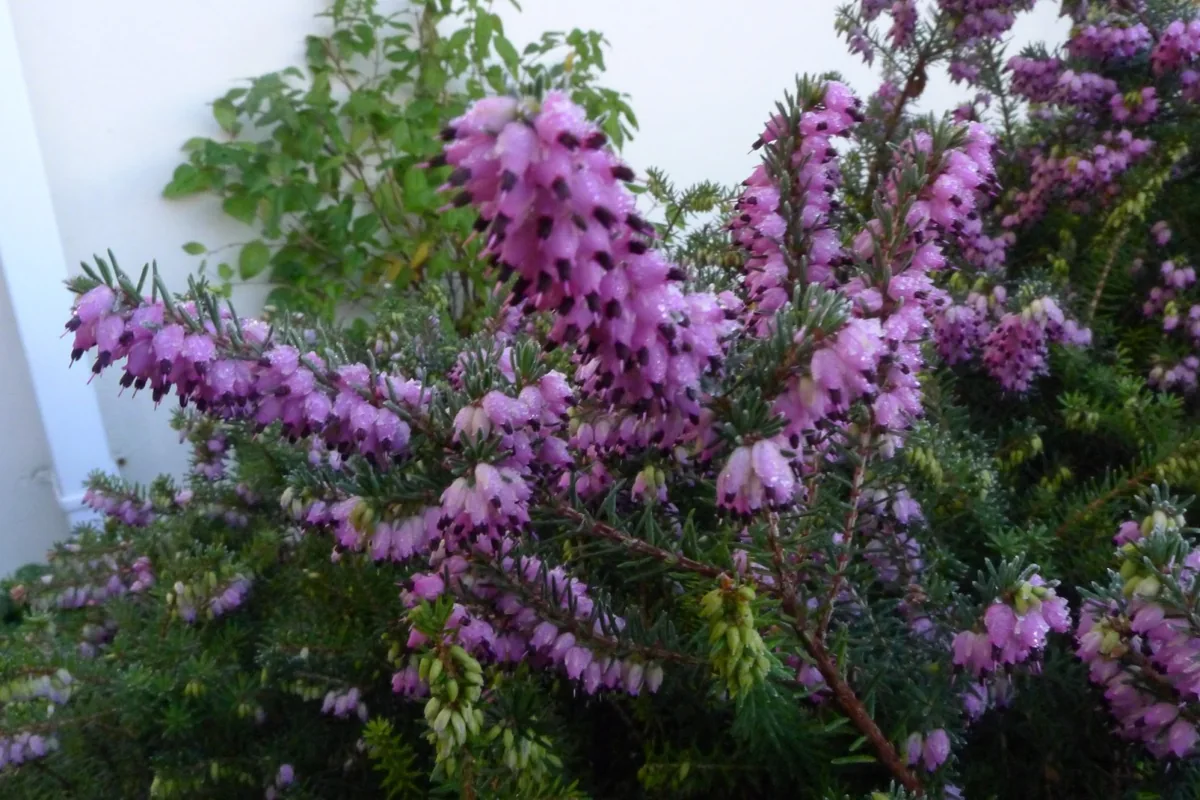
In-ground zones: 7–9 in the NC State profile; confirm named cultivar locally · Light: Sun to partial shade · Mature size: 6–12 in tall × 6–18 in wide · Interest: Fine evergreen leaves; winter flowers · Pets: Check: not listed for this exact species
Fine foliage and small pink flowers add a different texture from broad-leaved perennials. This is winter heath, not a promise that any plant sold simply as “heather” will behave the same way. Published hardiness ranges differ, so the range here follows the NC State profile conservatively; colder-region gardeners should verify a specifically hardy cultivar with local advice.
Care tip: Provide a well-drained root zone and avoid burying the crown in wet mix. Match the plant’s soil needs to its pot companions rather than packing unrelated plants together because their flowers happen to match.
8. Bergenia (Bergenia Species and Hybrids)
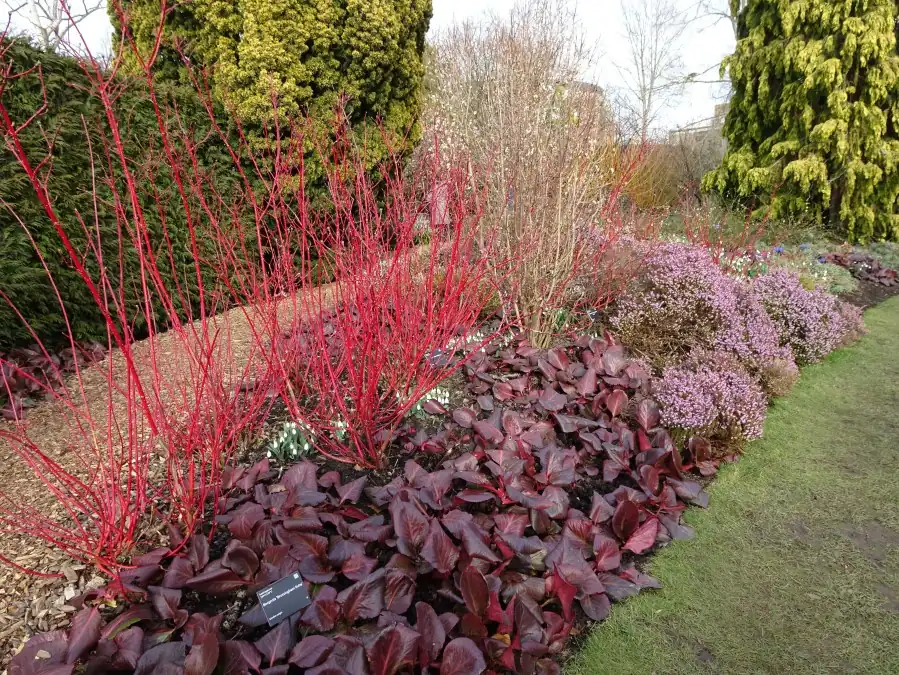
In-ground zones: 3–8 for representative B. crassifolia; hybrids vary · Light: Sun to shade with suitable moisture · Mature size: About 1–1½ ft tall × ¾–2 ft wide, cultivar dependent · Interest: Broad evergreen leaves; some bronze in cold weather · Pets: Check: not listed
Broad leaves can become the visual anchor in a pot filled with finer textures. Carolyn Walker’s winter-border photo shows bronze-purple bergenia leaves below red stems; the exact species or cultivar is not named, so it is not presented as one. The in-ground example illustrates foliage interest that a suitably selected bergenia can also bring to a container.
Plant with: Choose companions with compatible moisture and drainage needs, and confirm the hardiness of the actual nursery plant. Use a similar hand trowel for planting work in workable mix—not for forcing a root ball into frozen soil.
9. Black Mondo Grass (Ophiopogon planiscapus Dark-Leaved Selections)
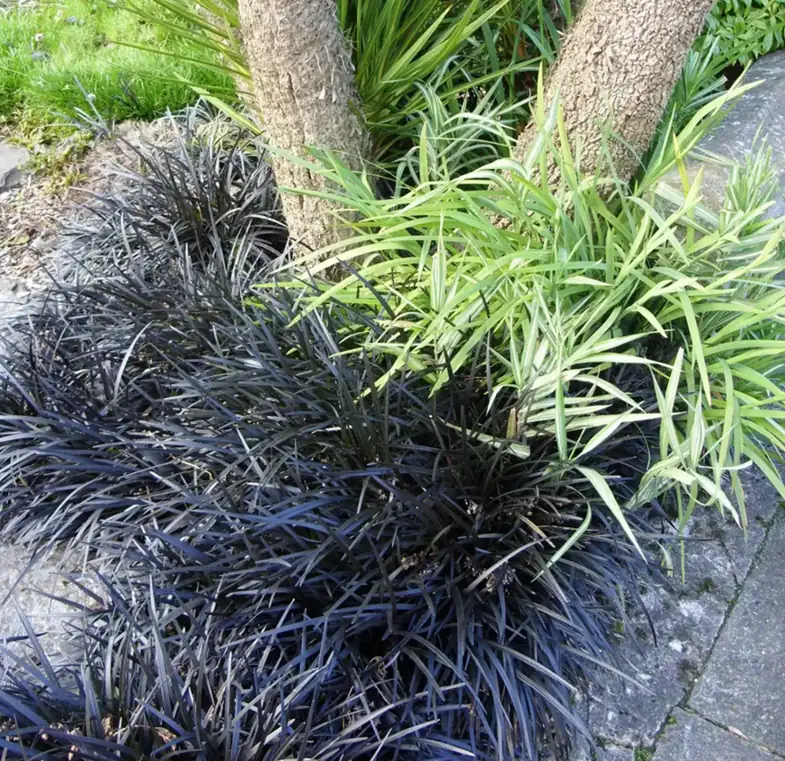
In-ground zones: 6–9 · Light: Partial shade · Mature size: 8–12 in tall × 8–12 in wide · Interest: Dark, grasslike evergreen foliage · Pets: Check: not listed
Black mondo grass creates a crisp contrast beside the striped sedge in Kelli Boyle’s photograph. Despite the common name, it is not a true grass, and it is a small edging-scale plant rather than an upright centerpiece. Use a modest clump near the front of a pot where its dark leaves will not disappear against an equally dark container.
Container note: Keep the mix moist but well drained and allow room for slow spreading. The dark-leaved selection in the photo is not given a confirmed cultivar name, so choose a labeled plant and check its specific growing information before combining it with others.
10. Japanese Tassel Fern (Polystichum polyblepharum)
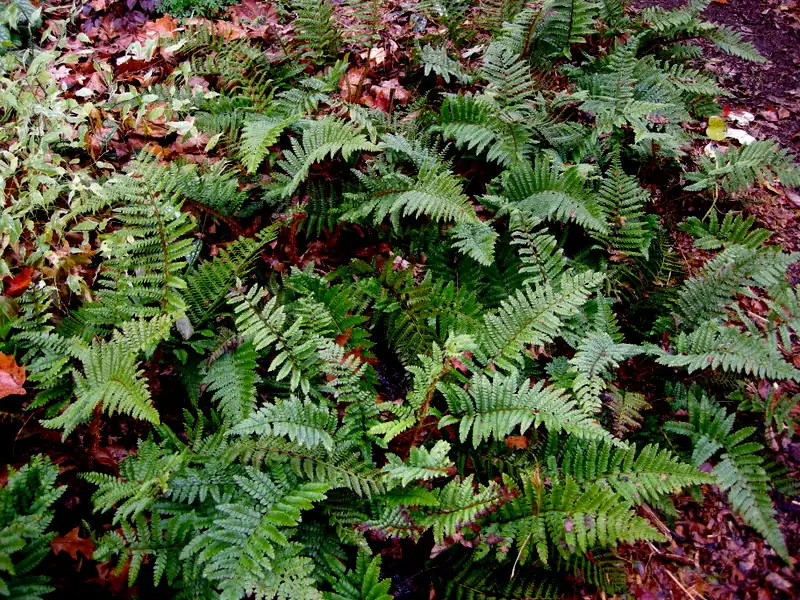
In-ground zones: 5–8 · Light: Dappled to partial shade; sheltered shade · Mature size: 1–2 ft tall × 1–2 ft wide · Interest: Glossy evergreen fronds · Pets: Check: not listed for this exact species
Glossy, divided fronds make a handsome green foil for broad-leaved plants. Carolyn Walker identifies this fern growing in her garden; the dense clump shows the plant’s mature foliage rather than a newly arranged container. A young tassel fern can suit a generous shaded pot, but the mature clump needs space to open into its natural form.
Winter note: Avoid drying wind and a waterlogged root zone. Fronds may flatten or brown in severe weather even when the plant survives; evergreen describes the habit, not a guarantee of perfect leaves after every freeze.
Winter Container Plants at a Glance
These are the same in-ground ranges used above. The two small tables keep all ten choices readable; neither table is a cold-survival guarantee for pots.
| Plant | In-ground zones | Light | Mature height | Pet caution |
|---|---|---|---|---|
| 1. Hybrid hellebore | 4–9 | Partial/dappled shade | 1–2 ft | Treat as toxic |
| 2. ‘Evergold’ sedge | 5–9 | Sun/partial shade | 12–18 in | Check: not listed |
| 3. Heuchera hybrids | Often 4–9; verify cultivar | Sun/partial shade by cultivar | Foliage 6–20 in | Check exact hybrid |
| 4. Japanese skimmia | 7–8 | Partial/full shade | Species 2–7 ft | Check; keep fruit away |
| 5. Winter pansy | 6–10; annual use | Sun/partial shade | 4–9 in | Check exact hybrid |
| Plant | In-ground zones | Light | Mature height | Pet caution |
|---|---|---|---|---|
| 6. Common snowdrop | 3–9 | Sun/partial shade | 4–10 in | Toxic |
| 7. Winter heath | 7–9 in NC State; verify locally | Sun/partial shade | 6–12 in | Check: not listed |
| 8. Bergenia | B. crassifolia 3–8; hybrids vary | Sun/shade, suitable moisture | 1–1½ ft | Check: not listed |
| 9. Black mondo grass | 6–9 | Partial shade | 8–12 in | Check: not listed |
| 10. Tassel fern | 5–8 | Dappled/partial shade | 1–2 ft | Check exact species |
What You’ll Need for Winter Containers
Fresh container mix, a hand trowel, pot risers, and a breathable cover are useful basics. Check pot and plant labels first; a cover offers limited help and cannot make a tender plant or an unsuitable pot winter-hardy.

- THICKER MATERIAL: Our plant freeze protection cover is made of UV stabilized polypropylene. Upgraded thicker 0.9oz./sq.yard lightweight but durable. Soft plant covers are friendly and no harm to your plants. Breathable non-woven fabric allow light, air go through the frost cloths and reach the plants.
- 6.5FTx16FT PLANT COVER: The frost covers for outdoor plants measures 6.5FTx16FT, and this plant covers for winter covers area up to 104 square feet. The freeze plant protection cover is easily trimmed to different size to fulfill different need. After cold weather ends, you can easily fold and store this winter floating row cover.
- WINTER PROTECTION: Frost blankets for outdoor plants protect your plants and crops from harsh weather such as low tem, cold wind, frost, snow, hail, sleet in winter,early spring and late fall. Warm support for young transplants, seedling and extend the growing season.
- SHADE COVER FROM SUN: The outdoor plant cover is not only for winter freeze protection, you can also use it as garden shade cloth cover or plant shade cover from sun, block certain proportion of sunlight and heat. Additionally, it can be used as a screen barrier to prevent birds, small animals and insects during the growth
- EASY-TO-USE: Secured this plant frost cover with soils, stakes, staples, blocks, stones, sticks or garden hoops to provide sufficient space for your vegetables, flowers, crops and small trees such as tomato, strawberry, blueberry, schinus, kale, citrus, grass, rised bed and potted plants.

- HAPPIER GARDENING - Prop up plants, flower pots and garden items above lawns, patios, and decking to rise above the challenges of stains, soil build-up infestation!
- ENHANCED Non-slip SURFACE GRIP – Every garden has a variety of surfaces and textures. We crafted a more optimal surface grip that helps connect the underside of the pot foot to a variety of floors. This grip helps to maintain a more practical non-slip contact, which results in a more secure and stable pot!
- 35G(1.23oz) PER PIECE - Our pot risers are often 2-3x the average weight of the lighter foam material pieces. We craft from a high-quality odourless TRUE EPDM RUBBER, and not from a bad smelling recycled-tyre rubber that is common on the market. Tested with 100kg, you can buy with confidence and avoid concerns of any flattening and compression.
- INVISIBLE – No longer fear breaking or tripping over ceramic feet and stands, our feet remain discreetly tucked under pots, allowing your plants and flowers to flourish and compliment your garden – A perfect Plant Caddy!
- PACKED WITH VALUE – Crafted from solid high-quality rubber, and integrating a smarter surface grip, with X24 pot feet per pack!

- FOR USE ON: Not just an indoor potting soil, this can also be used as a potting soil for outdoor plants and is a great soil mix for vegetables, herbs & all other container plants & flowers.
- CONTAINS: This organic soil for plants & vegetables is a rich blend of sphagnum peat moss, humus & perlite enriched with earthworm castings, alfalfa meal, kelp meal & feather meal
- MYCO-TONE: A proprietary blend of endo & ecto mycorrhizae.
- WHEN TO USE: Any time planting containers, whether starting a new plant or transplanting into a larger container. Plants require regular re-potting and fresh planting soil for optimum growth.
- ORGANIC GARDENING: Contains a rich blend of only the finest natural ingredients. No synthetic plant foods or chemicals are used.

- Thickened Aluminum Alloy Material: Our gardening shovel is made of high-quality aluminum alloy material, allowing the garden trowel to dig deeply into the soil and cut through hard turf easily. The 0.08 inch thickness makes our spade shovel more sturdy and long lasting, ensures durability and stability during use, and makes the trowel not easy to break and long lasting
- Ergonomic Design: The trowel garden tool is designed with an ergonomic rubber-grip handle that reduces hand and wrist fatigue while digging. The high-quality non-slip TPR material of the handle makes the trowel garden tool easy to hold and comfortable to use. Saving your labor, time and energy
- Easy to Store: The small hand trowel is lightweight and compact, makes it easy to store on your garden bag and carry out for gardening. The hanging hole in the handle is designed to accommodate a rope. You can hang the hand shovel for gardening on everywhere you want when you need to do gardening works in your own garden or other places
- Easy to clean: Our hand trowel has a smooth surface, with a polished aluminum knife head that is rustproof and long lasting. The small garden shovel is also easy to clean after use, ensuring its smooth appearance and remaining rust resistant for an extended period of time
- Multi-function: This small shovel is suitable for a wide range of horticultural tasks, including digging, weeding, loosening soil, aerating, transplanting, etc. The great gardening tools for women, small shovels for gardening, digging shovel, small plant tools
Choose for the Root Zone, Not Just the Leaves
Roots in pots are less insulated than roots in the ground. Brooklyn Botanic Garden recommends considering plants hardy two zones colder than your location as a starting point, alongside shelter and protection. That is a risk-reduction guideline, not a guarantee. In severe climates, overwinter valuable plants in a species-appropriate protected place rather than relying on a decorative pot to do the job.
Keep Drainage Open through Winter
Use a container rated for your winter conditions with unobstructed drainage holes. Remove standing water from catch trays, protect the pot from avoidable freeze-thaw damage, and check unfrozen mix during dry weather. A gravel layer does not solve a pot with no drainage. For plant-specific light, size, and soil needs, use the individual profiles in the NC State Extension Plant Toolbox and the label of your named cultivar.
Make a Pet-Safe Plan before Placing the Pots
Do not interpret an unverified listing as proof that a plant is safe to chew. Put toxic bulbs and hellebores out of reach, keep discarded leaves and spilled mix cleaned up, and ask a veterinarian about the exact plants in a pet-accessible container. Pet Poison Helpline’s snowdrop guidance explains why the bulbs deserve particular care. If ingestion is suspected, contact a veterinarian promptly rather than waiting for symptoms.
Choose one reliable foliage plant and one seasonal accent that share the same needs. A modest container with a sound winter plan is more useful than a crowded pot full of plants suited to different climates.
For more cold-season color, see these winter window box ideas and winter hanging basket ideas, and learn how to overwinter potted plants that need shelter.
Featured photo: 📷 Debbie Teashon.