
This post contains affiliate links. As an Amazon Associate I earn from qualifying purchases.
Cool-season vegetables to direct-sow in early spring let you begin with a workable outdoor bed instead of a room full of transplants. Peas, spinach, and radishes are useful starting points; carrots, beets, and turnips offer different harvests from the same cool part of the year. The right date depends on your soil and local weather, not a universal March calendar.
These eight crops are a direct-sowing shortlist, distinct from vegetables that need a long indoor head start. Choose a few you will actually eat and leave room to thin them.
How we chose: These crops can be sown directly outdoors in suitable cool-season conditions. They are grown as annual harvest crops, so USDA perennial hardiness zones are not sowing dates; height ranges can include flowering growth, while seed-packet spacing and root length guide bed planning. Human edibility is not a blanket pet-safety claim.
1. Garden Peas (Pisum sativum)
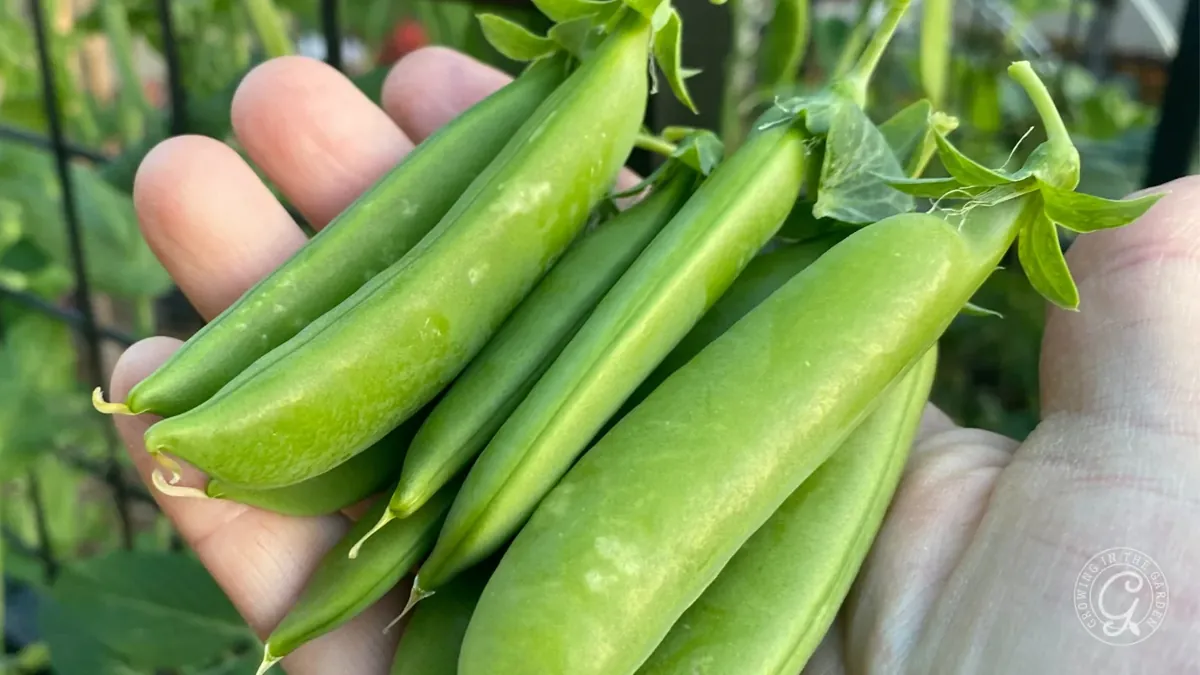
Zones: Annual harvest crop; use local sowing guidance · Light: Sun to part shade · Size: Dwarf and climbing forms; follow the packet’s mature height · Interest: Edible pods or shelled peas · Pets: Check exact plant and plant part; no feeding advice
Angela Judd’s freshly picked pods show the harvest you are planning for, not a reason to rush seed into cold mud. Choose shelling, snow, or snap peas according to how you cook, then check whether that variety needs a tall support. Direct sowing avoids having to untangle delicate young roots later.
Garden peas are Pisum sativum; do not confuse them with ornamental sweet peas sold for scented flowers. Buy a clearly labelled edible crop and make the support decision before the seedlings start climbing.
Care tip: Install the variety-appropriate support before sowing. garden twine for a simple support line can help guide young growth, but use a stable framework and check ties rather than letting stems become constricted.
2. Spinach (Spinacia oleracea)
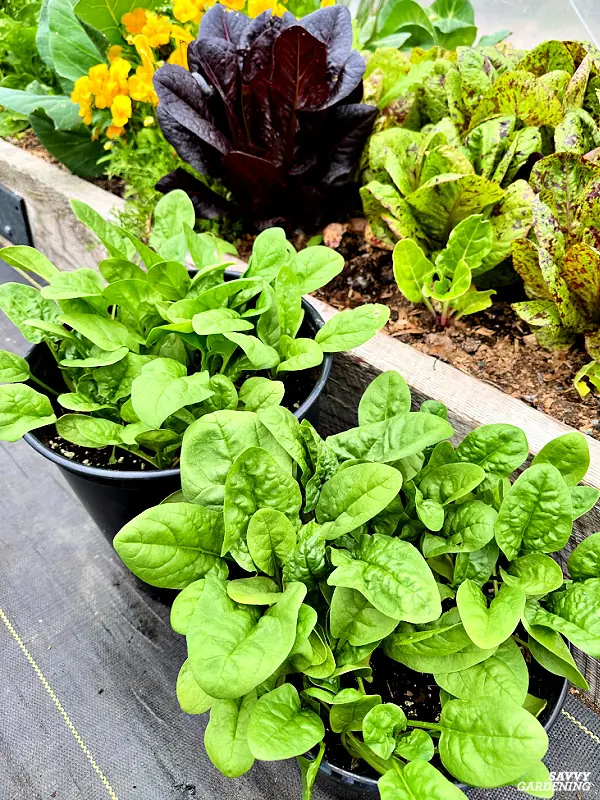
Zones: Annual harvest crop; use local sowing guidance · Light: Sun to part shade · Size: About 6–12 in. tall and wide before bolting · Interest: Tender leafy harvests · Pets: Check exact plant and plant part; no feeding advice
Niki Jabbour’s container-grown spinach makes the leaf crop easy to recognize, but it can also be direct-sown in a prepared bed. Cool conditions are the attraction: hot weather and lengthening days can bring the leafy harvest to an early end. Sow for the time you can realistically give the plants, rather than filling a large space all at once.
A small, well-tended patch is easier to keep evenly moist while seeds germinate, and it gives you a chance to judge how the crop performs in your spring weather.
Winter note: Check soil conditions rather than air temperature alone. a soil thermometer is a useful planning tool, but a favorable reading does not make a waterlogged bed ready to sow.
3. Spring Radishes (Raphanus sativus)
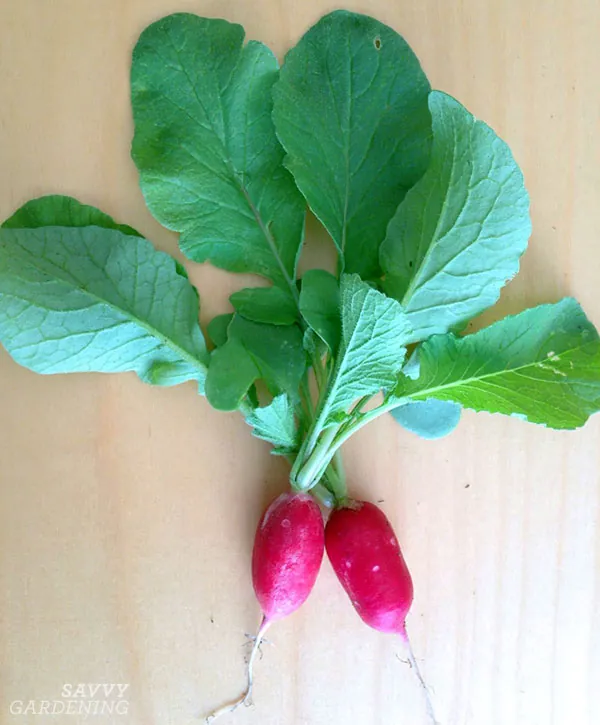
Zones: Annual harvest crop; use local sowing guidance · Light: Sun to part shade · Size: Species range about 6 in.–3 ft including flowering growth; root size varies · Interest: Crisp young roots · Pets: Check exact plant and plant part; no feeding advice
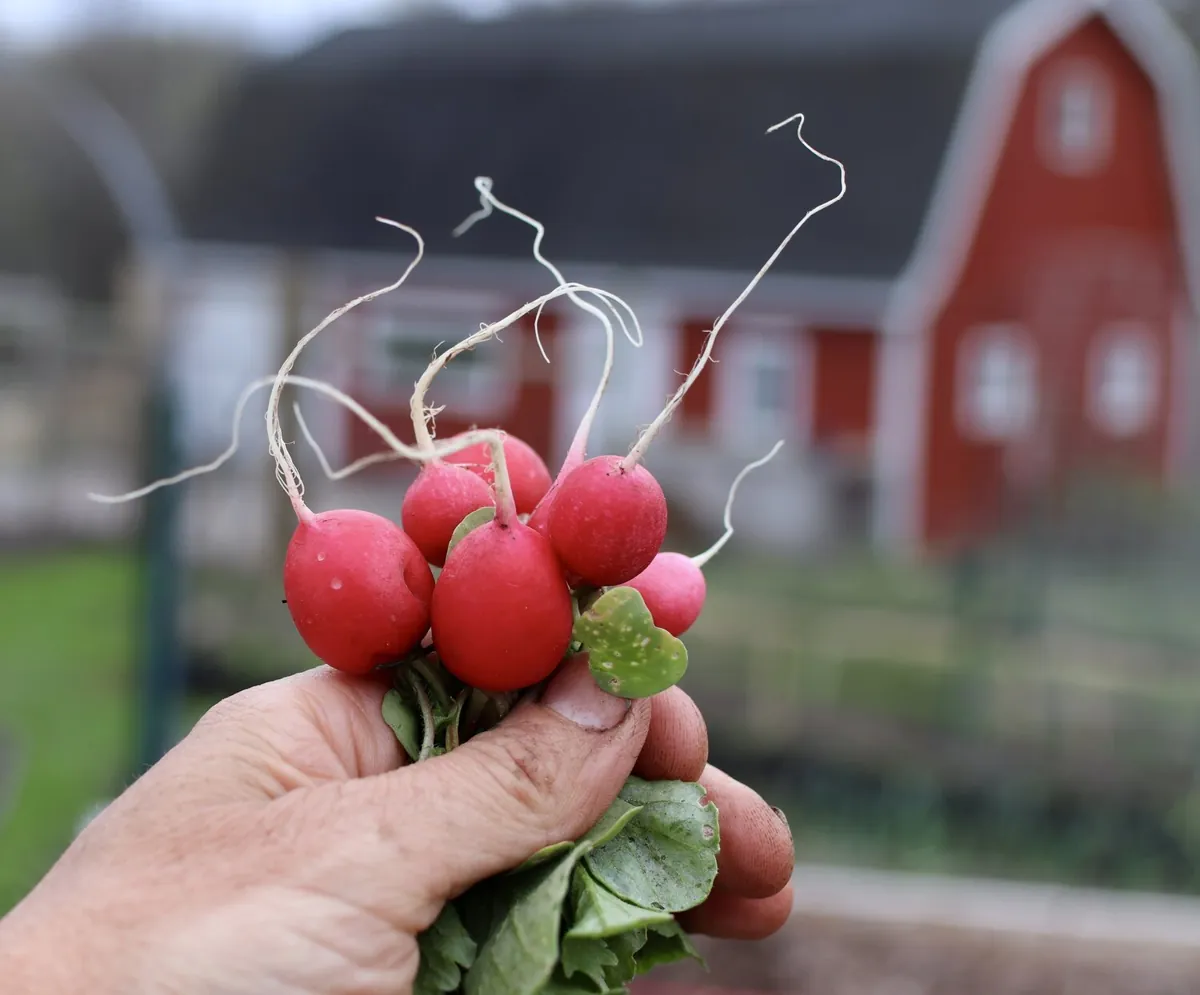
Tara Nolan’s harvested spring radishes are a reminder that small root crops need room below the leaves. Choose a variety intended for the spring sowing window; a large winter-storage radish is not automatically interchangeable with a quick spring type. Sow a manageable row and thin it according to the packet instead of leaving every seedling in place.
Inspect roots as they develop so that an early sowing does not become an overlooked, woody harvest. Radishes suit a small early-spring vegetable patch when you can keep an eye on them.
Budget note: Use part of a packet first and keep the remainder dry and labelled. Small successive sowings are easier to harvest promptly than one long row that becomes ready together.
4. Leaf Lettuce (Lactuca sativa)
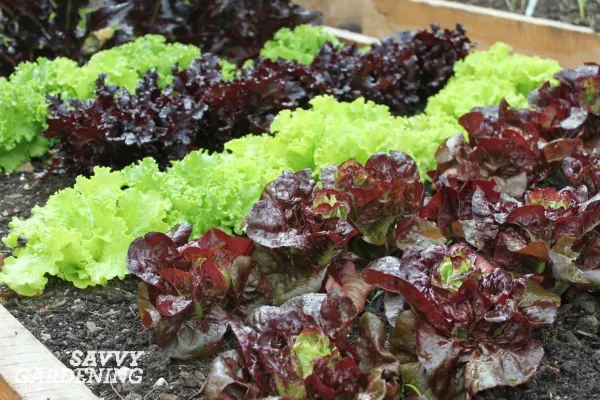
Zones: Annual harvest crop; use local sowing guidance · Light: Sun to part shade · Size: About 6–12 in. tall and wide before bolting · Interest: Young salad leaves · Pets: Check exact plant and plant part; no feeding advice
The red and green rows in Niki’s salad garden show how a leaf crop can be productive without needing a huge bed. For a direct-sown first attempt, leaf lettuce gives you flexible harvest sizes; you do not have to wait for every plant to make a firm head. Keep variety labels, especially if you sow several colors, so you can repeat the ones you enjoy.
Do not mistake a neat photograph for permission to ignore spacing: larger plants need more room than baby-leaf harvesting.
Plant with: Give lettuce its own clearly marked row or patch so you can distinguish seedlings from weeds. Keep the surface from drying hard while tiny seeds are establishing, following the sowing depth on the packet.
5. Arugula (Eruca vesicaria)
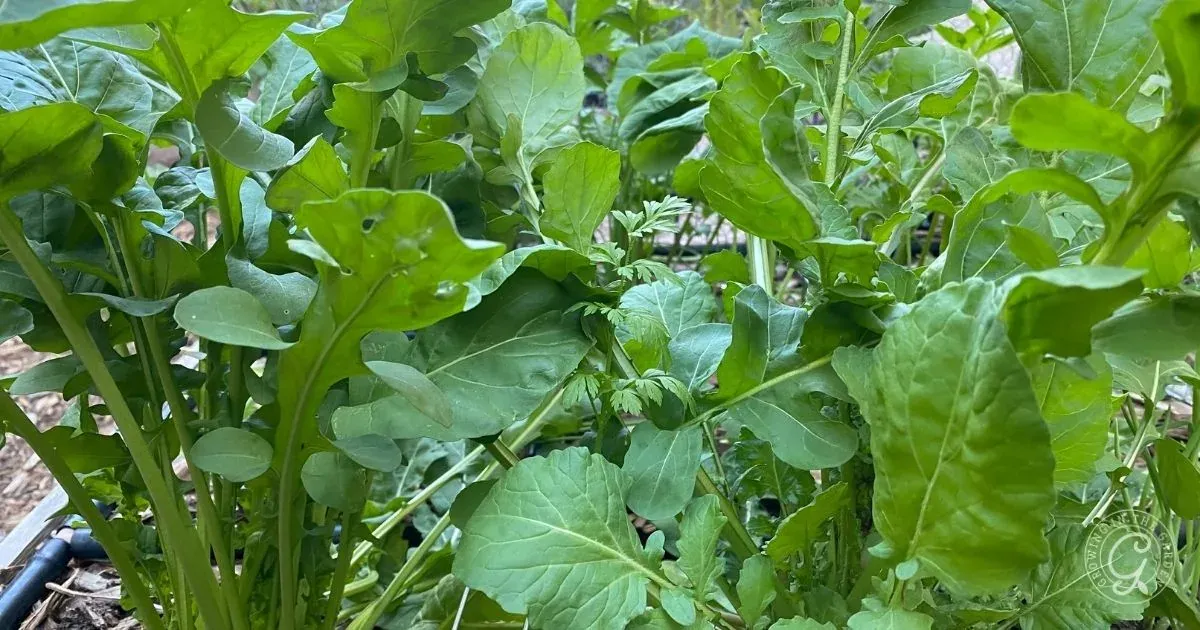
Zones: Annual harvest crop; use local sowing guidance · Light: Sun to part shade · Size: About 8 in.–3 ft across leafy and flowering stages · Interest: Peppery young leaves · Pets: Check exact plant and plant part; no feeding advice
Angela’s garden bed shows the soft, lobed leaves of annual arugula, also called rocket. It is a useful change from a lettuce-only salad patch, especially if you prefer a stronger flavor. Plan to pick young leaves rather than treating the bed as a permanent green carpet.
Warm weather can push plants toward flowering, so keep the first sowing modest and watch how quickly the crop moves in your climate. Make sure the seed packet identifies the plant: annual salad rocket and perennial wild rocket are not identical crops.
Care tip: Monitor young leaves for pest damage. A lightweight floating row cover can be useful over a clean, newly sown area; secure it, check underneath, and manage heat rather than treating a cover as a cure-all.
6. Carrots (Daucus carota subsp. sativus)
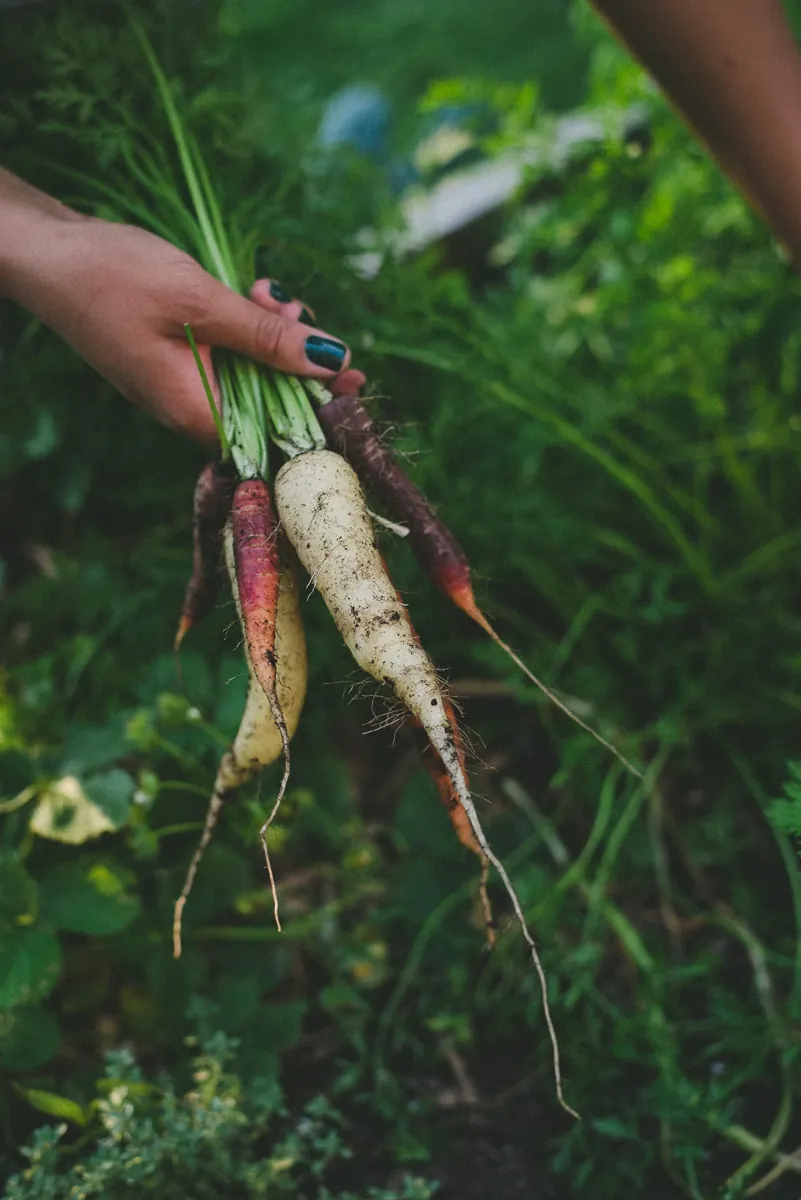
Zones: Annual harvest crop; use local sowing guidance · Light: Sun to part shade · Size: Cultivated species range about 3 in.–3 ft; root length is variety-dependent · Interest: Sweet garden roots · Pets: Check exact plant and plant part; no feeding advice
Rachel Hardacre’s harvest shows cultivated garden carrots with their leafy tops, not wild Queen Anne’s lace. Direct sowing lets the developing root grow in its final position, which is the main reason to put carrots on this list rather than treating them as another indoor transplant. Pick a root shape that suits your soil depth and prepare a fine, workable seedbed.
Germination can feel slow compared with radishes, so keep the row labelled and do not casually hoe it because nothing appeared after a few days.
Container note: A deep container with drainage can be an option when the bed is unsuitable, but match its depth to the chosen root length. A hand trowel for checking soil depth and obstacles is useful before sowing; do not dig through a newly seeded row.
7. Garden Beets (Beta vulgaris Garden Beet Group)
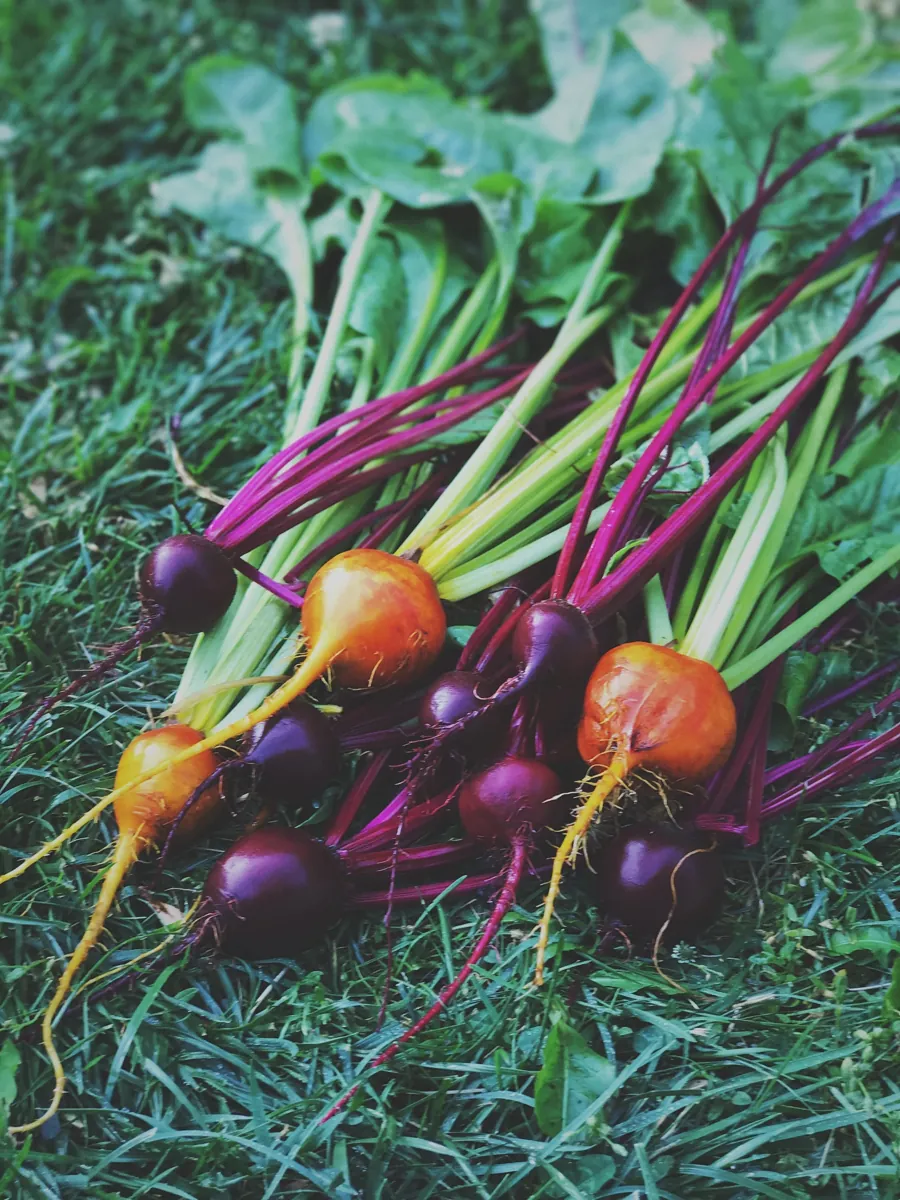
Zones: Annual harvest crop; use local sowing guidance · Light: Sun to part shade · Size: About 12–18 in. tall × 8–12 in. wide · Interest: Roots and leafy tops · Pets: Check exact plant and plant part; no feeding advice
Rachel’s colorful beet harvest illustrates why this crop earns a place alongside carrots rather than merely filling another row. Both roots and greens have kitchen uses, but choose how you want to harvest before crowding the plants together. Beet seed clusters can produce more than one seedling, making thinning especially important for root development.
Keep the bed evenly moist during establishment and use the packet’s final spacing as the reference. Different root colors do not make separate entries here: this is one crop with several worthwhile choices.
Care tip: Thin carefully once you can distinguish the seedlings, and avoid tugging a whole clump out together. A crowded row may look lush above ground while giving you much less useful root growth.
8. Turnips (Brassica rapa Rapifera Group)
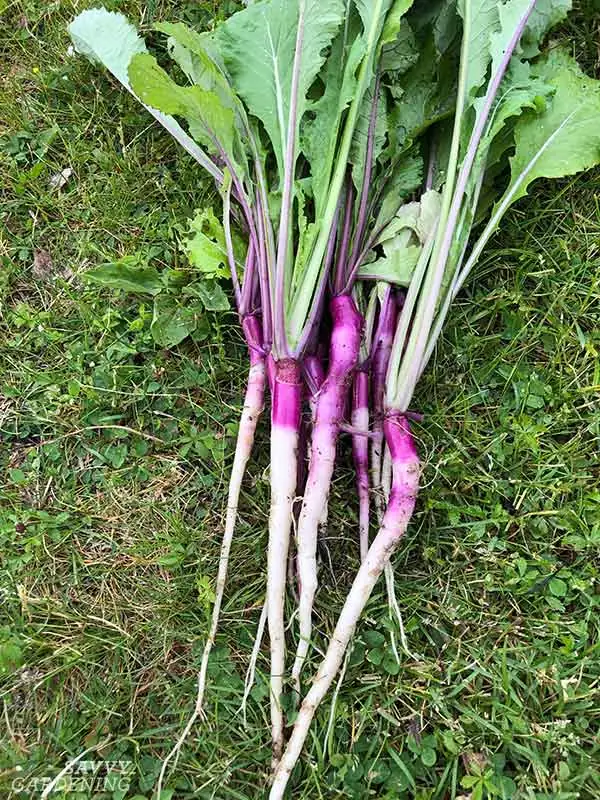
Zones: Annual harvest crop; use local sowing guidance · Light: Full sun · Size: About 12–18 in. tall × 6–12 in. wide · Interest: Young roots and greens · Pets: Check exact plant and plant part; no feeding advice
Tara’s photograph is specifically Hinona Kabu, an elongated purple-and-white turnip, rather than a standard round white root. It shows why the seed packet’s variety and intended harvest size matter. Turnips belong in a cool-season direct-sowing plan, but the best type depends on whether you want tender young roots, greens, or a larger cooking crop.
Do not wait for every variety to look like a supermarket turnip before harvesting. A small first row is an easy way to find the flavor and texture you prefer.
Winter note: Plan the sowing and harvest window together so the crop does not simply run into summer heat. Keep the variety name and sowing date on a marker you can still read after spring rain.
Compare Eight Direct-Sown Spring Crops
All eight are annual harvest crops here. Use local soil and weather guidance for the date, and the packet for the final spacing and variety-specific size.
| Crop | Light | Harvest focus | Planning detail |
|---|---|---|---|
| Garden peas | Sun–part shade | Pods or shelled peas | Check dwarf versus climbing height |
| Spinach | Sun–part shade | Young leaves | 6–12 in. before bolting; avoid a drying seedbed |
| Spring radishes | Sun–part shade | Young roots | Choose a spring type and thin promptly |
| Leaf lettuce | Sun–part shade | Salad leaves | 6–12 in. before bolting; distinguish baby-leaf spacing |
| Arugula | Sun–part shade | Peppery young leaves | 8 in.–3 ft across growth stages; pick young |
| Carrots | Sun–part shade | Cultivated garden roots | Match root length to soil depth |
| Garden beets | Sun–part shade | Roots and tops | 12–18 in. high; thin clusters |
| Turnips | Full sun | Roots or greens | 12–18 in. high; identify the variety |
What You’ll Need for Early-Spring Direct Sowing
A soil thermometer, temporary row line, hand trowel, and lightweight cover are supporting supplies for planning and tending a small sowing area. None is identified as the creators’ equipment. A cover may buffer conditions but does not turn a hard freeze or waterlogged bed into a safe sowing window.

- Easy-to-read green, yellow, and red tick marks for easy monitoring
- 5-inch stainless steel stem penetrates soil and worm compost to the perfect depth.
- Worms are happiest between 55F and 90F. This thermometer lets you know when to cool them off or to move them to a warmer place

- Comprehensive Winter Protection for Your Garden: Our outdoor plant covers provide complete freeze protection for strawberries, vegetables, tomatoes, fruit trees, citrus plants, shrubs, and potted plants throughout the winter. This frost cloth plant freeze protection shields delicate plants from sudden temperature drops, frost, and strong winds, ensuring they survive harsh winter conditions. Ideal for those looking for frost blankets for outdoor plants and reliable plant freeze protection covers.
- Lightweight and Breathable Floating Row Cover: Made from 0.9 oz/sq non-woven, breathable frost fabric for plants, our frost row cover allows essential air, moisture, and sunlight to reach your plants. This frost cover helps regulate sunlight exposure to prevent overheating and maintain stable soil temperatures, ensuring optimal growing conditions, this planket frost protection plant cover guarantees healthy growth.
- Reusable Freeze Cloth for Outdoor Plants: No need to remove and replace the frost cloths for outdoor plants daily. Easily cut to fit various sizes and shapes, wrap the plant protector for winter around trees and shrubs, or lay it directly over potted plants, flowers, vegetables, raised beds, or grow tunnels. This garden bed row cover can be secured with stones, stakes, or supported with garden hoops or frames.
- Versatile Floating Row Cover: Our winter plant covers freeze protection products offer multiple functions, including garden beds frost protection, snow resistance, animal barriers, insect barriers, and shade cover. The plant frost protection covers shield your plants from frost, wind, snow, ice, and freezing temperatures in late fall and winter. In spring and summer, these frost protection for outdoor plants defend your garden against strong sunlight, insects, and birds.
- Extended Growing Season: Frost blankets for plants and plant covers for winter for vegetables frost protection allow gardeners to plant earlier in the spring or extend their growing season into the winter. The garden covers for raised beds helps retain warmth during cold nights, promoting faster seed germination and seedling growth, leading to earlier harvests and increased yields.

- 【NEW ARRIVAL】Bengal Imported 100% Natural Jute Twine String. 3 ply Φ/ 2 mm * 600 Feet (182M approx) twine. Larger amount, cost saving!!! Made of natural jute fiber, and won’t hurt environment.
- 【PURE NATURAL】Our twine is made from high-quality natural fibers. High quality, soft tone, natural texture of jute. No harmful substances, no extreme stinky smell. Eco-friendly, biodegradable, and easy to use around the house. Our jute twine is soft but strong, and it will prevent items you beading or hanging from damaging.
- 【DECORATION&CRAFT】Make a pretty gift wrap, gift card string, photos string, art crafts and DIY projects. For wedding, birthday, and more, to create a handmade rural style decoration.
- 【FEATURES】Our jute twines are widely used in packaging, strapping, gardening, greenhouses, pastures, bonsai because of its abrasion resistance, corrosion resistance, rain resistance and easy to use.
- 【MANUFACTURER】We are the professional manufacturer engaged in the research, development, production, sale and service of many kinds of ropes. Our products are exported to North America, Europe, Australia and Southeast Asia and other areas. We are committed to providing best products and services. If you have any questions, please contact us.

- Thickened Aluminum Alloy Material: Our gardening shovel is made of high-quality aluminum alloy material, allowing the garden trowel to dig deeply into the soil and cut through hard turf easily. The 0.08 inch thickness makes our spade shovel more sturdy and long lasting, ensures durability and stability during use, and makes the trowel not easy to break and long lasting
- Ergonomic Design: The trowel garden tool is designed with an ergonomic rubber-grip handle that reduces hand and wrist fatigue while digging. The high-quality non-slip TPR material of the handle makes the trowel garden tool easy to hold and comfortable to use. Saving your labor, time and energy
- Easy to Store: The small hand trowel is lightweight and compact, makes it easy to store on your garden bag and carry out for gardening. The hanging hole in the handle is designed to accommodate a rope. You can hang the hand shovel for gardening on everywhere you want when you need to do gardening works in your own garden or other places
- Easy to clean: Our hand trowel has a smooth surface, with a polished aluminum knife head that is rustproof and long lasting. The small garden shovel is also easy to clean after use, ensuring its smooth appearance and remaining rust resistant for an extended period of time
- Multi-function: This small shovel is suitable for a wide range of horticultural tasks, including digging, weeding, loosening soil, aerating, transplanting, etc. The great gardening tools for women, small shovels for gardening, digging shovel, small plant tools
Use Soil Readiness Instead of a Calendar Promise
University of Minnesota Extension’s planting guidance places several early crops, including peas, lettuce, spinach, and radishes, in roughly the 40–50°F soil-temperature group. That is a planning reference, not a guarantee that every seed germinates well at the cold end. Soil should crumble rather than smear when worked.
In a northern garden, the useful window may arrive well after March; a mild-climate garden may follow a very different calendar.
Prepare for Roots Before You Sow
Carrots, beets, radishes, and turnips need more than a green-looking surface. Clear obstacles, prepare a workable texture, and plan the packet’s final spacing before planting. NC State’s cultivated-carrot profile is the relevant carrot reference—not the profile for wild carrot. Keep labels and sowing dates, and thin deliberately rather than leaving seedlings packed together because the bed looks pleasantly full.
Keep the First Sowing Manageable
A few short, labelled rows make it easier to watch moisture, weather, and pest damage than a whole bed sown in one burst. Inspect any cover after wind and on warming days; neither a fabric cover nor a sunny afternoon removes the need to check conditions underneath. Keep seed packets, tools, and crop debris out of pets’ reach, and seek plant-specific advice rather than treating an edible-garden label as pet-feeding guidance.
Can You Direct-Sow These Vegetables in January?
Only where local conditions suit the crop. January is not a universal outdoor sowing month, and cold tolerance does not make frozen or saturated ground workable. Check your regional extension calendar, soil temperature, and forecast together.
In many climates, winter is the time to choose seed and prepare the plan, while outdoor sowing waits for spring.
Choose two or three crops with different harvests and start with a space you can tend consistently. The best early sowing is the one matched to your actual soil and season.
Featured photo: 📷 Meg Cowden / Seed to Fork.