
This post contains affiliate links. As an Amazon Associate I earn from qualifying purchases.
The best vegetables to start from seed indoors in late winter are the ones that need a head start before your own planting season—not every crop on a seed rack. Onions, leeks, and slow-growing celeriac deserve an early look; peppers and eggplants need warmth, while spring brassicas need a different outdoor window. These eight choices help you plan the space under your lights. Use December and January for choosing varieties, then sow only when the packet and your local transplant date agree.
How we chose: These are vegetables commonly raised as transplants, selected for slow growth, a long season, or a useful spring head start. They are grown here as annual crops; USDA perennial-hardiness zones are not a sowing calendar. The regional examples below deliberately separate February candidates from crops that should wait until March or later in cold climates.
1. Bulb Onions (Allium cepa)
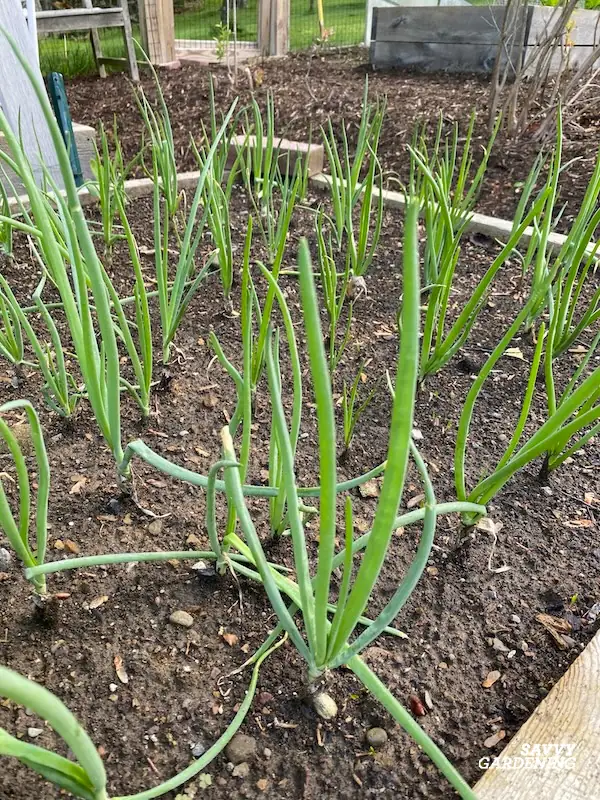
Zones: Grown as an annual crop; local climate controls timing · Light: Full sun outdoors; strong seedling light indoors · Height: 12–18 in. · Interest: Summer bulb harvest · Pets: Toxic to cats and dogs
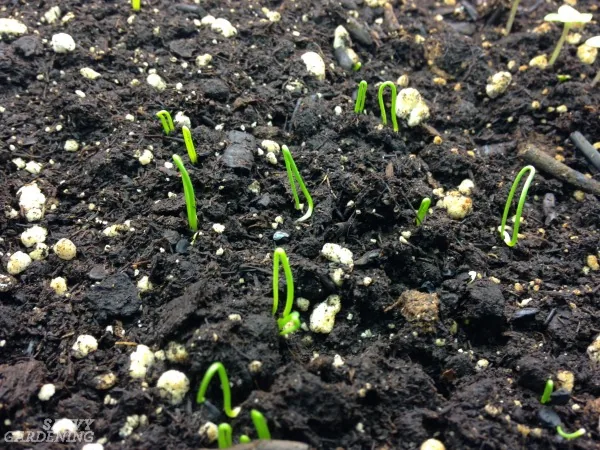
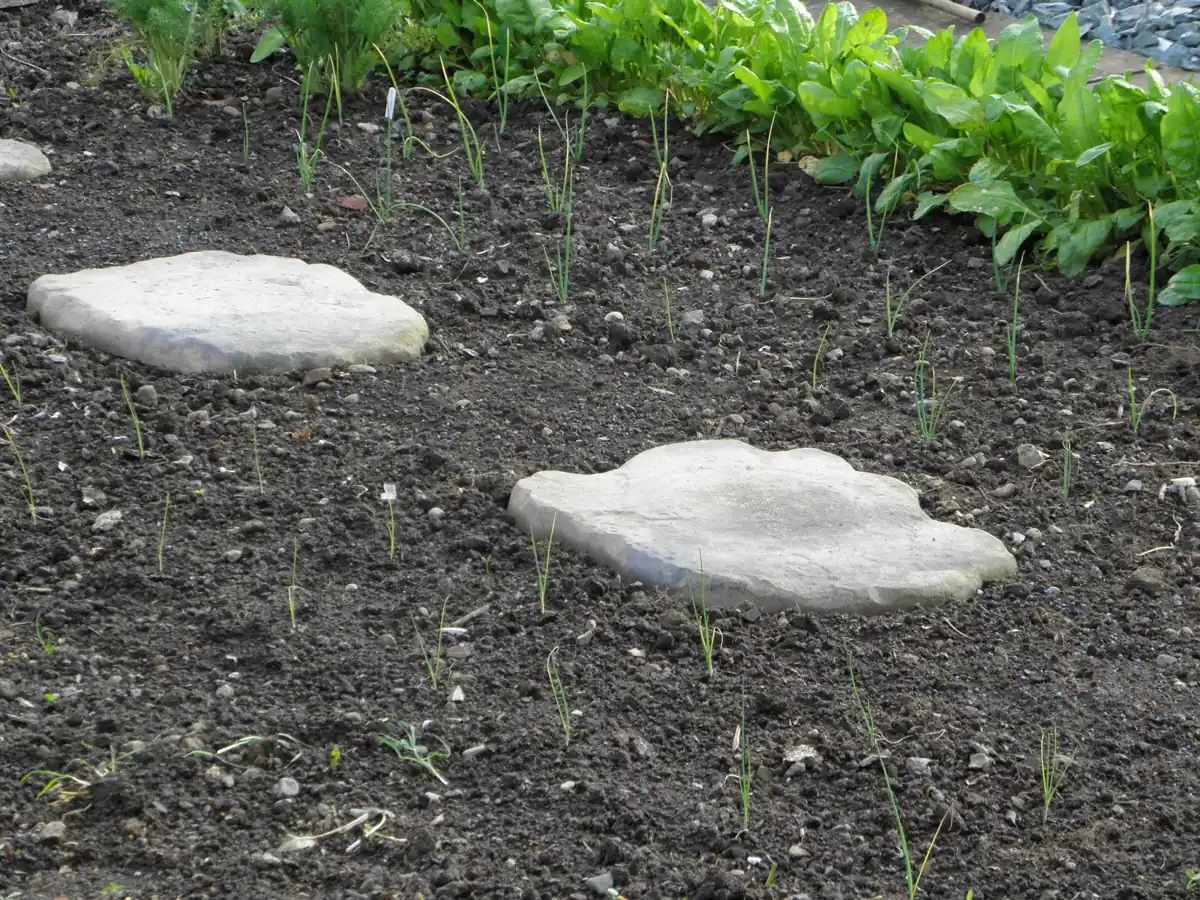
Thin green onion leaves take relatively little room at first, but a good bulb harvest starts with choosing a day-length type suited to your latitude. Seed gives you more choices than simply buying a bag of sets. The photo shows young plants after planting out, not a tray ready for immediate harvest. Choose a cultivar that can mature in your season, then allow it steady indoor light rather than trying to compensate for a late start with excessive fertilizer.
Sowing window: Early February in the UMN Minnesota example.
Care tip: Label the variety and sowing date with plant markers. Keep onion seedlings and discarded trimmings away from pets.
2. Leeks (Allium porrum; Leek Group)
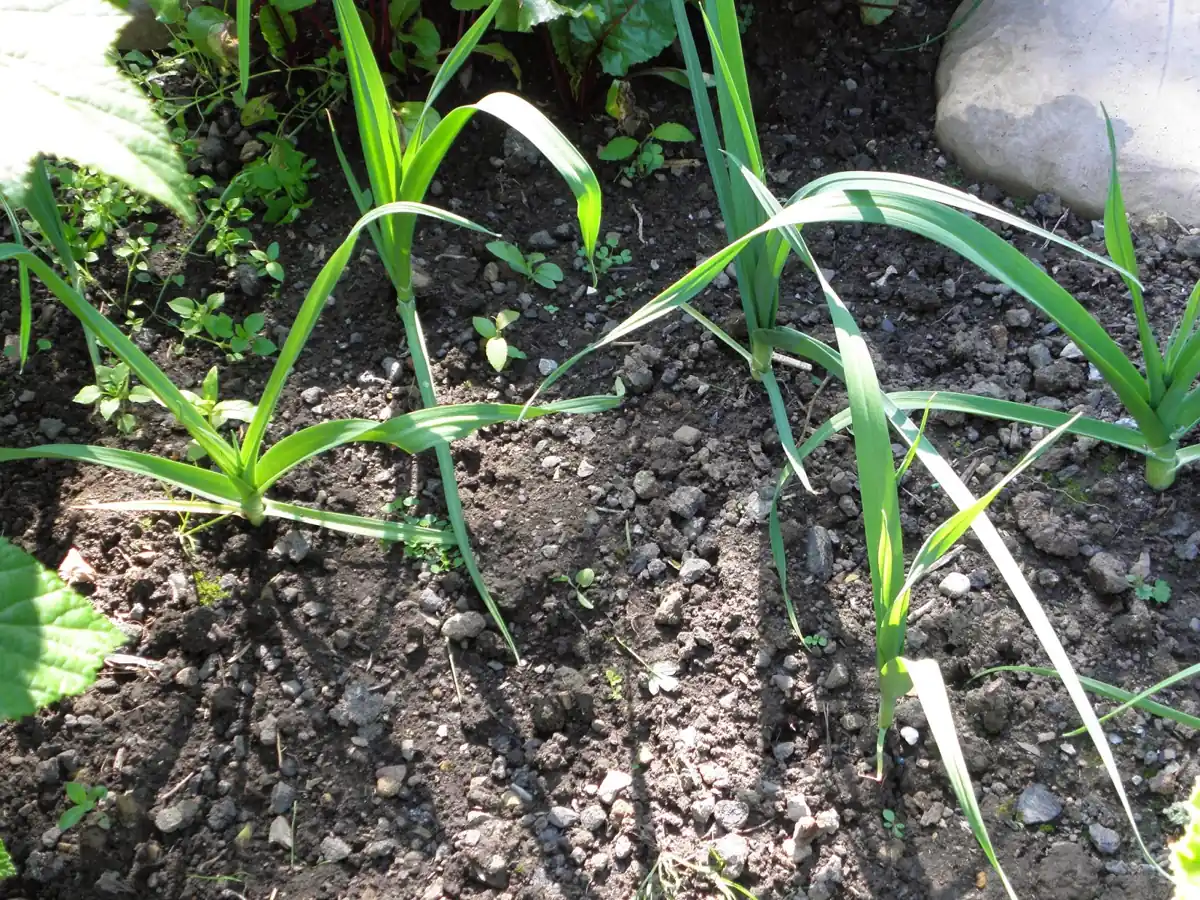
Zones: Grown as an annual crop; local climate controls timing · Light: Full sun outdoors; strong seedling light indoors · Height: Varies by cultivar; allow a tall leaf canopy · Interest: Autumn–winter shanks · Pets: Allium crop: keep away from pets
Leeks turn a little indoor growing space into plants for a much later harvest. Choose an early type for late-summer use or a hardy late type for winter meals, rather than assuming every packet produces the same plant. The pictured leeks are already growing outdoors, showing the upright leaves you are working toward. They are a useful choice when you want a long-season crop without giving over every light shelf to large individual pots.
Sowing window: Late winter onward; RHS notes about eight weeks to transplant size.
Winter note: RHS describes late-winter indoor sowing as an option, not a requirement. Outdoor spring sowing can work too; select the method that fits your climate and available space.
3. Celeriac (Apium graveolens var. rapaceum)
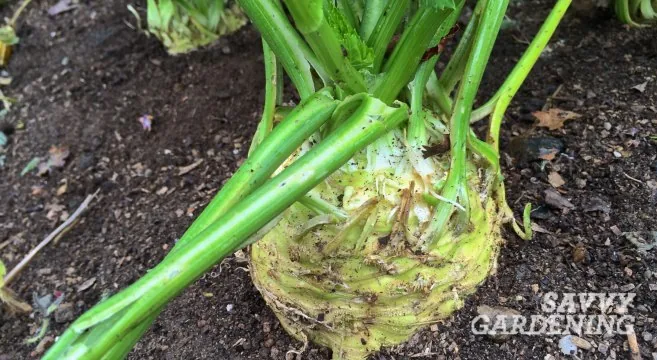
Zones: Grown as an annual crop; local climate controls timing · Light: Full sun outdoors; strong seedling light indoors · Height: Species range about 18–36 in.; cultivar dependent · Interest: Autumn–winter swollen stem · Pets: Check: no cultivar-specific pet-safe claim
The knobbly globe in the photo is the edible swollen stem sold as celery root. Celeriac needs a long season, which makes it worth planning before quicker vegetables fill your trays. It is not a good choice for a dry bed that you cannot keep consistently moist. The reward comes much later than seedling season, so think about its eventual summer position before starting a full packet. This is a crop for patient planning, not an instant late-winter windowsill harvest.
Sowing window: Early spring; RHS gives March in the UK.
Care tip: RHS warns that cold exposure can encourage premature flowering in young plants. Keep the seedlings growing steadily and delay planting out when conditions are unsuitable.
4. Broccoli (Brassica oleracea, Broccoli Group)
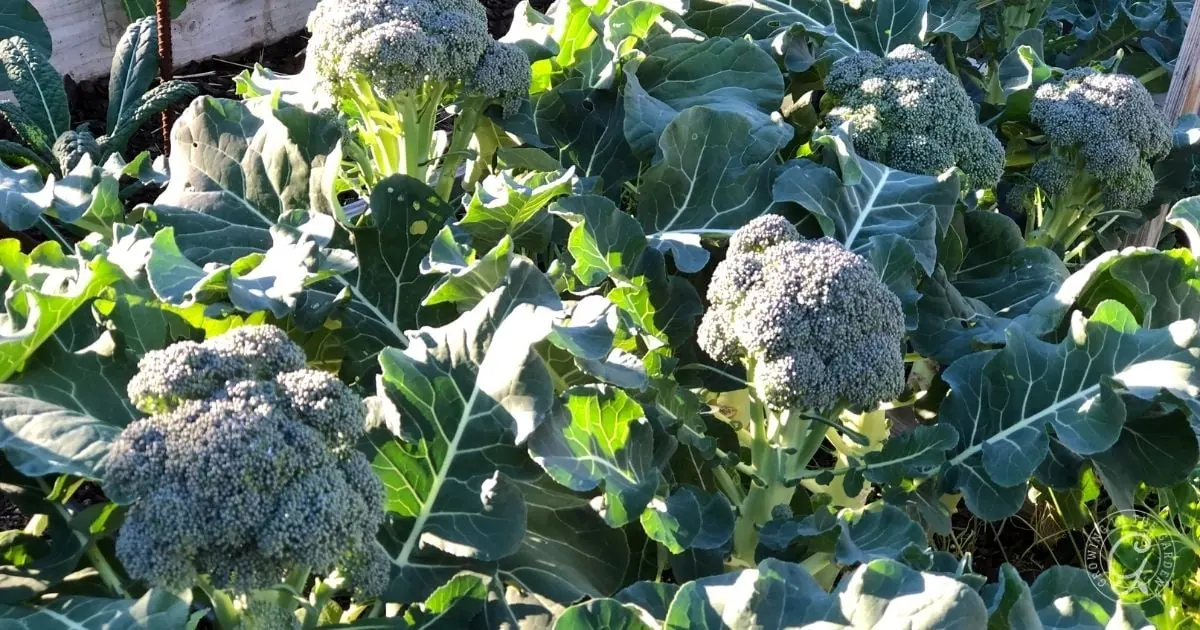
Zones: Grown as an annual crop; local climate controls timing · Light: Full sun outdoors; strong seedling light indoors · Height: 1–4 ft., depending on type · Interest: Spring or fall heads and shoots · Pets: Check: no pet-feeding recommendation
Broccoli is a good spring-transplant candidate when your outdoor season offers enough cool weather for heads to develop. A compact heading variety and a large sprouting type can need very different amounts of space. The mature heads in this photo show why choosing a crop for its eventual bed, not its tiny seedling, matters. Start a modest batch you can plant on time rather than a crowded tray that has to wait indoors long after it is ready.
Sowing window: Early March in the UMN Minnesota example.
Container note: A reusable cell tray with a bottom tray and dome is a similar seed-starting option; remove the dome after emergence rather than keeping seedlings enclosed.
5. Cabbage (Brassica oleracea, Cabbage Group)
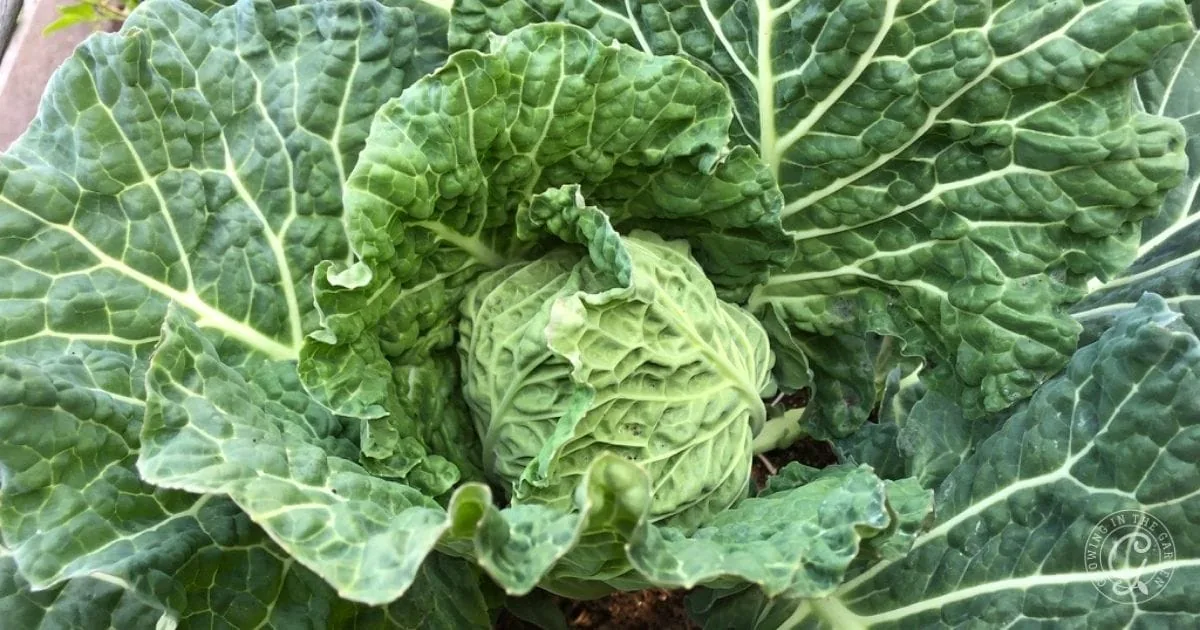
Zones: Grown as an annual crop; local climate controls timing · Light: Full sun outdoors; strong seedling light indoors · Height: 10–24 in. · Interest: Spring or fall heads · Pets: Check: no pet-feeding recommendation
A cabbage seedling is small, but the finished head and outer leaves occupy real garden space. Choose a heading type and maturity period that suit your spring weather and the number of cabbages you actually want to harvest. The crinkled leaves in the photograph belong to a mature garden plant, not a claim about a named seed variety. For a small bed, a short row of well-spaced plants is a more useful target than using every cell in a large propagation tray.
Sowing window: Early March in the UMN Minnesota example.
Budget note: Plan the final plant count first and sow a small allowance for losses. Keep vigorous transplants rather than growing more plants than your bed can accommodate.
6. Cauliflower (Brassica oleracea, Cauliflower Group)
Zones: Grown as an annual crop; local climate controls timing · Light: Full sun outdoors; strong seedling light indoors · Height: 1–4 ft., depending on type · Interest: Cool-season curds · Pets: Check: no pet-feeding recommendation
Cauliflower deserves a place on the list if you can give it consistent growing conditions and plant it out at the right stage. It is less forgiving of interrupted growth than a casual “sow everything early” approach suggests. The creator’s photo shows cauliflower and broccoli planted beneath protective netting; it is a real mixed brassica patch, not a close-up of a particular cauliflower cultivar. Choose a locally suitable heading variety before reserving indoor shelf space.
Sowing window: Early March in the UMN Minnesota example.
Care tip: Avoid keeping transplants cramped or letting them repeatedly dry out. Use crop-appropriate protection outdoors and keep any netting taut, secure, and checked regularly.
7. Peppers (Capsicum annuum)
Zones: Grown as an annual crop; local climate controls timing · Light: Full sun outdoors; strong seedling light indoors · Height: About 1–3½ ft.; cultivar dependent · Interest: Summer–fall fruit · Pets: Avoid browsing; hot fruit can irritate
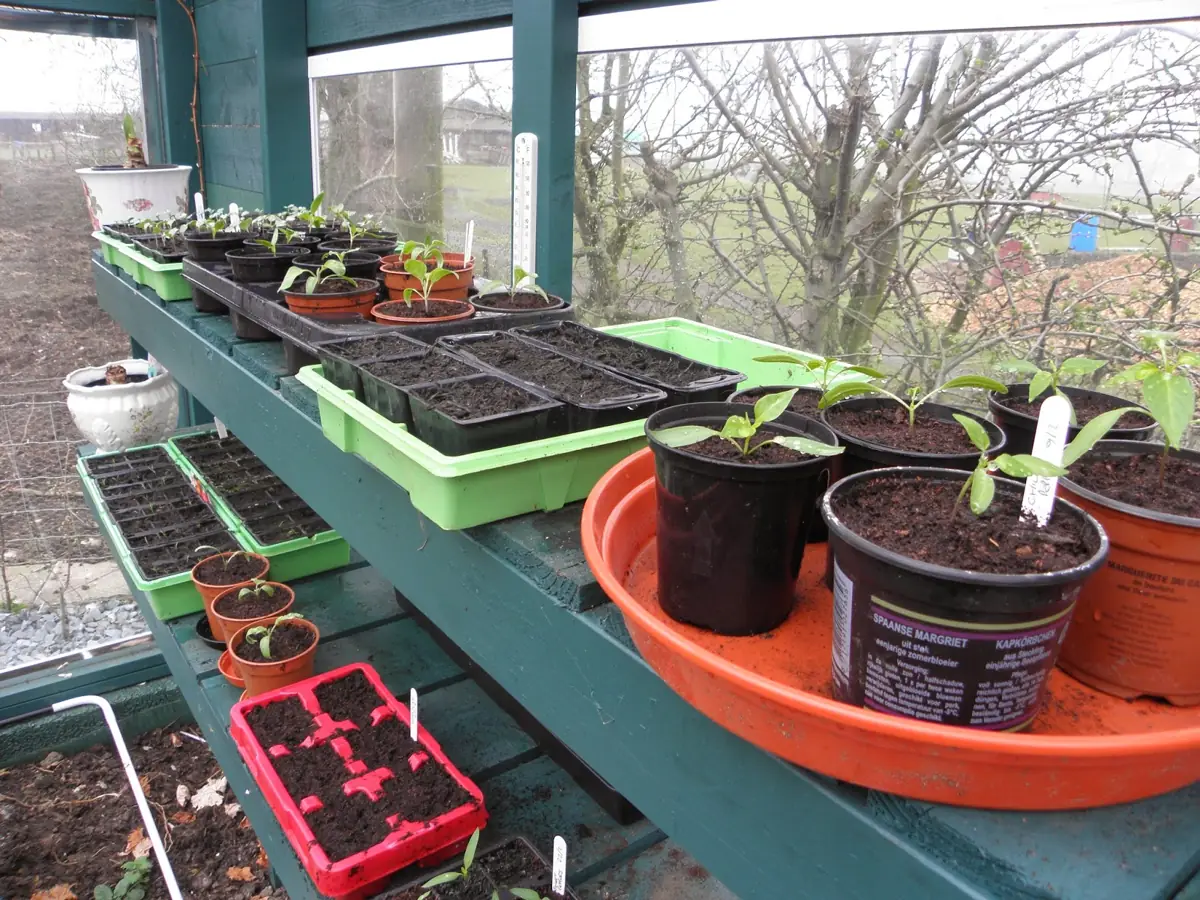
Peppers can justify an indoor start because their eventual crop depends on a long enough warm season. Sweet and hot varieties do not all germinate or mature at the same pace, so read the actual packet before borrowing someone else’s January schedule. The photograph shows mixed seedlings, including peppers, on greenhouse shelving. Once growth begins, good light matters as much as warmth: heating a dim tray is not a shortcut to a sturdy plant.
Sowing window: Mid-March in the UMN Minnesota example; adjust locally.
Care tip: For a cool propagation area, a seedling heat mat with a thermostat can help control germination conditions. Follow the seed packet and equipment instructions; do not heat every crop indiscriminately.
8. Eggplant (Solanum melongena)
Zones: Grown as an annual crop; local climate controls timing · Light: Full sun outdoors; strong seedling light indoors · Height: 2–4 ft. · Interest: Summer–fall fruit · Pets: Leaves, stems, roots, and flowers are poisonous
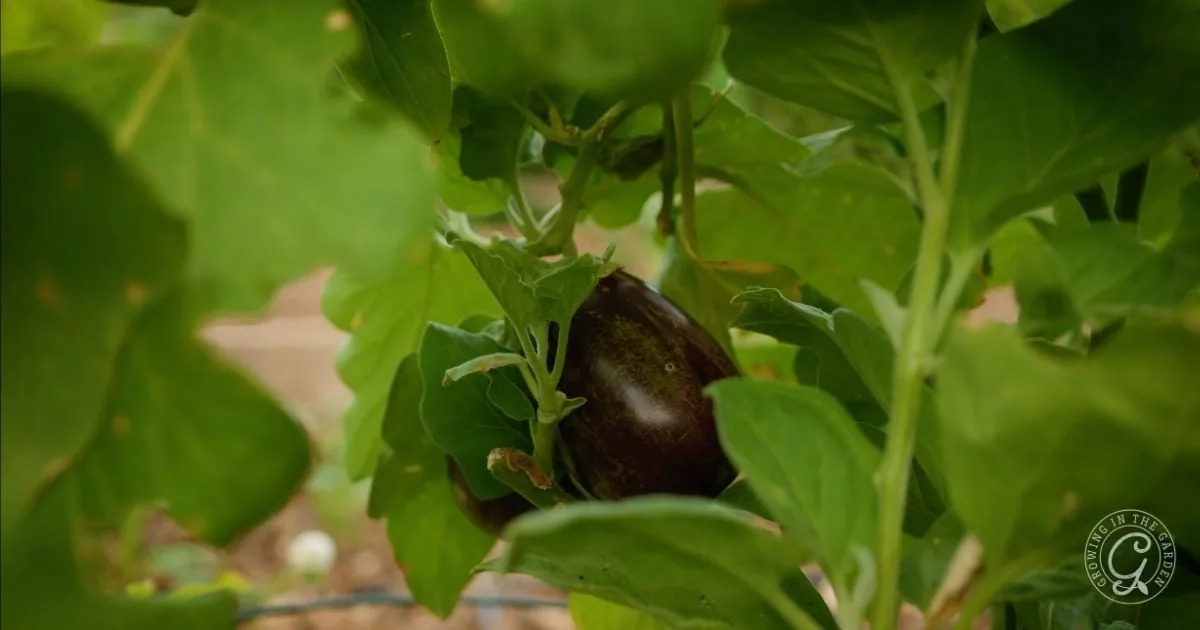
A glossy eggplant fruit is a reminder that this crop needs more than an early sowing date: it also needs enough warmth outdoors to finish. Compact and early-maturing selections can be more practical where summers are short. The purple fruit in the photo is not being identified as a named cultivar. NC State lists ‘Hansel’ and ‘Black Beauty’ among its cultivar examples, but use local advice to choose between a compact option and a larger-fruited plant.
Sowing window: Mid-March in the UMN Minnesota example; adjust locally.
Winter note: Keep seedlings under suitable LED growing lights after germination and wait for warm, frost-free outdoor conditions before transplanting. Keep non-fruit plant parts away from pets.
Compare Crops Before Filling Your Trays
| Crop | Growing habit | Height | Timing reference, not a universal date |
|---|---|---|---|
| Bulb Onions | Annual crop | 12–18 in. | Early February in the UMN Minnesota example |
| Leeks | Annual crop | Varies by cultivar; allow a tall leaf canopy | Late winter onward; RHS notes about eight weeks to transplant size |
| Celeriac | Annual crop | Species range about 18–36 in.; cultivar dependent | Early spring; RHS gives March in the UK |
| Broccoli | Annual crop | 1–4 ft., depending on type | Early March in the UMN Minnesota example |
| Cabbage | Annual crop | 10–24 in. | Early March in the UMN Minnesota example |
| Cauliflower | Annual crop | 1–4 ft., depending on type | Early March in the UMN Minnesota example |
| Peppers | Annual crop | About 1–3½ ft.; cultivar dependent | Mid-March in the UMN Minnesota example; adjust locally |
| Eggplant | Annual crop | 2–4 ft. | Mid-March in the UMN Minnesota example; adjust locally |
Useful Supplies for Vegetable Transplants
Choose supplies around the number of plants you can finish: a reusable cell tray, lights, a thermostat-controlled germination mat where needed, and labels. These are similar supplies, not the exact equipment identified in the creator photos.

- Adjustable Vents: The seed trays have adjustable vents that allow you to regulate the temperature and humidity of your seedling environment for total control over the growing process.
- Drainage Holes: The seed trays have drain holes at the bottom for proper drainage, reducing the risk of root rot and promoting healthy growth.
- Mini Greenhouse: The seed starter kit includes 10 trays and a humidity dome to create a mini greenhouse for starting seeds and fostering a healthy garden.
- Reusable and Portable: The seed trays are made of durable plastic and can be reused for multiple growing seasons. They are also lightweight and easy to transport.
- Complete Seed Starting Kit: The MIXC seed starter kit includes 10 trays, 10 watertight base trays, 10 humidity domes, and 10 plant labels for a complete seed starting solution.

- Luminous Output: Delivers an impressive 20000 lumens of full sun 6500K light, perfect for seeding, cloning, and vegetative growth stages.
- Efficient Design: 4-foot long fixture with 4 energy-efficient T5 bulbs provides uniform light coverage for indoor gardens and grow tents.
- Durable Construction: UL listed for safety, with a sturdy aluminum housing designed for long-lasting performance.
- Versatile Application: Ideal for various indoor plants including vegetables, herbs, flowers, and seedlings.
- Easy Installation: Equipped with hanging chains for convenient overhead mounting in grow rooms or tents.

- IDEAL GERMINATION TEMPERATURE: The BN-LINK seedling heat mats for seed starting can reach surface temperatures around 70°F to 85°F, providing gentle warmth for seed germination, cutting propagation, hydroponic growing and healthy seedling growth. Achieve faster germination and higher growth rates with seed heating mat.
- STABLE & UNIFORM HEATING: Using advanced far-infrared heating technology and reinforced heating film with dual insulation layers, this plant heat mat for seedlings delivers consistent, even warmth, raising root-zone temperatures approximately 10–20°F above ambient temperature without the risk of overheating or root scorching.
- DURABLE & WATERPROOF: This plant heating pad for indoor growing is made with flexible, multi-layer PVC that is wear-resistant and long-lasting. With an IP67 waterproof rating, the heating mat for plants resists splashes and sprays and can be safely cleaned by wiping.
- MULTIPLE APPLICATIONS: Simply place the seed warming mat under your seedling tray and plug seed starter heat mat into outlet—quick and easy to use. Ideal for seed starting, growing seedlings, plant propagation, and indoor gardening, it also works perfectly for home brewing, kombucha fermentation, and warming reptile or pet terrariums, meet all your daily needs.
- SAFETY & RELIABILITY: ETL Listed for quality assurance, this 10" x 20.75" heating pad for plants germination with a 5.9ft power cord fits standard 1020 seed starter trays and runs on just 20W. Rolls up easily, making these grow mats for seedlings simple to store when not in use. Backed by BN-LINK’s 12-month warranty for added peace of mind.


- 【Value for Money】: Great value plant labels pack included 500 Pcs white plastic plant tags 4inch*0.62inch(10cm*1.6cm) with a bonus permanent marking pen, enough plant markers can meet your different needs and plant makers name tags will make plant header look clearer.
- 【Durable Waterproof Materials】: These plant markers plant labels for seedlings are made of high standard quality PVC plastic. Water resistance, and will not rust like metal tags or rot like wooden labels, not easy to break and brittle.
- 【Easy to Use】: These plastic plant labels markers, pointed on end and square on the other, The shape of the garden labels is very easy to insert into the soil, easily cleaned with household cleaner for reuse. Plant tags' smooth edge without injuring plants and hands.
- 【Easy to Write】: Garden tags labels both side are blank, you can write on any side, matte surface easy to write on the plant labels to record the true condition of the plants or flowers. With the bonus permanent marking pen, the ink on the plant label will not easy to be washed away by rain, or fade in the sunlight.
- 【Wide Application】: Our plastic seed tags can be used to write cultivar name, plant names.They really help you remind what is where, perfect for vegetable seedlings, greenhouses, gardening project, pot experiments, etc.
Make the Late-Winter Plan Fit Your Garden
Work backward from planting out
The University of Minnesota seed-starting guide places onions and leeks in February but peppers and eggplants in March for its own region. That is a useful warning against sowing all eight crops together. Your county Extension calendar and packet instructions should set the dates; a milder region and a colder region will not share the same schedule.
Reserve space for larger pots
A tray that fits under one light today can need much more room once plants develop true leaves and roots fill their cells. Count the larger pots you can illuminate, not just the small cells you can squeeze onto a shelf. Skip crops you can buy as a few healthy transplants if raising them would crowd everything else.
Choose crops for their outdoor needs
Cool-season brassicas, long-season alliums, and heat-loving fruiting crops are not interchangeable. RHS leek guidance distinguishes late-winter indoor sowing from spring outdoor sowing, while its celeriac guide emphasizes warmth for young plants and consistent moisture later. Start with two or three crops whose needs fit your actual garden.
Pet note: Edible for people does not mean suitable for pets. Keep onion-family crops out of reach, do not offer eggplant foliage, and keep seed packets, fertilizers, and treated seed inaccessible.
A good late-winter seed order is selective. Choose the crops you can give enough light, growing space, and the right planting date, then let the rest wait.
Featured photo: 📷 Jessica Walliser at Savvy Gardening.